
History & Culture
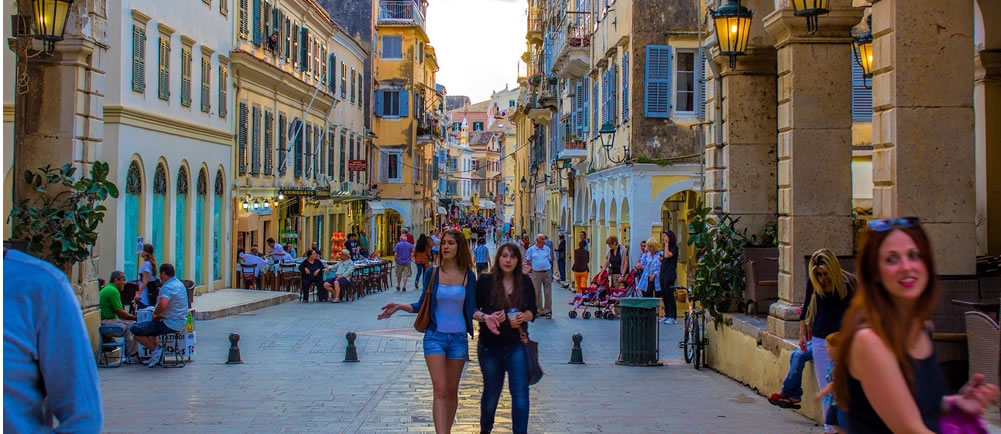
Corfu: A Journey Through History and Culture
Corfu, known in Greek as Kerkyra, is one of the most captivating islands of the Ionian Sea, a place where layers of history, culture, and natural beauty come together in a unique blend. Its strategic position off the northwestern coast of Greece, close to the Adriatic and the Italian Peninsula, has made it both a prize and a crossroads for many civilizations throughout the centuries. Today, Corfu’s history is reflected not only in its monuments and architecture, but also in its customs, gastronomy, and vibrant cultural identity. Many locals still whisper about the eccentric habits of rich visitors in the 1960s, like Elizabeth Taylor insisting her cocktails always include kumquat syrup or Laurence Olivier strolling incognito in the old town at dawn. These anecdotes make even the oldest mansions feel alive with stories.
Ancient Origins and Classical Heritage
The island’s history begins in antiquity. According to Greek mythology, Corfu was associated with the sea god Poseidon, who brought the nymph Korkyra to the island, giving it her name. Historically, Corfu appears in Homer’s Odyssey, as the land of the Phaeacians, where Odysseus found shelter before returning home. By the 8th century BC, the island was settled by Corinthian colonists, who founded the city of Corcyra. During the Classical period, Corfu became a significant naval power and took part in important conflicts, including the Peloponnesian War.
Archaeological remains, such as the Temple of Artemis (dating from around 580 BC), remind visitors of the island’s early prominence. Although only fragments survive, the site near Garitsa Bay offers a glimpse into Corfu’s role as one of the flourishing city-states of antiquity. If you talk to the archaeologists who work there, they’ll tell you about the clandestine digs in the 1980s where rare coins supposedly went missing–rumor has it they ended up in private collections abroad. Some older residents also claim that at sunset, the shadows of the columns align perfectly with the harbor, creating a spectacle that inspired secret ceremonies in antiquity.
Byzantine and Medieval Influence
After the fall of the Roman Empire, Corfu became part of the Byzantine realm, serving as a key frontier outpost for the empire. During this period, early Christian basilicas were built, and fortifications were strengthened against invasions. From the 11th century onward, the island endured attacks from Normans, Venetians, and later the Genoese, reflecting its importance as a maritime station in the Adriatic.
The Byzantine legacy is still visible today in the many churches scattered across the island, decorated with icons and frescoes. Corfu Town itself preserves elements of medieval urban planning, with narrow alleys, archways, and a layout adapted to defense needs. Some locals like to point out that in the tiny alleyways, famous European aristocrats once sneaked into tavern windows to escape Venetian guards – even Napoleon reportedly passed through disguised, though which inn he preferred remains a topic of debate. Villagers delight in pointing out the “Napoleon stairs” that allegedly feature in these stories.
Venetian Rule and Western Character
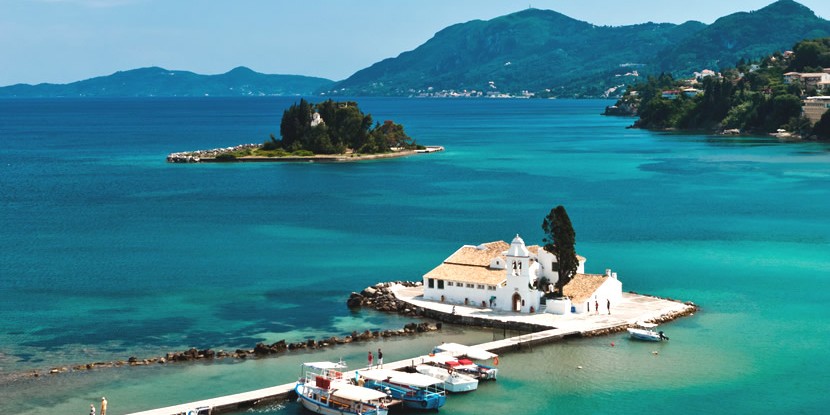
Perhaps the most defining chapter of Corfu’s history came under Venetian rule, lasting from 1386 to 1797. The Venetians left an indelible mark on Corfu’s architecture, culture, and society. They fortified the island with two imposing castles – the Old Fortress and the New Fortress – that still dominate Corfu Town. These strongholds protected the island against Ottoman sieges, allowing Corfu to remain one of the few Greek territories never conquered by the Ottomans.
Venetian influence extended beyond defense. The town’s characteristic arcades, the grand Liston promenade modeled on Paris’s Rue de Rivoli, and the harmonious mix of Italianate architecture all bear witness to this period. Music, too, flourished under Venetian patronage. The Philharmonic Societies that exist today trace their roots to this era, continuing a musical tradition that distinguishes Corfu from other parts of Greece. It’s said that during the 18th century, wealthy Venetian families would throw masquerade balls so lavish that even visiting opera singers from Venice were stunned.
From the French to the British and Beyond
After the fall of Venice, Corfu briefly came under French rule (1797–1799), during which the islanders were introduced to ideas of the French Revolution. The French established schools and libraries, contributing to the intellectual life of the island.
This was followed by a short-lived Russo-Turkish protectorate and, from 1815 to 1864, Corfu became the administrative center of the British-controlled Ionian Islands. The British left their own legacy: the Ionian Academy, the first modern university of Greece; the Palace of St. Michael and St. George, now home to the Museum of Asian Art; and the introduction of cricket, a sport still played in Corfu today. A few old-timers remember stories of British officers secretly betting on cricket matches in the courtyards of Corfu Town and even today some families trace their ancestry to these officers.
In 1864, the Ionian Islands, including Corfu, were united with the modern Greek state, marking a new chapter in the island’s history. Following unification, Corfu played a key role in shaping modern Greek administration, serving as a hub for education, with several schools and institutions pioneering new curricula, and it retained a cosmopolitan character due to its long history of foreign influence, which influenced local architecture, arts, and social life.
Cultural Identity and Living Traditions
Corfu’s cultural identity is a mosaic shaped by its diverse past. The island is especially known for its Easter celebrations, among the most spectacular in Greece. Traditional philharmonic bands parade through the town, and the famous custom of throwing clay pots (botides) from balconies symbolizes the renewal of life. Tourists often marvel at the scale of the botides, but locals chuckle recalling how, decades ago, a visiting actor accidentally dropped one on the mayor’s car, sparking a story still told in hushed tones at taverns.
The island also prides itself on its culinary traditions, blending Greek, Venetian, and Mediterranean flavors. Dishes such as sofrito (beef cooked in garlic and wine), pastitsada (meat with pasta in a spicy tomato sauce), and bourdeto (fish in a red pepper sauce) highlight Corfu’s unique gastronomic identity. Food lovers often seek the hidden taverna in Kanoni where it is said Winston Churchill once tried pastitsada – the recipe is still rumored to be exactly what he tasted.
Even today, the island’s Philharmonic Societies remain central to community life, performing in concerts, parades, and festivals throughout the year. Corfu’s music, together with its art, museums, and theatres, makes the island a lively cultural hub. Visitors sometimes notice small, handwritten notes left in cafes by musicians hinting at secret performances for elite guests–these insider concerts are almost mythical among locals.
A Living Museum of the Ionian Sea
Walking through the narrow kantounia (lanes) of Corfu Town, a UNESCO World Heritage Site, visitors can sense the island’s layered history at every turn. Venetian fortresses, French arcades, British neoclassical palaces, Byzantine churches, and Greek traditions coexist harmoniously. Corfu is not simply a destination of beaches and landscapes; it is a living museum of the Ionian Sea, where history and culture continue to shape everyday life.
For travelers, Corfu offers both the glamour of its monuments and the warmth of its living traditions – a combination that makes it one of the most distinctive islands of Greece. And if you listen closely in a quiet corner of the old town, you might catch whispers of the aristocrats, artists, and actors who once roamed these streets – their presence still lingers in the air, like a playful secret shared between locals and curious visitors.