Many people visit Corfu for its beaches, green landscapes, and relaxed Ionian atmosphere. But according to ancient Greek mythology, this island may also have been the legendary land of the Phaeacians — the mysterious seafaring people who helped Odysseus return home in Homer’s Odyssey.
For centuries, historians and travelers have connected Corfu with the mythical island of Scheria, the final stop of Odysseus before Ithaca. While nobody can prove the story with certainty, many places around the island still match Homer’s descriptions surprisingly well.
Even today, locals often grow up hearing stories about Odysseus, King Alcinous, and Princess Nausicaa, especially in areas like Palaiokastritsa and Ermones on the west coast of Corfu.
Was Corfu the Ancient Island of Scheria?
One of the reasons many scholars connect Corfu with Scheria is geography.
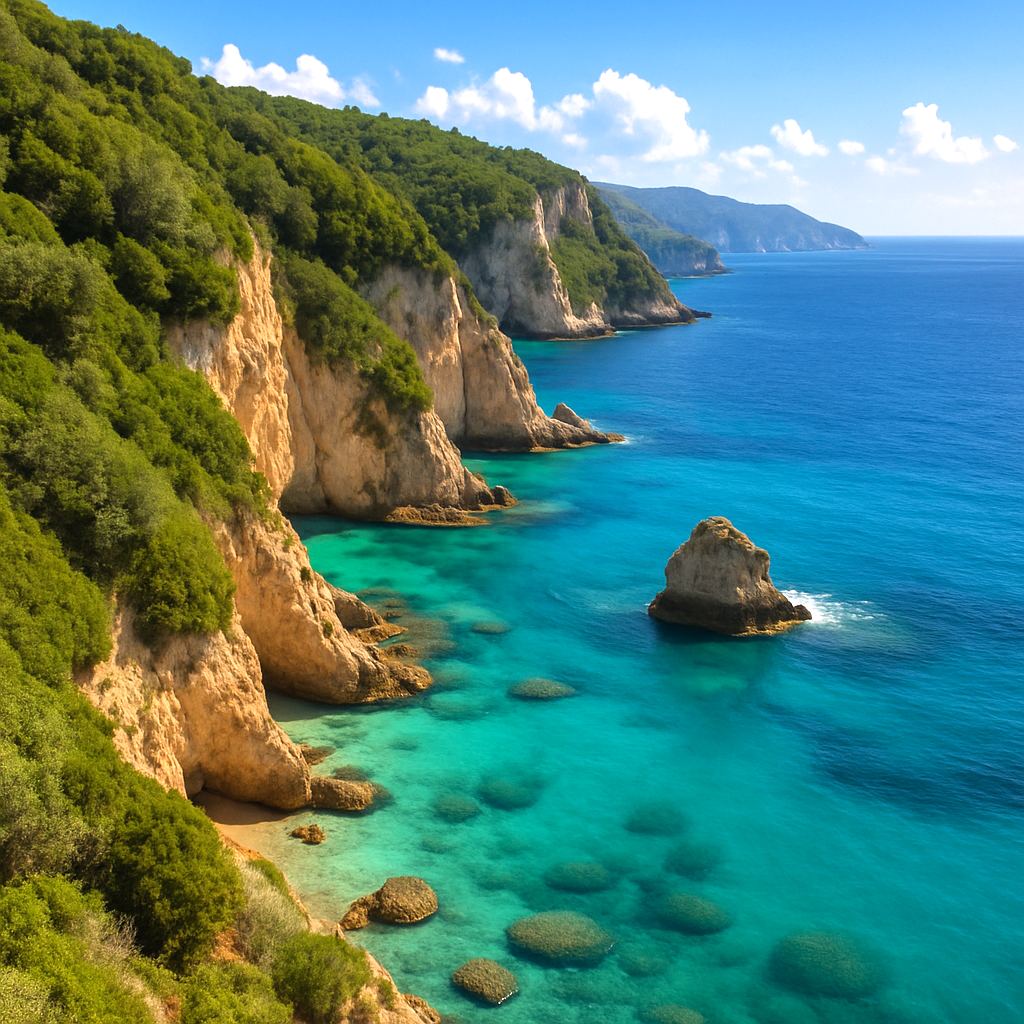
In the Odyssey, Homer describes a lush island with fertile land, sheltered harbors, and strong connections to the sea. Anyone who has visited Corfu in spring can understand why the island became linked with this mythical paradise. Unlike many dry Greek islands, Corfu is famous for its greenery, olive groves, cypress trees, and year-round vegetation.
Some locations around the island are especially connected with the legend.
Kanoni and the Twin Harbors
Many historians believe the area around Kanoni and Garitsa Bay resembles Homer’s description of the twin harbors of Scheria. The narrow peninsula, calm waters, and natural protection from winds make the comparison easy to understand.
This area near Corfu Town was also one of the island’s most important ancient settlements.
The “Petrified Ship” of Palaiokastritsa
One of the most famous local legends can be found near Palaiokastritsa. According to mythology, Poseidon punished the Phaeacians for helping Odysseus by turning their returning ship into stone.
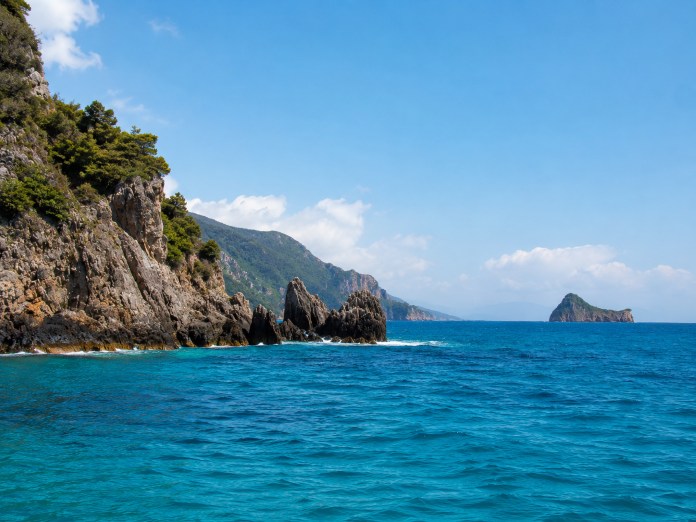
Today, local boat captains still point toward a rocky formation in the sea called Kolovri, which many people jokingly describe as the “petrified ship” from the legend. Whether true or not, it definitely adds to the atmosphere of the area.
Who Were the Phaeacians?
In Homer’s story, the Phaeacians were peaceful people known for hospitality and exceptional sailing skills. Their king, Alcinous, ruled alongside Queen Arete, while their daughter Nausicaa famously discovered Odysseus washed ashore after a storm.
Unlike the warriors of other Greek kingdoms, the Phaeacians were described as lovers of music, celebrations, sports, and the sea.
Their story is also closely connected with the ancient Greek idea of Xenia — the sacred tradition of hospitality toward strangers and travelers.
When Odysseus arrived exhausted and unknown, the Phaeacians welcomed him, fed him, and helped him continue his journey home without asking for anything in return.
Many locals in Corfu still like to say that hospitality remains part of the island’s culture today.
The Legendary Ships of the Phaeacians
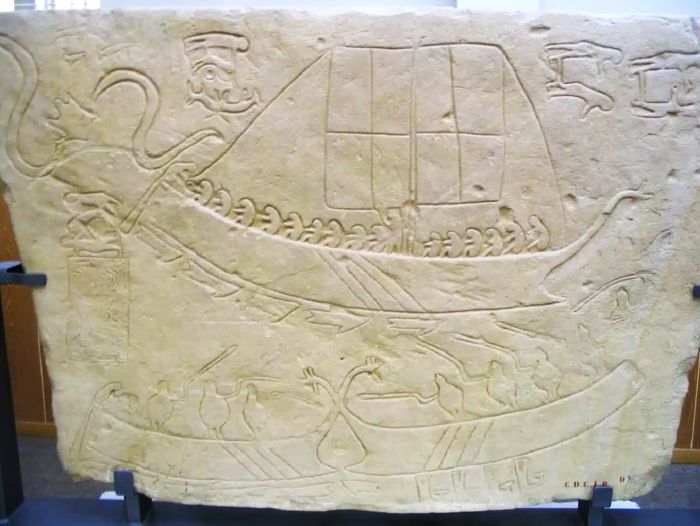
One of the most interesting parts of the Odyssey is Homer’s description of Phaeacian ships.
According to the myth, their vessels moved quickly across the sea without needing pilots and could travel safely even during storms. Of course, this belongs more to mythology than history, but it probably reflected the reputation of the island’s sailors during ancient times.
Because of Corfu’s position between Greece and Italy, the island naturally became important for trade and navigation for centuries. Even today, the sea plays a major role in daily life around the island.
Where Did Odysseus Meet Nausica?
This is one of the most debated questions connected with the legend.
According to Homer, Odysseus reached Scheria after surviving a violent storm and met Princess Nausicaa near a river where she was washing clothes with her companions. Two places in Corfu are most commonly linked with this scene.
Ermones Beach
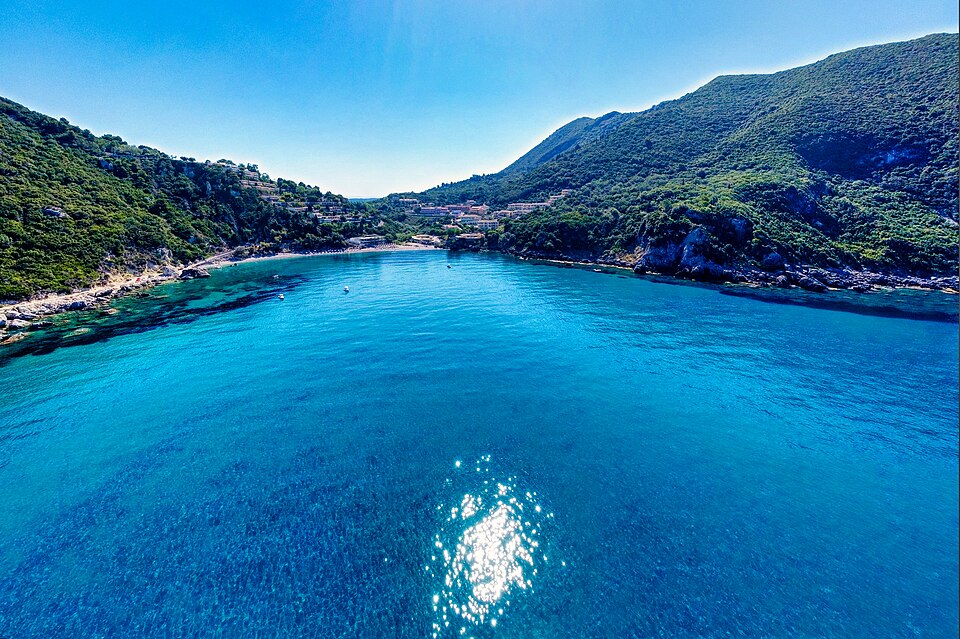
Ermones, on the west coast, is one of the strongest candidates. The area has dramatic cliffs, deep waters, and a small river flowing into the sea — details that match parts of Homer’s description. The beach itself has a quiet, almost mythical atmosphere, especially early in the morning or outside the busy summer months.
Paleokastritsa
Others believe the scene happened in Palaiokastritsa, one of the most beautiful coastal areas in Corfu. The sheltered bays, sea caves, and steep green hills make it easy to imagine ancient sailors arriving here after crossing the Ionian Sea. During July and August the area becomes very busy, but outside peak hours it still has a peaceful atmosphere that fits perfectly with the old legends.
Archaeology and Ancient Corfu
While the Phaeacians themselves remain part mythology and part mystery, Corfu does have a very important ancient history.
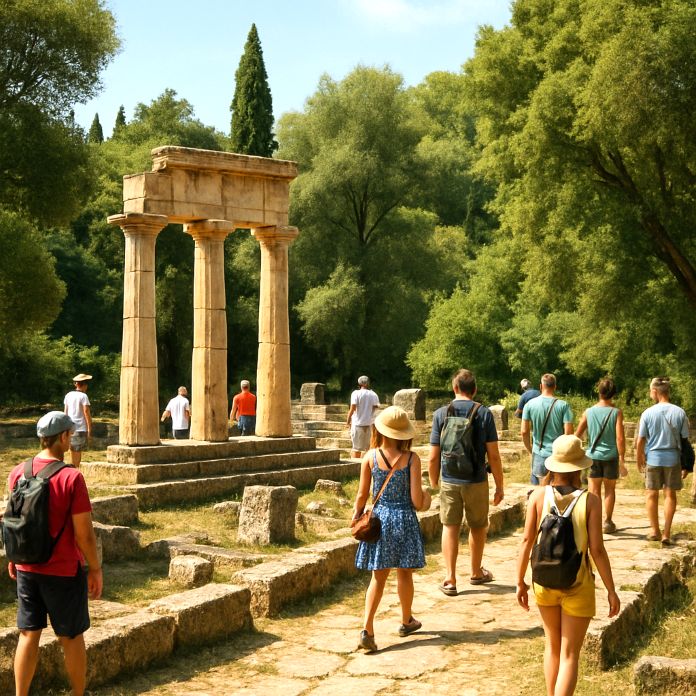
Near Mon Repos and Kanoni, visitors can explore the ruins of ancient Palaiopolis, one of the earliest settlements on the island. Archaeologists have discovered temples, harbor remains, pottery, and other artifacts showing that Corfu was already an important maritime center thousands of years ago.
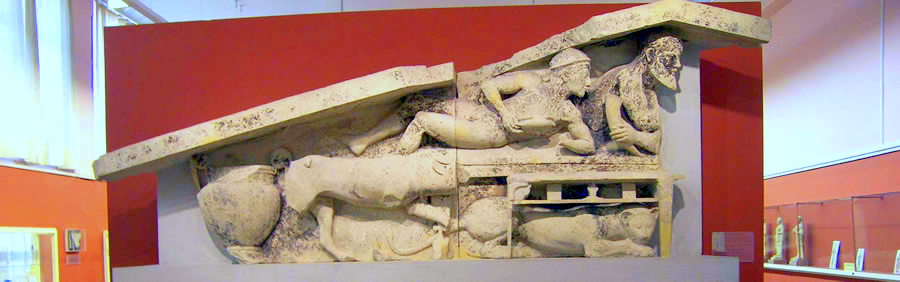
The Archaeological Museum of Corfu also contains impressive discoveries from the island’s ancient past, including the famous Gorgon pediment from the Temple of Artemis. Although no excavation has proven the existence of a “Phaeacian kingdom,” the island’s geography and history continue to keep the theory alive.
Places to Visit for the Phaeacian Experience
- Paleokastritsa – famous for its bays, caves, monastery, and local legends connected with Odysseus.
- Ermones Beach – often linked with the meeting between Odysseus and Nausicaa.
- Kanoni and Mon Repos – important ancient area near Corfu Town with archaeological remains.
- The Archaeological Museum of Corfu – ideal for understanding the island’s ancient history.
- Boat trips along the west coast – one of the best ways to experience the dramatic coastline connected with many local myths.
A Legend That Still Lives in Corfu
Whether the Phaeacians truly existed or not, their story remains deeply connected with Corfu.
Part of what makes the island special is this mixture of mythology, history, and natural beauty. One moment you are walking through ancient ruins near Corfu Town, and the next you are swimming below cliffs that locals still associate with Homer’s legends. For many visitors, that combination is what makes Corfu feel different from other Greek islands.
And when the evening light falls over the Ionian Sea, it becomes easy to understand why people still imagine Odysseus arriving here after his long journey home.
Click here to read about Museums & Galleries in Corfu