Shopping in Corfu: Local Products, Boutiques & Best Souvenirs
Shopping in Corfu can be much more interesting than picking up a magnet or T-shirt before flying home. The island has traditional food products, handmade leather goods, jewellery, Greek fashion, olive-oil soap, local spirits and small shops that are worth visiting even if you are not normally much of a shopper.

The greatest concentration is in Corfu Town, particularly around the pedestrian streets of the Old Town. You can easily combine shopping with Liston, Saint Spyridon, the Old Fortress and the historic kantounia.
Below are some of the best places and products to look for, together with a few tips for finding something genuinely connected with Corfu rather than another mass-produced souvenir.
Shopping in Corfu at a Glance
• Best overall shopping: Corfu Old Town
• Local food products: kumquat, olive oil, honey, sweets, local spirits and wine
• Traditional craft: olive-oil soap, handmade leather and jewellery
• Fresh food: Corfu Local Market below the New Fortress
• Greek fashion & design: boutiques throughout Corfu Old Town
• Best historic shopping experience: Patounis Soap Factory
• Easy-to-carry souvenirs: soap, jewellery, small leather goods, sweets and packaged local products
Corfu Old Town — The Best Place to Shop
The narrow pedestrian streets of Corfu Old Town contain the island’s greatest variety of shops.
Rather than one shopping avenue, there is a network of streets around Nikiforou Theotoki, Evgeniou Voulgareos, Guilford Street, Agiou Spyridonos and the surrounding kantounia.
You will find everything from inexpensive souvenir stores to independent Greek designers, jewellers, leather workshops, food shops and international brands.
The nicest way to shop here is not to follow one exact route. Wander away from Liston and explore the smaller streets behind Saint Spyridon, where many independent shops are located.
Handmade Leather & Greek Sandals
Leather sandals are one of the easiest Greek products to take home, but quality varies enormously between shops.
Simatis Real Leather is particularly interesting because it is a genuine Corfu workshop rather than simply a retailer of imported sandals.
The business began in Corfu in 1984 and continues to manufacture handmade leather sandals, bags and accessories locally. Its workshop uses Greek leather, including vegetable-tanned leather for many products.
The shop is at 26 Eleftheriou Venizelou Street in Corfu Town.
Official website: Simatis Real Leather
Corfu Sandals, on Filellinon Street, is another established footwear shop in the Old Town with a wide choice of Greek-style leather sandals.
My tip: Look at the sole, stitching and leather rather than buying simply because something is described as “Greek”. If buying specifically for local craftsmanship, ask where the item was actually made.
Greek Fashion & Design Boutiques
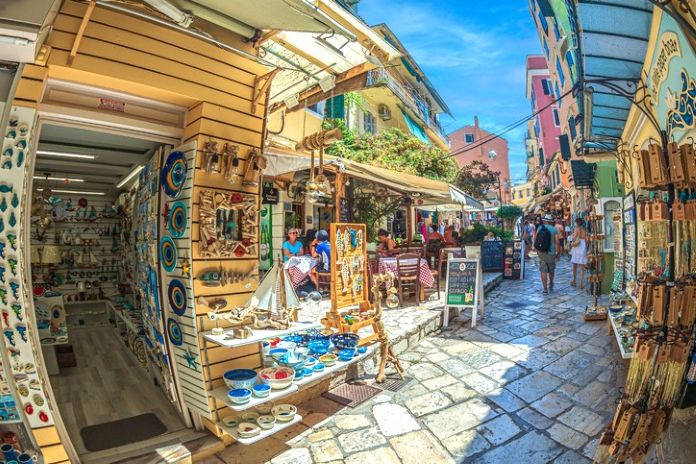
Corfu Old Town has developed a surprisingly good selection of Greek fashion and design shops.
Muses Corfu, at 22 Michael Theotoki Street, is one of the more distinctive concept stores. It combines contemporary Greek fashion, jewellery, accessories, art and home decoration.
The shop represents a wide range of Greek and independent designers rather than functioning as a conventional souvenir shop.
Official website: Muses Corfu
Lamprini Chantziara has a concept store at 51 Guilford Street. The Corfu-born designer creates one-of-a-kind handmade jewellery using combinations of crochet techniques, chains, crystals and semi-precious stones.
Official website: Lamprini Chantziara
Lophelia Clothing, on Filellinon Street, is another independent option for women’s clothing and accessories.
Jewellery in Corfu
Jewellery shops are everywhere in the Old Town, ranging from inexpensive fashion pieces to gold, silver and precious stones.
You will also find contemporary pieces inspired by Greek mythology, the sea, olive leaves and Corfiot architecture.
If you are spending a significant amount, compare a few shops rather than buying the first piece you see. Ask clearly what metal and stones are being used and request the appropriate receipt and documentation for valuable items.
The small independent shops around Guilford Street and the streets surrounding Saint Spyridon can be particularly interesting for something less mass-produced.
Pandora’s Box — Antiques & Curiosities
If you prefer old objects to new fashion, Pandora’s Box Corfu on Agias Sofias Street is an antiques shop rather than an ordinary tourist-souvenir store.
Shops like this can be worth browsing if you are looking for decorative objects, collectibles or something with more character than a standard holiday souvenir.
Remember that restrictions can apply when exporting genuine antiquities or protected cultural objects from Greece. Never assume that because something old-looking is offered for sale it can automatically be taken out of the country without documentation.
Corfu Local Market — Shop Where Locals Shop
Corfu’s traditional Local Market sits beneath the New Fortress close to the centre of town.
According to the official Visit Corfu guide, local producers sell fresh fish and seafood, vegetables, herbs, traditional sweets and other local products here.
This is a working food market rather than a polished tourist attraction, which is exactly why it is worth seeing.
Visit earlier in the day when the fish and produce sections are at their most active.
My tip: Even if you do not need groceries, walk through the market before exploring the New Fortress area. It provides a glimpse of everyday Corfu that is very different from the souvenir streets around Liston.
Patounis Soap Factory — One of Corfu’s Best Authentic Souvenirs
If you want to buy something genuinely connected with Corfu, Patounis Soap Factory should be near the top of the list.
The factory has operated at 9 Ioannou Theotoki Street since 1891 and still produces traditional soap by hand using olive products and historic equipment.
The building and equipment have been recognised as part of Greece’s industrial heritage, while the traditional soap-making practice was added to Greece’s National Inventory of Intangible Cultural Heritage in 2017.
You can buy the soaps directly from the factory shop.
As of 2026, guided visits are offered Monday to Saturday at 12:00 between April 1 and October 31. Booking ahead is recommended.
Official website: Patounis Olive Soap
My tip: This is one of the few souvenirs where visiting the place it is actually made is more interesting than simply buying the product.
Kumquat & Traditional Corfiot Products
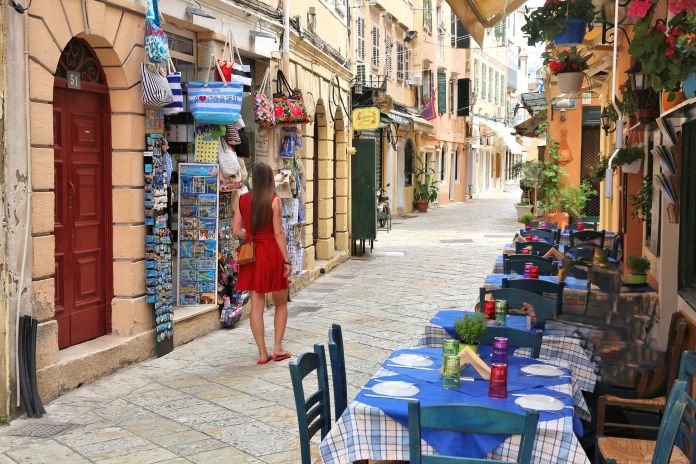
Kumquat is probably Corfu’s most famous edible souvenir.
You will see bottles of kumquat liqueur everywhere, together with candied kumquat, marmalade, spoon sweets and other products made from the small citrus fruit.
Other traditional products worth looking for include:
• Mandolato — traditional nougat
• Mandoles — caramelized almonds
• Sykomaida — spiced fig preparation
• Local olive oil
• Corfiot honey
• Local wine and spirits
• Tsitsibira — Corfu ginger beer, although this is better enjoyed on the island than carried home
For food products, look at the ingredient list and place of production rather than assuming that every item displaying a picture of Corfu was made on the island.
Lazaris Distillery & Artisan Sweets
Lazaris Distillery & Artisan Sweets is one of the island’s best-known producers of kumquat products, spirits and traditional sweets.
Importantly, you do not have to drive towards Achilleion to shop there.
Lazaris currently has a brand store in Corfu Town at 22 Evgeniou Voulgareos Street, as well as other locations including Tzavrou and its main facilities.
Products include kumquat liqueur, sweets, marmalades, chutneys and spirits.
Official store information: Lazaris Stores
Olive Oil
Corfu is covered by millions of olive trees, so good local olive oil is another natural product to take home.
Do not judge oil purely by an elaborate bottle. Check where it was produced, harvest information where available and whether it is actually Corfiot or simply packaged for the island’s tourist market.
Specialist delicatessens and producer shops can often explain the variety, harvest and production method much better than a generic souvenir shop.
Cosmetics & International Brands
If you need mainstream cosmetics rather than local products, Sephora currently has stores in Corfu Town, including one on Georgiou Theotoki Street.
You will also find familiar Greek and international fashion, beauty and footwear brands in and around the commercial streets outside the oldest pedestrian section of town.
For distinctive souvenirs, however, I would spend more time with independent Corfiot and Greek businesses than with shops you can find in almost any European city.
Shopping in Gouvia & Dassia
Gouvia and Dassia have plenty of seasonal shops, mini markets, boutiques and stores aimed at holidaymakers, but I would not describe them as Corfu’s principal “designer shopping districts”.
Gouvia Marina adds some more upscale yachting-related businesses and boutiques, while both resorts are convenient if you are staying nearby and do not want to travel into town.
For the greatest choice of independent fashion, jewellery, traditional products and gifts, Corfu Town remains the better destination.
What Are the Best Souvenirs from Corfu?
If you want something that actually reminds you of the island after you return home, my choices would be:
• Traditional Patounis olive soap
• A bottle of quality Corfiot olive oil
• Kumquat liqueur or sweets
• Sykomaida or mandolato
• Handmade leather sandals or a small leather bag
• Jewellery made by a Greek or Corfiot designer
• Local honey or wine
• A small piece of locally created art or ceramics
How to Avoid Mass-Produced Souvenirs
Not everything sold in Corfu is made in Corfu — and there is nothing unusual about that in a popular tourism destination.
However, if buying something because you believe it is locally made, ask a few simple questions.
Where was it produced? Who made it? Is the olive oil actually from Corfu? Is the jewellery handmade locally or imported? Is the food manufactured on the island?
A genuine local producer or craftsperson will normally be happy to explain.
You may pay slightly more, but you are buying something with a real connection to the island and supporting the people who continue those traditions.
When Is the Best Time to Shop in Corfu Town?
In summer, many shops in the tourist centre remain open well into the evening, when temperatures are cooler and the Old Town becomes particularly lively.
Opening hours vary considerably between independent shops, larger chains and different seasons, so do not rely on one general timetable for every business.
If you want to visit a specific independent shop, workshop or producer, check its current opening hours first.
The local food market is better visited earlier in the day.
Shopping During a Cruise Visit
Corfu Town is particularly easy for cruise passengers because the historic centre is relatively close to the port.
If you have only a few hours, concentrate on the Old Town rather than travelling to distant resorts specifically for shopping.
You can combine Saint Spyridon, Liston and Campiello with the market, Patounis and the main pedestrian shopping streets without needing a car.
Use our Corfu map to see how the main areas fit together.
Shopping & Corfu’s Cultural Heritage
Some of the most interesting products make more sense when you know the history behind them.
Soap production, olive cultivation, kumquat, leatherwork, jewellery and Corfu’s taste for European fashion all reflect different aspects of the island’s history and connections with the Mediterranean.
Our Corfu History & Culture guide explains more about the Venetian, French and British periods that helped shape the character you still see in Corfu Town today.
Final Thoughts
Shopping in Corfu is at its best when you move beyond the rows of identical souvenirs.
Buy soap in a factory that has been producing it since 1891. Try kumquat before choosing a bottle. Ask who made a pair of leather sandals. Walk through the local market and browse small design shops hidden in streets you did not originally plan to visit.
That way, whatever you take home has a little more connection with the island.
And if you leave Corfu with nothing more than a bar of olive soap, a bottle of olive oil and something handmade that you genuinely like, you have probably shopped better than someone carrying three bags of generic souvenirs.
Shop locations, opening hours and seasonal operations can change. Check directly with individual businesses before making a special journey.