Buying a House in Corfu: A Guide for 2026
Dreaming of owning a home in Corfu? Whether you are looking for a small village house among olive trees, an apartment in the historic town, a holiday home near the sea, or a luxury villa overlooking the northeast coast, buying property in Corfu can be both exciting and complicated.
This guide explains the Corfu property market in 2026, popular areas to consider, the buying process for foreigners, taxes and costs, Golden Visa rules, and some practical local points that are easy to overlook when viewing a beautiful house in the summer sunshine.
What You’ll Find in This Guide
• Property types and current market trends in Corfu
• Popular areas for permanent living, holidays and investment
• The buying process for international buyers
• Legal, technical and financial checks before purchasing
• Golden Visa rules relevant to Corfu in 2026
• Practical local advice before choosing your property
The Property Market in Corfu in 2026
Swayed by the Ionian Sea, green hills and thousands of olive trees, Corfu’s property market offers far more variety than a typical Mediterranean resort destination. You will find old stone houses in traditional villages, apartments in Corfu Town, renovated cottages, building plots, modern villas and luxury properties overlooking the sea.

Property prices have continued to rise, although asking prices can vary enormously depending on location, condition, access and sea views. In July 2026, one major property-market tracker reported an average asking price of approximately €2,966 per m² for residential property in Corfu, around 12.5% higher than July 2025. Kassiopi was among the more expensive areas, with reported average asking prices close to €4,700 per m².
Remember that these are asking prices, not necessarily final transaction prices. A renovated villa with an uninterrupted sea view can command dramatically more than an older village property requiring major renovation.
Types of Property & Popular Areas
• Town Apartments: Corfu Town is ideal for buyers who want year-round life, restaurants, shops, healthcare, schools, cultural events and easy access to the airport.
• Traditional Village Houses: Villages such as Lakones, Gastouri, Pelekas and many smaller inland communities contain older stone houses full of character. They can be beautiful projects, but renovation costs need careful investigation.
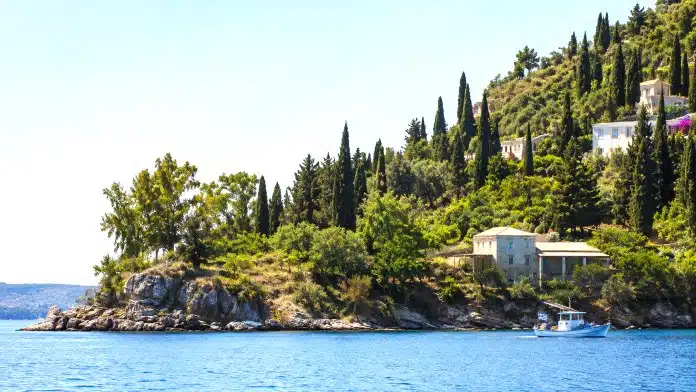
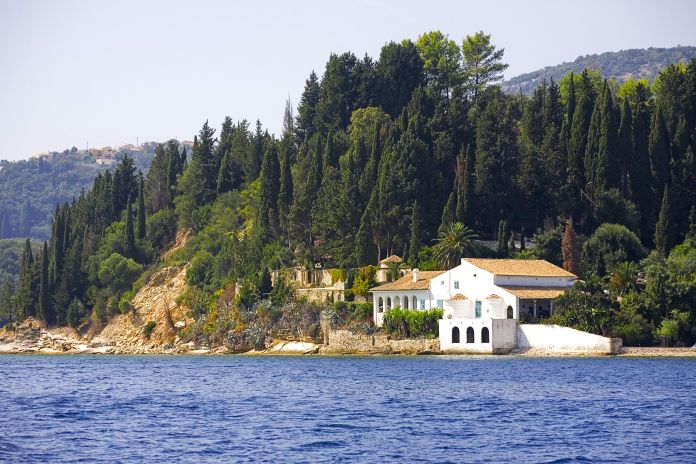
• Luxury Villas: Northeast Corfu remains one of the island’s most desirable areas. Nissaki, Kalami, Agni, Agios Stefanos Sinies and Kassiopi attract buyers looking for sea views, privacy and access to attractive bays.
• West-Coast Properties: Areas around Paleokastritsa, Agios Gordios, Pelekas and nearby villages appeal to buyers who prefer dramatic scenery, sandy beaches and sunsets.
• Southern Corfu: The south can sometimes offer more property for the budget than the most fashionable northeast coast, particularly away from the major tourist resorts.
What Area of Corfu Is Best for Buying?
The answer depends much more on how you intend to use the property than on which area looks best during a one-week holiday.
If you plan to live in Corfu throughout the year, access to supermarkets, pharmacies, doctors, restaurants and other services becomes extremely important. Corfu Town and nearby areas generally remain much more active during winter.
If the property is primarily for summer holidays or tourism, proximity to beaches, restaurants, boat trips and popular resorts may become more important.
For investment properties, do not look only at July and August demand. Consider how long the tourism season realistically lasts in that particular location and whether the property is attractive during May, June, September and October.
Buying Property in Corfu as a Foreigner
Foreign citizens can buy property in Greece. EU and EEA buyers generally follow the same standard purchase procedure as Greek buyers. Third-country nationals can also purchase property, although special restrictions can apply in designated border areas.
For most properties on the main island of Corfu, the standard buying process applies. However, buyers interested in the Diapontia Islands — including Othoni, Mathraki and Erikoussa — should obtain specialist legal advice because particular border-area rules can apply to non-EU buyers.
Regardless of nationality, never rely only on the estate agent or seller for legal and technical checks. Use independent professionals who represent your interests.
Buying Process Step by Step
1. Define your goal: Decide whether you want a permanent residence, holiday home, renovation project, rental property or long-term investment.
2. Set your real budget: Your budget should include much more than the advertised purchase price. Allow for taxes, professional fees, registration costs, renovation and possible currency-transfer charges.
3. Obtain a Greek AFM: A Greek tax identification number is required for purchasing property in Greece and for many related financial and administrative procedures.
4. Use an independent lawyer: A lawyer can investigate ownership, title history, mortgages, claims and other legal issues. For foreign buyers, independent legal representation is strongly recommended.
5. Use an independent engineer: This is particularly important in Corfu, where many properties are old or have been altered over the years. The engineer should investigate building legality, permits, plans, boundaries and any unauthorized extensions.
6. Check land carefully: If buying land or a property with substantial land, confirm boundaries, road access, zoning, forest-map status, archaeological restrictions and whether the land is legally buildable.
7. Pay the applicable property transfer tax: The general real-estate transfer tax rate is 3% of the taxable property value, with an additional municipal levy calculated on the main tax. Different tax treatment or exemptions can apply in specific circumstances.
8. Sign the final deed before a notary: The property transfer is completed through a notarial deed and subsequently registered with the competent Land Registry or Hellenic Cadastre.
Do Not Skip the Engineer’s Inspection
This is one of the most important pieces of advice we can give anyone buying an older property in Corfu.
A house can look perfect during a viewing and still have problems with extensions, boundaries, planning permissions, retaining walls, access roads, drainage or buildings that do not fully correspond with the official plans.
These problems can become extremely expensive after purchase.
Pay particular attention to properties advertised as having additional land, guest houses, swimming pools or opportunities for future construction. Never assume that because something physically exists, it is automatically legal.
How Much Extra Should You Budget?
The purchase price is only part of the total cost. Depending on the property and transaction, buyers may need to budget for transfer tax, notary fees, registration or Cadastre fees, legal advice, engineering inspections, estate-agent fees, banking expenses and currency conversion.
If the property needs renovation, obtain realistic quotations before completing the purchase. Restoring an old Corfiot house can be wonderful, but costs can rise quickly once work begins.
Ask your lawyer and other advisers for an itemized estimate based on the specific property rather than relying on a generic percentage found online.
Golden Visa in Corfu – Important 2026 Rules
The Greek Golden Visa programme remains relevant for qualifying non-EU investors, but the rules have changed significantly from the old €250,000 system.
For a standard real-estate investment in Corfu, the minimum qualifying investment is generally €800,000. This is because the higher threshold applies to Greek islands with populations above 3,100 residents.
Under the standard €800,000 property route, the investment must generally concern one property with a minimum surface area of 120 m².
There are separate categories where a minimum investment of €250,000 may still apply, including certain qualifying properties converted from commercial to residential use and certain listed buildings requiring restoration.
Golden Visa properties are also subject to specific rules regarding their use, including restrictions affecting short-term rental use. Anyone purchasing specifically for residency purposes should obtain current immigration and legal advice before paying a deposit.
Rental Income & Short-Term Rentals
A property that performs well as a holiday rental can generate useful income, but buyers should never assume that every house can automatically be placed on Airbnb or similar platforms without restrictions.
Check the latest registration, tax and operational requirements before calculating expected returns. Regulations affecting short-term accommodation have changed several times in recent years and may continue to evolve.
Location also matters enormously. A villa overlooking a popular beach may perform strongly during summer, while a property in a quieter inland village may appeal to a completely different type of guest.
Practical Things to Check Before Buying
• Winter conditions: Visit the area outside summer if you are considering permanent living.
• Humidity: Corfu is a very green island partly because it receives substantial rainfall. Older houses can suffer from damp and humidity, so inspect walls, roofs and ventilation carefully.
• Road access: A wonderful hilltop villa is less attractive if the final road is extremely narrow or difficult for an ordinary car.
• Parking: Never assume a property has legal or practical parking simply because a car was parked outside during your viewing.
• Water: Ask about water supply, pressure, storage tanks and summer reliability, particularly in more remote areas.
• Internet: If you plan to work remotely, check the actual available internet connection at the property rather than relying on general coverage maps.
• Sunlight: A cool shaded home may feel wonderful in August but very different in January. Check where the sun falls during winter as well as summer.
• Noise: Visit at different times of day. A peaceful street in the morning may become busy at night during the tourist season.
Renovating an Old House in Corfu
Restoring a traditional Corfiot property can be incredibly rewarding. Stone walls, old olive trees, wooden shutters and village courtyards have a character that new construction cannot easily reproduce.
However, old properties require patience. Before purchasing, investigate the roof, structural condition, electrical system, plumbing, drainage, damp, access and legality of every part of the building.
For properties in traditional settlements, protected areas or close to archaeological sites, additional restrictions may affect what can be changed externally.
Local Insider Advice
One of the easiest mistakes is falling in love with the view and forgetting about everyday life.
Stand outside the property and ask yourself some boring but important questions: Where is the nearest supermarket? Where is the pharmacy? Can a delivery van reach the house? Is the road comfortable at night? Where will visitors park? How far is the nearest doctor? What happens during winter?
If the property sits among olive trees, ask about access rights, boundaries and responsibility for maintaining the land. Some Corfiot olive trees are extremely old, and land ownership can sometimes be more complicated than it first appears on the ground.
And talk to the neighbors. A five-minute conversation with someone who has lived beside the property for 30 years can occasionally tell you things that no glossy property listing ever will.
2026 Property Market Outlook
Corfu continues to attract international buyers, particularly for properties with sea views, renovated traditional houses and villas in established tourism areas. Asking prices increased again into 2026, although demand and pricing differ substantially between regions of the island.
Instead of trying to predict whether prices will rise another 5% or 10%, focus on whether the individual property represents good value for its location, legal status, condition and realistic use.
A well-located, legally clean property with good access and year-round practicality will usually be a safer choice than a spectacular bargain with unclear boundaries, unauthorized construction or difficult access.
Final Thought
Buying a house in Corfu can be much more than purchasing a holiday property. For many people, it becomes a connection with the island itself — the village bakery in the morning, olive trees outside the window, the sea changing colour with the weather and neighbors who slowly become friends.
But romance should come after due diligence, not instead of it. Choose the location carefully, use independent professionals, inspect everything properly and never rush because someone tells you another buyer is waiting.
A beautiful Corfu house can become part of your life for decades. Taking a little more time before signing is almost always worth it.
Important: Property, tax, residency and planning rules can change. This guide provides general information and should not replace advice from a qualified Greek lawyer, notary, accountant or engineer regarding a specific purchase.