
Religious Sites, Monasteries and Chapels in Corfu
Religion and faith have played an important role in Corfu’s history and everyday life for centuries. Churches, monasteries and small chapels can be found throughout the island, from the narrow streets of Corfu Town to mountain villages, olive groves and remote coastal areas. In this guide, we explore some of Corfu’s most important religious landmarks, including the Church of Saint Spyridon, Vlacherna Monastery, Paleokastritsa Monastery and the monastery on Mount Pantokrator, together with the traditions that continue to connect faith with Corfiot culture.
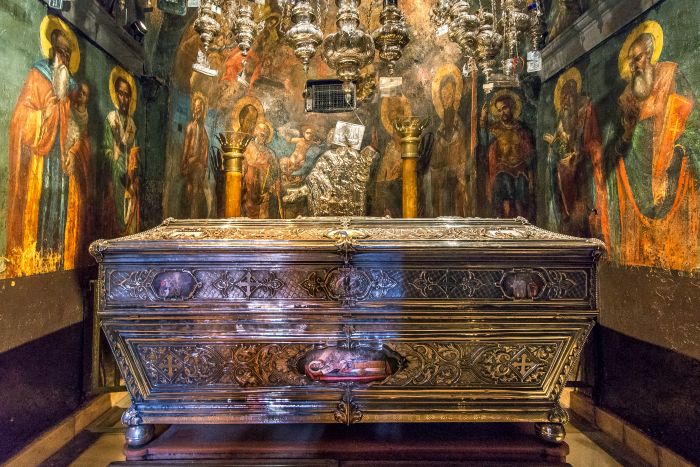
The Church of Saint Spyridon
If Corfu has a spiritual heart, it lies within the Church of Saint Spyridon in the Old Town. Its distinctive bell tower rises above the historic center and has become one of the most recognizable landmarks on the island.
The church houses the relics of Saint Spyridon, the patron saint of Corfu. For Corfiots, Saint Spyridon has a particularly important place in local religious life and tradition. His relics are carried through the streets during four major processions each year, attracting residents, pilgrims and visitors.
Inside, the richly decorated interior, painted ceiling, silver reliquary and scent of incense create an atmosphere very different from the busy streets outside. A visit can easily be combined with exploring the historic center and other attractions covered in our Corfu history and culture guide.
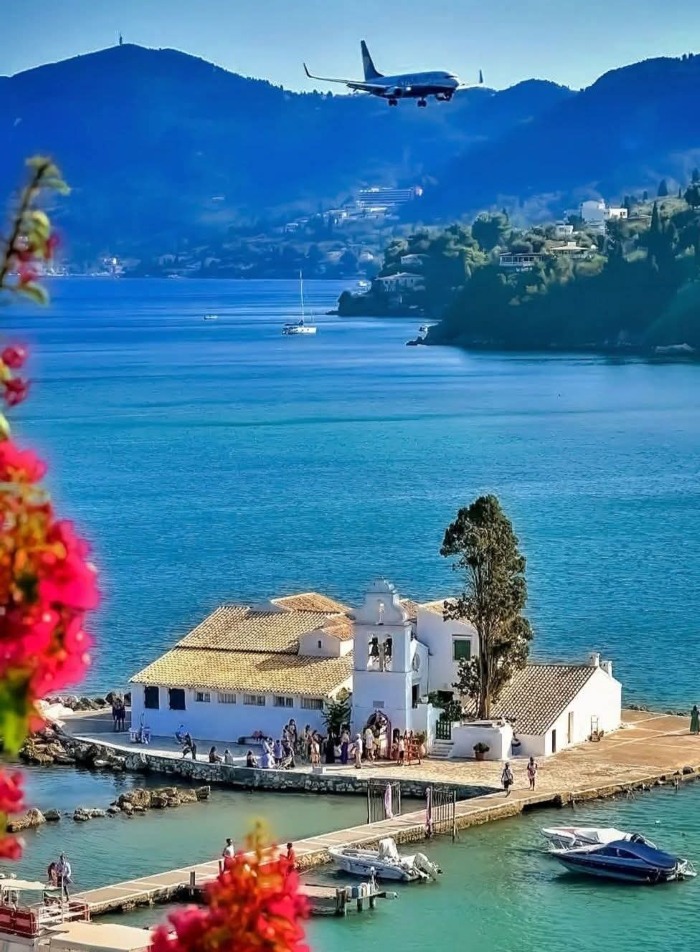
Vlacherna Monastery at Kanoni, Corfu, Greece
Vlacherna Monastery
Few places capture Corfu’s image as beautifully as Vlacherna Monastery. Standing on a tiny islet connected to the mainland by a narrow causeway, the whitewashed monastery is one of the island’s most photographed landmarks.
Visitors can walk across the causeway, admire the church and enjoy views across the water toward Pontikonisi. The area is also famous for its spectacular close-up views of aircraft landing at Corfu Airport.
Vlacherna can easily be combined with a visit to Kanoni, Mon Repos and nearby attractions. See our complete Kanoni and Mon Repos guide when planning your visit.
Paleokastritsa Monastery
The Monastery of the Virgin Mary of Paleokastritsa stands high above the famous bays of Paleokastritsa and is one of the most scenic religious sites on Corfu. Its origins date back centuries, although the complex has been rebuilt and altered over time.
Visitors can explore the courtyard, church and small museum while enjoying magnificent views over the Ionian Sea. The combination of religious heritage, traditional architecture, flowers and dramatic coastal scenery makes the monastery one of the most memorable stops in northwest Corfu.
The Monastery of Pantokrator
Mount Pantokrator rises to 906 metres and is the highest point on Corfu. Near its summit stands the Monastery of Pantokrator, surrounded by some of the island’s most impressive panoramic views.
The mountain has long been associated with religious pilgrimage, particularly around the Feast of the Transfiguration in August. Visitors can reach the summit by road, while experienced walkers may prefer to explore parts of the surrounding mountain landscape on foot.
If you enjoy combining religious sites with walking and nature, take a look at our Corfu forest and mountain trails guide.
Smaller Monasteries and Chapels
Beyond the island’s best-known religious landmarks, Corfu is filled with smaller churches, monasteries and countryside chapels. Some stand beside villages, while others are hidden among olive groves, cypress trees or on remote hillsides.
The Monastery of Myrtiotissa, on Corfu’s west coast, occupies a peaceful setting close to the sea, while churches and chapels around villages such as Kinopiastes illustrate how deeply religious buildings are woven into everyday Corfiot life.
Many small chapels were built by local families and communities and remain important gathering places during feast days and village celebrations.
Religious Traditions and Corfu Easter
Easter is one of the most important periods of the year in Corfu and one of the best times to experience the island’s combination of religion, music and local tradition.
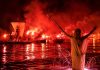
Holy Week includes church services, processions and performances by Corfu’s famous philharmonic bands. On Holy Saturday, the traditional throwing of clay pots from balconies in the Old Town has become one of the island’s most recognizable Easter customs.
Music plays an especially important role in these celebrations. You can learn more about this tradition in our guide to Corfu’s music and philharmonic bands.
The Blend of Faith, History and Culture
Corfu’s religious architecture reflects the island’s long and complex history. Byzantine traditions, Orthodox faith and centuries of Venetian influence can all be seen in churches, iconography, bell towers and decorative details.
For travelers interested in history and architecture, religious sites provide another way to understand how Corfu developed its distinctive cultural identity. They are not simply monuments from the past; many remain active places of worship and an important part of community life.
Tips for Visiting Religious Sites in Corfu
When visiting churches and monasteries, remember that these are active religious spaces rather than conventional tourist attractions. Dress respectfully, keep voices low and avoid interrupting services or worshippers.
Opening hours can vary considerably, particularly at smaller monasteries and village churches, so it is worth checking locally before making a special journey. During major religious festivals and feast days, some normally quiet sites can become extremely busy.
A Journey into Corfu’s Spiritual Heritage
Visiting Corfu’s religious sites offers much more than sightseeing. A candle burning inside a village chapel, the sound of church bells across Corfu Town or the view from a mountain monastery can reveal a side of the island that visitors may otherwise miss.
Whether you are interested in faith, architecture, history or simply beautiful places, Corfu’s monasteries and churches are an important part of the island’s story. Use our Corfu map to help plan your route and combine these religious landmarks with villages, viewpoints and other attractions around the island.