
Traditional Corfiot Food: Local Dishes, Sweets & Drinks
Food in Corfu tells the story of the island almost as clearly as its architecture. Centuries of Venetian influence mixed with Greek traditions, local ingredients and the produce of the Ionian countryside to create a cuisine noticeably different from that of many other parts of Greece.
Expect slow-cooked meat, intensely seasoned sauces, fresh fish, wild greens, local olive oil, citrus fruits and recipes handed down through generations. Names such as pastitsada, sofrito, bourdeto and bianco are part of everyday Corfiot culinary language rather than dishes created especially for tourists.
If you want to experience the island through its food, these are some of the dishes, sweets and local products worth looking for.
🍝 Pastitsada — Corfu’s Most Famous Pasta Dish

Pastitsada is arguably the most emblematic dish of Corfu. Traditionally prepared with rooster, although beef is now also very common, the meat is slowly cooked in a rich red sauce and served with thick pasta.
What makes Corfiot pastitsada distinctive is its aromatic mixture of spices, traditionally known as spetseriko. Recipes vary between families, but spices may include cinnamon, cloves, nutmeg, allspice, bay leaf and other aromatics.
This is the kind of dish traditionally associated with Sunday lunches, celebrations and family gatherings.
My tip: If a traditional taverna has both beef and rooster pastitsada, try the rooster version at least once. It is the version most closely associated with the old Corfiot recipe.
🥩 Sofrito — Veal with Garlic, Parsley & Vinegar
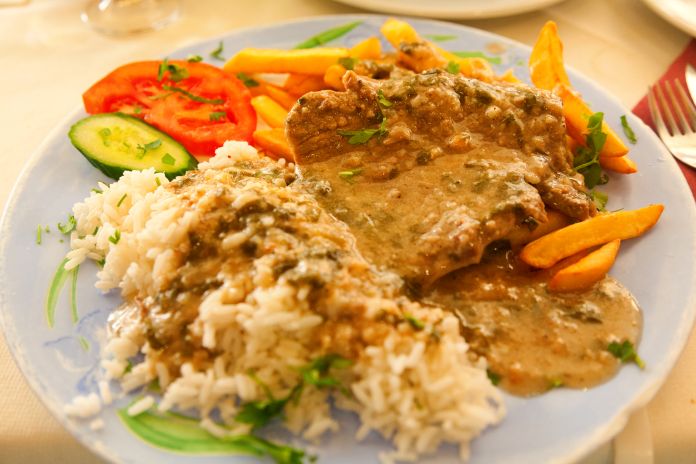
Sofrito is another of Corfu’s signature dishes. Thin slices of veal or beef are lightly floured and cooked until tender in a white sauce based on garlic, parsley, white wine, vinegar and white pepper.
Unlike many Greek meat dishes, there is no tomato dominating the sauce. The flavour comes from the garlic, herbs and acidity, creating something completely different from pastitsada.
It is commonly served with mashed potatoes, fries, rice or another simple side that absorbs the sauce.
🐟 Bourdeto — Corfu’s Fiery Fish Dish
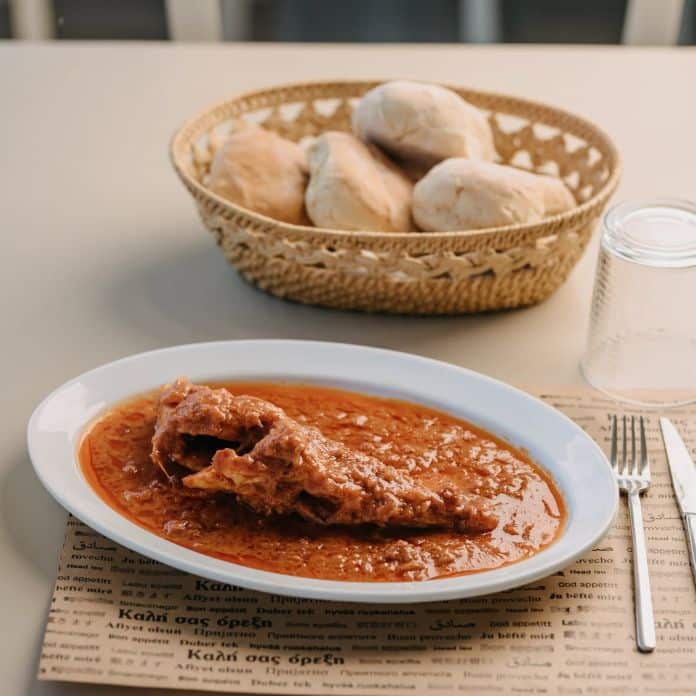
Bourdeto is one of the great dishes of Corfu’s fishing tradition. Fish such as scorpionfish are cooked in a powerful red sauce dominated by hot red pepper, with lemon added towards the end.
Different families and tavernas have their own versions, and the level of heat can vary enormously. Traditional versions put the emphasis on the fish, olive oil and red pepper rather than creating an ordinary tomato-based fish stew.
My tip: If you do not normally eat spicy food, ask how hot the restaurant makes its bourdeto before ordering. A genuinely traditional version can have quite a kick.
🐟 Bianco — The Other Great Corfiot Fish Dish
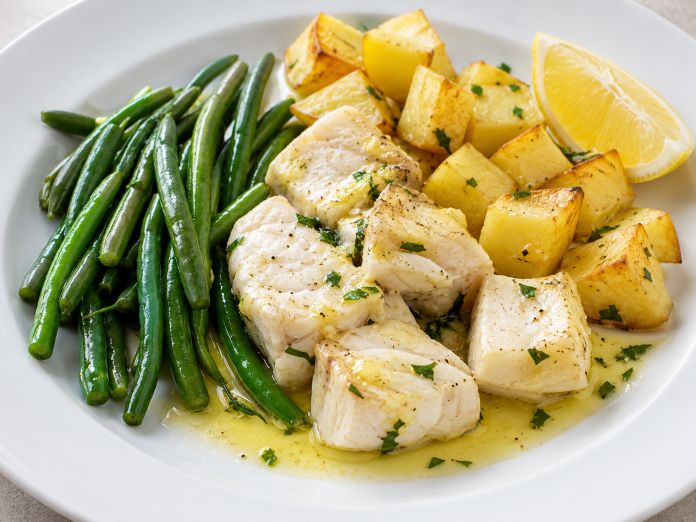
If bourdeto represents Corfu’s fiery side, bianco is its lighter counterpart.
Fish is slowly cooked with potatoes, garlic, pepper, olive oil and lemon, creating a pale, rich sauce that explains the dish’s Italian-derived name — bianco, meaning white.
It is one of the most characteristic dishes of Corfiot coastal cooking and particularly worth trying in a good fish taverna.
For an authentic seaside meal, Benitses is one of several areas where traditional fish tavernas remain an important part of local life.
🌿 Tsigareli — Spicy Corfiot Wild Greens
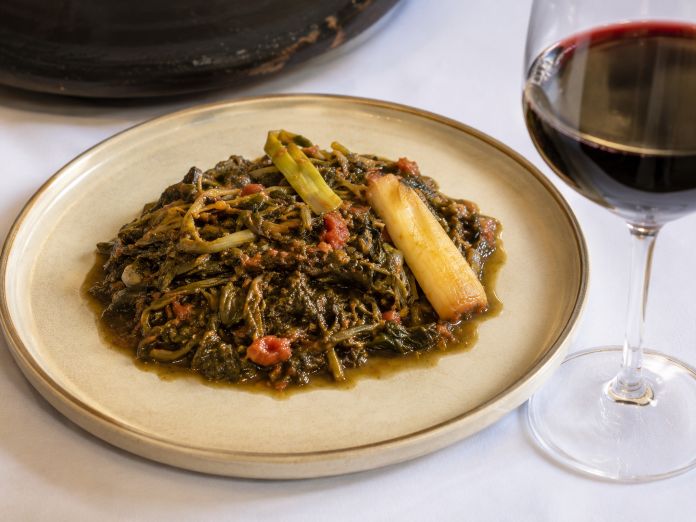
Tsigareli shows how much flavour Corfiot cooks can create from very simple ingredients.
A mixture of seasonal wild greens is cooked with ingredients such as onion, garlic, tomato and plenty of hot red pepper or paprika. Traditionally, the exact combination depended on whatever greens were available in the countryside.
It can be served as a side dish, meze or light meal with good bread and local olive oil.
🍖 Porpetes — Corfiot Meatballs in Red Sauce
Porpetes are traditional Corfiot meatballs cooked in a rich red sauce. Recipes vary considerably between households, and older versions may contain more elaborate combinations of herbs, spices and fillings.
They are a good example of the Venetian influence that appears repeatedly in Corfu’s home cooking.
🐟 Savoro — Fish Preserved the Old Corfiot Way
Savoro is one of Corfu’s most historically interesting fish dishes.
Fried fish is covered with an aromatic mixture traditionally containing vinegar, olive oil, garlic and rosemary, often with raisins and other ingredients. Before refrigeration, the acidity helped preserve the fish for longer periods.
It was particularly practical for fishermen and sailors, turning preservation into something genuinely delicious.
🐟 Stakofisi — Corfiot Stockfish
Stakofisi is an old Corfiot preparation using dried cod or stockfish. Traditional recipes combine the fish with ingredients such as onion, red pepper, tomato and leeks.
It is less easy to find on modern restaurant menus than pastitsada or sofrito, which makes it particularly interesting when you come across it in a traditional kitchen.
🥩 Nouboulo Fumicado — Corfu’s Cured Pork Delicacy
Nouboulo or Noumboulo Fumicado is one of Corfu’s most distinctive cured meats.
Traditionally made from pork loin, it is cured and seasoned, marinated with local wine and aromatics, then smoked using fragrant herbs and wood before being allowed to mature.
It is normally served in very thin slices, much like prosciutto, and works particularly well as part of a meze plate with cheese, olives and wine.
🥓 Salado — Traditional Corfiot Salami
Salado is another product from Corfu’s charcuterie tradition. It is a cured local salami traditionally made with pork and beef, seasoned and smoked with aromatic local vegetation.
Like nouboulo, it reflects the strong Venetian influence on Corfu’s food culture and is usually served thinly sliced with wine, ouzo or cheese.
🍊 Neratzosalata — Bitter Orange Salad
One of Corfu’s more unusual local recipes is neratzosalata, a salad that makes use of the island’s bitter oranges.
The citrus is combined with ingredients such as onion, olive oil and paprika to create a savoury salad with an unmistakably aromatic, slightly bitter character.
If you enjoy discovering foods that rarely appear on standard Greek restaurant menus, see our guide to unusual local food in Corfu.
🥬 Horta — Wild Greens with Olive Oil & Lemon
Although horta are eaten throughout Greece rather than being exclusively Corfiot, wild greens have always been an important part of the island diet.
They are usually boiled simply and served with local olive oil, lemon and salt. The varieties change with the seasons and what grows naturally in the countryside.
🐠 Fresh Local Fish & Seafood
Corfu’s relationship with the sea is naturally reflected on the table. Sea bream, sea bass, red mullet, scorpionfish, octopus, squid and other catches appear on menus throughout the island.
Fresh fish is often prepared very simply — grilled with olive oil and lemon — while traditional recipes such as bourdeto, bianco and savoro transform it into something unmistakably Corfiot.
My tip: When ordering whole fresh fish, check whether the menu price is per portion or per kilogram. Ask for the weight and approximate final price before the fish is cooked.
🍰 Traditional Corfiot Sweets & Local Drinks
Corfu’s sweets and drinks carry the same mixture of Greek, Venetian and British influences as its savoury food. Several make excellent gifts to take home, although the best excuse for trying them is simply that you are already here.
🍯 Mandolato — Corfiot Nougat
Mandolato is Corfu’s traditional nougat, generally made with honey, sugar, egg white and almonds.
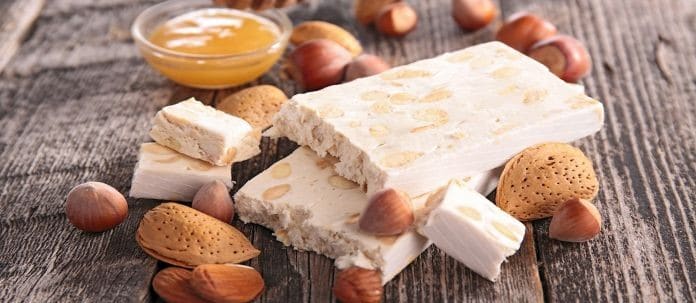
Its name and style reflect the island’s long Venetian connection. You will find both softer and harder versions in traditional sweet shops.
🍬 Mandoles — Caramelized Almonds
Mandoles are almonds coated in a crisp caramelized sugar layer and are among Corfu’s best-known traditional sweets.
They are widely sold in confectionery shops and make an easy local souvenir because they travel much better than most fresh desserts.
🍞 Fogatsa — Corfu’s Easter Bread
Fogatsa is a sweet, aromatic bread of Venetian origin traditionally associated with Easter in Corfu.
It resembles a rich sweet bread or Greek tsoureki and remains an important part of the island’s Easter food tradition.
🍊 Kumquat — Corfu’s Famous Citrus Fruit
Kumquat has become one of the products most closely associated with Corfu. The fruit is used to make liqueur, candied fruit, spoon sweets, marmalade and other confectionery.
Corfu kumquat also has protected geographical status, reinforcing its connection with the island.
My tip: Taste before buying. Kumquat liqueurs range from very sweet to considerably more aromatic and bitter, so not every bottle tastes the same.
🍇 Sykomaida — Spiced Corfiot Fig Cake
Sykomaida is one of Corfu’s most distinctive traditional products. Dried figs are mixed with ingredients such as grape must, ouzo, mastic, fennel and black pepper to create a dense, aromatic fig cake.
It sits somewhere between a sweet and a meze and can be eaten on its own or paired with cheese, cured meats or a drink.
🥤 Tsitsibira — Corfu Ginger Beer
Tsitsibira is Corfu’s local version of ginger beer, a legacy of the period of British rule during the 19th century.
It is a refreshing, lightly fermented soft drink made with ginger and lemon and is particularly popular during the warmer months.
Ginger beer itself is certainly not unique to Corfu, but tsitsibira has become a distinctive part of modern Corfiot food culture.
🍋 Bergamot & Other Spoon Sweets
Bergamot, bitter orange, kumquat and other fruits are traditionally transformed into spoon sweets, served in small portions with coffee or offered to guests.
The floral aroma of bergamot makes it particularly distinctive.
🌿 Corfu Olive Oil
Olive oil is at the heart of Corfiot cooking. Millions of olive trees cover the island, many growing in old groves that have shaped the landscape for centuries.
Local olive oil appears everywhere — on boiled greens, salads and fresh bread, in slow-cooked dishes and naturally in the preparation of fish and vegetables.
The huge olive groves are not simply agricultural scenery; they are part of Corfu’s history, economy and everyday food culture.
🍷 Local Wine
Corfu also has a long winemaking tradition. Local grape varieties include Kakotrygis and several lesser-known Ionian varieties, and small producers continue to make both white and red wines.
If a family taverna offers its own local wine, it can be worth trying alongside traditional Corfiot dishes.
Where to Try Traditional Corfiot Food
You will find pastitsada and sofrito on menus all over Corfu, but a restaurant having a traditional dish on its menu does not automatically mean it prepares it particularly well.
Look for family tavernas, village restaurants and places serving cooked dishes alongside the usual grills and seafood. Ask whether a dish is homemade and whether there are any daily specials that are not shown on the printed menu.
For restaurant ideas around the island, see our Hidden & Not-So-Hidden Culinary Gems in Corfu.
What Should You Try If You Have Only One Day?
If this is your first visit and you cannot try everything, start with:
• Pastitsada for the classic Corfiot meat dish.
• Sofrito if you prefer a lighter garlic-and-herb sauce.
• Bourdeto if you enjoy spicy fish.
• Bianco if you want a milder traditional fish dish.
• Nouboulo as a local meze.
• Sykomaida or mandolato for something sweet.
• Tsitsibira or kumquat liqueur for a distinctly Corfiot drink.
Final Thoughts
Corfu’s cuisine is not simply Greek food served on an island. Its Venetian past, fishing traditions, olive groves, spices, citrus fruit and generations of family cooking have created dishes with a character of their own.
Try the famous names such as pastitsada and sofrito, but do not stop there. Ask about bianco, savoro, tsigareli, sykomaida or whatever has been cooked that day.
Some of the most memorable Corfiot meals are not the fanciest ones. They are the plates that arrive from a small kitchen with a recipe somebody learned from a mother or grandmother — and that is where the real taste of Corfu still lives. 🍷🇬🇷