Museums & Galleries in Corfu: A Guide to the Island’s Cultural Treasures
Corfu is famous for its beaches, landscapes and historic Old Town, but the island also has an impressive collection of museums and galleries. Archaeology, Asian art, music, literature, local history and even banknotes all have their own dedicated spaces.
Many of the most important museums are located in Corfu Town, making it easy to combine several of them with a day exploring the UNESCO-listed historic centre.
Whether you are looking for something interesting to do on a rainy day or simply want to understand Corfu beyond its beaches, these are some of the museums and galleries worth adding to your itinerary.
Best Museums & Galleries in Corfu
• Archaeological Museum of Corfu — Corfu Town
• Museum of Asian Art — Palace of Saint Michael and Saint George, Corfu Town
• Byzantine Museum of Antivouniotissa — Corfu Old Town
• Municipal Gallery of Corfu — Palace of Saint Michael and Saint George
• Banknote Museum of the Ionian Bank — Corfu Old Town
• Dionysios Solomos Museum — Corfu Town
• Serbian Museum — Corfu Town
• Kapodistrias Museum — Koukouritsa, near Evropouli
• Folklore Museum of Sinarades — Sinarades village
• Museum of Palaiopolis – Mon Repos — Mon Repos Estate
• Casa Parlante — Corfu Old Town
• Nikolaos Halikiopoulos Mantzaros Music Museum — Philharmonic Society of Corfu
• V Museum Corfu — Corfu Town
• National Gallery – Corfu Annex — Kato Korakiana
Archaeological Museum of Corfu
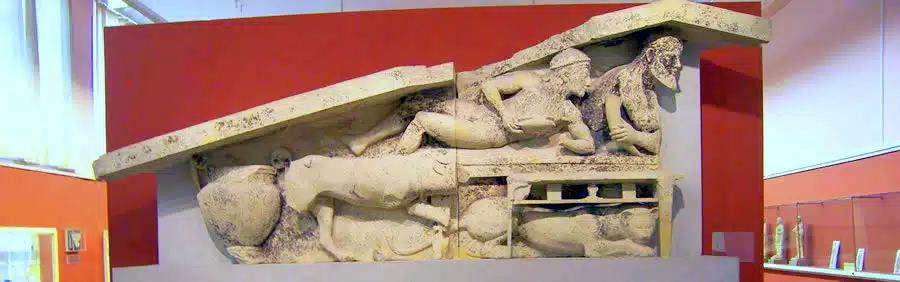
The Archaeological Museum of Corfu is one of the island’s most important museums and an excellent place to understand ancient Corcyra.
Its most famous exhibit is the enormous Gorgon pediment from the Temple of Artemis, dating from around 590–570 BC. The dramatic figure of Medusa dominates the composition and represents one of the most important surviving examples of early monumental Greek temple sculpture.
The museum also contains sculptures, funerary monuments, pottery and finds from archaeological sites around ancient Corcyra and the wider island.
My tip: If you plan to visit Mon Repos and ancient Palaiopolis as well, visiting the Archaeological Museum first gives useful context to what you will later see around the archaeological sites.
Museum of Asian Art
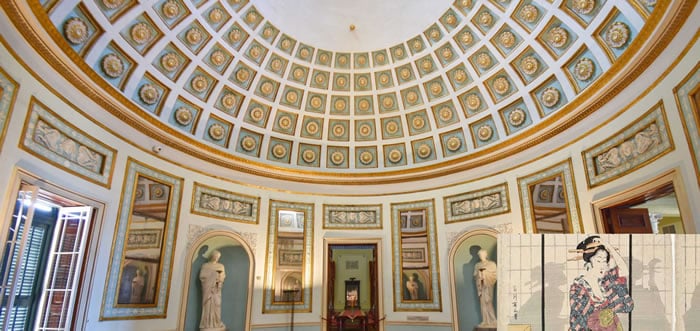
One of Corfu’s most surprising cultural attractions is the Museum of Asian Art, housed inside the magnificent Palace of Saint Michael and Saint George beside Spianada Square.
The museum was founded in 1928 as the Museum of Sino-Japanese Art following the donation of the collection of diplomat and collector Gregorios Manos.
Today its collections contain approximately 15,000 works of Asian art, including Chinese ceramics, Japanese prints and objects, sculpture, textiles, weapons and works from India, Tibet, Nepal and Southeast Asia.
The palace itself is part of the experience. Built during the British period, it is one of the most impressive neoclassical buildings in Corfu Town.
My tip: Do not rush this museum. Even visitors who arrive thinking they are not particularly interested in Asian art often find the Japanese and Chinese collections unexpectedly fascinating.
Byzantine Museum of Antivouniotissa
The Byzantine Museum of Antivouniotissa is housed inside the historic Church of Panagia Antivouniotissa in one of the most atmospheric parts of Corfu Old Town.
Its collection focuses on religious icons and ecclesiastical art, illustrating the evolution from Byzantine artistic traditions towards the distinctive Ionian and post-Byzantine styles that developed under Western influence.
The setting makes the museum particularly special. Rather than entering a conventional modern exhibition hall, visitors experience the works within a historic Corfiot church.
If religious heritage interests you, see our guide to churches, monasteries and religious sites in Corfu.
Municipal Gallery of Corfu
The Municipal Gallery of Corfu is also housed within the Palace of Saint Michael and Saint George.
Its collection focuses particularly on Corfiot and Ionian artists and includes works associated with important painters such as Georgios Samartzis, Charalambos Pachis, Angelos Giallinas and Nikolaos Ventouras.
The gallery provides an excellent introduction to the artistic development of Corfu and the wider Ionian Islands, where Greek subjects were frequently interpreted through techniques and ideas influenced by Western European art.
Temporary exhibitions and cultural events can also make repeat visits worthwhile.
Banknote Museum of the Ionian Bank
The Banknote Museum of the Ionian Bank is one of Corfu Town’s more unusual attractions and is located in a historic building at Agiou Spyridonos Square.
The collection traces the evolution of currency in the modern Greek state through banknotes, coin notes and related material. Exhibits demonstrate how changes in money reflect periods of political, economic and social change in Greece.
The museum also explores the history of the Ionian Bank, an institution with particularly strong connections to Corfu and the Ionian Islands.
My tip: Do not dismiss this museum just because you are not interested in banking. Old banknotes are miniature pieces of graphic design and history, and the exhibition tells parts of modern Greek history from a very different perspective.
Dionysios Solomos Museum
The Dionysios Solomos Museum is housed in the Corfu residence where Greece’s national poet spent the final years of his life.
Solomos is best known as the author of the poem Hymn to Liberty, verses from which became the Greek national anthem.
The museum preserves material related to his life and work and also helps visitors understand the wider intellectual and literary environment that developed in the Ionian Islands during the 19th century.
For more historical background, read our Corfu History & Culture guide.
Serbian Museum of Corfu
The Serbian Museum tells one of the most moving and internationally important chapters of Corfu’s modern history.
During the First World War, the remnants of the Serbian army and thousands of civilians reached Corfu after the devastating retreat through Albania. The island became a place of refuge and recovery before Serbian forces returned to the war.
The museum displays photographs, uniforms, documents, weapons, medals and other material connected with the Serbian presence on Corfu between 1916 and 1918.
For Serbian visitors, the museum can be particularly emotional. A visit can also be combined with Vido Island, where the Serbian Mausoleum commemorates soldiers who died during this period.
Kapodistrias Museum
About 7 km from Corfu Town, near Evropouli, the Kapodistrias Museum – Centre for Capodistrian Studies is dedicated to Ioannis Kapodistrias, the first Governor of the modern Greek state and one of Corfu’s most important historical figures.
The museum occupies Koukouritsa, the Kapodistrias family’s country estate, surrounded by peaceful gardens and countryside.
The permanent exhibition includes personal belongings, family memorabilia, documents and objects connected with Kapodistrias and his remarkable diplomatic and political career across Europe.
This is one of the best museums in Corfu for anyone interested in modern Greek history.
My tip: Allow time for the grounds as well as the museum itself. The quiet location feels very different from the busy museums of central Corfu Town.
Folklore Museum of Sinarades
The Nikos Paktites Folklore Museum of Sinarades offers a completely different perspective on Corfu.
Rather than palaces, politics or fine art, the museum focuses on everyday rural island life. A traditional house contains furniture, domestic equipment, clothing, agricultural tools and objects that reveal how Corfiot families lived before the arrival of modern tourism.
It is especially worthwhile for visitors interested in traditional villages and the social history of Corfu rather than only its major monuments.
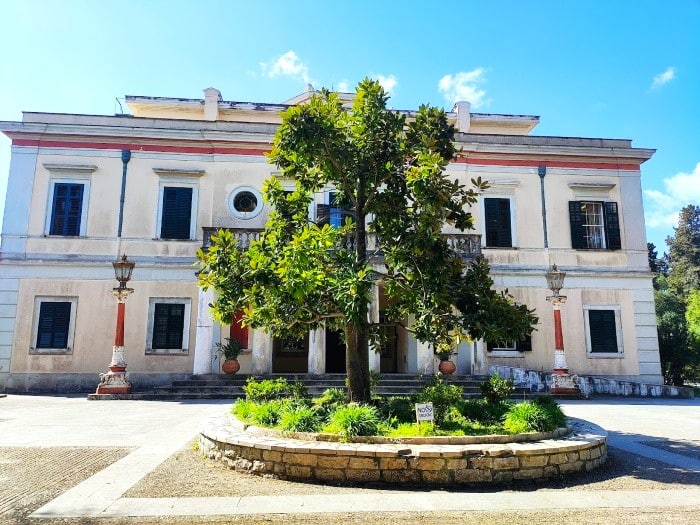
Museum of Palaiopolis – Mon Repos
The Museum of Palaiopolis – Mon Repos is housed in the neoclassical mansion inside the beautiful Mon Repos Estate.
The villa was built during the period of British administration in the early 19th century and later became associated with the Greek royal family. Prince Philip, Duke of Edinburgh, was born at Mon Repos in 1921.
Today, the museum connects the history of the mansion with the archaeology of Palaiopolis, the ancient city of Corcyra.
Archaeological finds from the surrounding area help visitors understand the ancient city that once occupied this part of Corfu.
The surrounding park is also one of the nicest green spaces close to Corfu Town and contains walking paths, archaeological remains and coastal views.
My tip: Do not visit only the mansion and leave. Allow time to walk through the Mon Repos estate and explore the surrounding Palaiopolis area.
Casa Parlante
Casa Parlante brings 19th-century aristocratic Corfu to life inside a restored mansion in the Old Town.
Instead of conventional display cases, the museum recreates rooms of a noble household using period furniture, decorative objects, figures, sounds and other sensory elements.
Visitors move through spaces such as the drawing room, dining room and private quarters while discovering how members of an affluent Corfiot family and their servants might have lived during the 19th century.
It is particularly suitable for visitors who prefer an immersive experience rather than reading long museum labels.
Nikolaos Halikiopoulos Mantzaros Music Museum
The museum of the historic Philharmonic Society of Corfu, commonly known as the Old Philharmonic, is dedicated to the extraordinary musical history of the island.
The Philharmonic Society was founded in 1840 and became one of the most influential musical institutions in the Ionian Islands.
The museum contains historical instruments, photographs, paintings, student records, archival material and original musical scores, including material connected with composer Nikolaos Halikiopoulos Mantzaros.
Mantzaros composed the music for the Greek national anthem and played a fundamental role in Corfu’s musical development.
For more background, see our guide to Corfu’s philharmonic bands and musical tradition.
V Museum Corfu
V Museum Corfu offers a very different museum experience, using modern technology to introduce visitors to episodes from Corfu’s history and traditions.
Interactive holograms, digital displays, audiovisual presentations and 3D elements bring historical figures and events to life.
The exhibits include material connected with Odysseus and the Phaeacians, Ioannis Kapodistrias, Nikolaos Mantzaros, Corfu’s fortifications and the famous Easter Botides tradition.
The museum is particularly suitable for families and visitors who prefer interactive storytelling to a traditional collection of objects in display cases.
National Gallery – Corfu Annex
Art lovers should also consider the Corfu Annex of the National Gallery – Alexandros Soutsos Museum in Kato Korakiana.
The Corfu Annex opened in 1993 and occupies the historic Castellino and Castelleto buildings surrounded by landscaped grounds.
At present, the annex hosts temporary exhibitions and cultural events. Its permanent collection is undergoing a period of reorganization and is expected to reopen after the second half of 2027.
The grounds also contain sculptures from the National Gallery’s collections, making the setting itself part of the visit.
My tip: Because the exhibition programme changes, check what is currently showing before making a special journey.
Which Corfu Museums Should You Choose?
If you have time for only a few museums, choose according to your interests.
• For ancient history: Archaeological Museum + Mon Repos / Palaiopolis
• For art: Museum of Asian Art + Municipal Gallery
• For Corfu history: Kapodistrias Museum + Solomos Museum
• For religious art: Byzantine Museum of Antivouniotissa
• For music: Nikolaos Halikiopoulos Mantzaros Music Museum
• For families: Casa Parlante + V Museum
• For unusual museums: Banknote Museum
• For rural Corfu: Folklore Museum of Sinarades
Good Museums for a Rainy Day in Corfu
If the weather suddenly changes, Corfu Town is the easiest place to spend several hours indoors.
The Museum of Asian Art, Archaeological Museum, Municipal Gallery, Banknote Museum, Casa Parlante and V Museum are all within or close to the central town area.
You can easily combine two or three museums with lunch, coffee and a walk around the Old Town whenever the rain eases.
Tickets, Opening Hours & Reduced Admission
Museum opening hours in Corfu can vary according to season, and some smaller museums may close on particular days of the week.
State museums and archaeological sites also offer free or reduced admission to certain eligible groups under Greek Ministry of Culture rules.
My tip: Always check the museum’s current official opening hours before making a special journey, particularly outside the main summer season. Hours and ticket prices can change.
Plan a Museum Day in Corfu Town
If you enjoy culture, it is easy to dedicate most of a day to museums without travelling far.
Start with the Archaeological Museum, continue towards Spianada for the Museum of Asian Art and Municipal Gallery, then walk through the Old Town towards Saint Spyridon, the Banknote Museum and Casa Parlante.
Finish with the narrow streets of Campiello or a coffee around Liston. This combines formal museums with the historic city itself, which is arguably Corfu’s greatest open-air museum.
Use our Corfu map to help plan museum visits around the island.
Final Thoughts
Corfu’s museums reveal just how many different stories exist behind the island’s holiday image.
Ancient Corcyra, Byzantine icons, Venetian influence, British administration, Serbian history, Greek independence, music, literature, Asian art and traditional village life can all be explored within a relatively small island.
Even if museums are not normally the main reason you travel, choose at least one or two while you are in Corfu. They give context to the fortresses, churches, villages and traditions you will see everywhere else — and make the island considerably more interesting once you return outside.
Opening hours, exhibitions and ticket prices can change. Check current information with each museum before travelling.