Winter in Corfu: Weather, Flights, Digital Nomads & Local Life

Most visitors associate Corfu with sunny beaches, warm seas and busy summer resorts. Winter reveals a completely different island.
Corfu becomes quieter, greener and much closer to the everyday life experienced by the people who live here year-round. The beach clubs disappear, traffic becomes lighter and villages that are packed in August can feel almost empty.
Winter in Corfu is not a traditional beach holiday, and anyone arriving expecting guaranteed sunshine and a full summer resort atmosphere will probably be disappointed.
But if you enjoy local culture, traditional food, nature, walking, photography and a slower Mediterranean lifestyle, winter can be one of the most interesting times to experience the island.
It can also work surprisingly well for digital nomads and long-stay visitors who want to spend several weeks or months on a Greek island when accommodation demand is much lower than during summer.
Winter in Corfu at a Glance
• Winter season: Roughly November to March
• Coldest period: Usually January and February
• Weather: Mild compared with northern Europe but wet, humid and changeable
• Snow: Rare at sea level; occasionally possible on Mount Pantokrator and higher ground
• Best winter base: Corfu Town or nearby residential areas
• Tourist resorts: Many seasonal businesses close
• Restaurants: Plenty remain open in Corfu Town and year-round residential areas
• Transport: Buses continue operating but some routes have reduced winter frequency
• Accommodation: Generally easier and cheaper to find than in peak summer
• Best for: Long stays, digital nomads, culture, food, walking and local life
• Not ideal for: Beach clubs, nightlife, watersports and guaranteed sunshine
What Is Corfu Like During Winter?
Once the main tourism season finishes, the character of the island changes dramatically.
Many seasonal hotels, beach bars, excursion businesses and restaurants close, especially in resorts whose economy depends almost entirely on summer tourism.
Corfu Town, however, remains very much alive.
It is the island’s administrative, commercial, educational and cultural centre, so cafés, bakeries, restaurants, supermarkets, pharmacies, shops and everyday services continue operating throughout the year.
The same is true to varying degrees in larger residential communities around the island.
Winter is when you begin to see the difference between a place created mainly for visitors and a community where people actually live all year.
Winter Weather in Corfu
Corfu has a Mediterranean climate, but it is considerably wetter than many visitors expect from a Greek island.
That rainfall is one of the reasons the island is so green.
Winter weather can change quickly. You may have a mild sunny morning followed by heavy rain, strong wind and dramatically darker skies later the same day.
December, January and February are the core winter months, with January and February generally the coldest period.
Average temperatures remain relatively mild compared with much of northern Europe, but temperature alone does not tell the whole story.
Humidity, wind and older buildings without modern insulation can make a Corfu winter feel considerably colder than the thermometer suggests.
There are also beautiful clear winter days when sitting outside for coffee in the sun is perfectly comfortable.
Check our Corfu Weather guide for current conditions and more detailed seasonal information.
Does It Rain a Lot in Corfu in Winter?
Yes. Rain should be considered a normal part of a winter stay rather than an occasional inconvenience.
That does not mean it rains continuously for months.
Winter often consists of changing periods of sunshine, cloud, showers, heavier rain and occasional storms.
A week can contain several completely different kinds of weather.
This is why I would avoid planning a winter holiday around a rigid outdoor itinerary. When you wake up to a beautiful clear day, use it.
Can It Snow in Corfu?
Snow in Corfu is unusual, particularly in Corfu Town and along the coast, but it can happen during sufficiently cold weather.
Snow is more likely on Mount Pantokrator, the island’s highest mountain, and occasionally around higher villages.
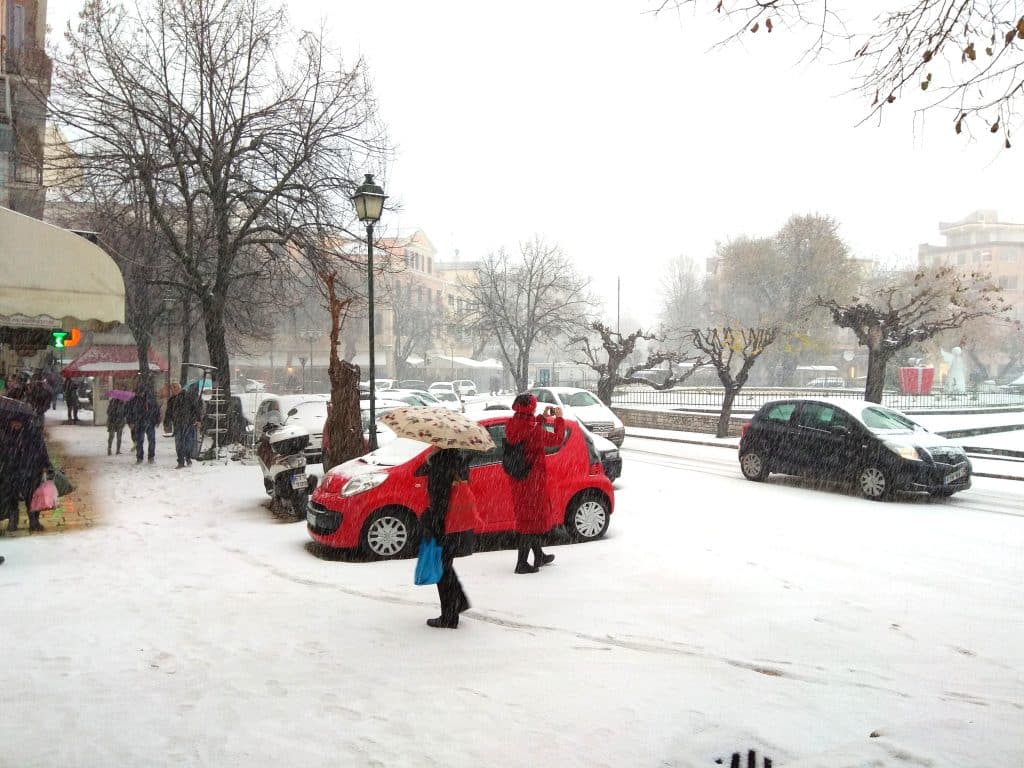
When Pantokrator does turn white, it creates one of the strangest Corfu views: snow on the mountains while the sea remains visible below.
Do not expect this every winter, however. Snowfall on Corfu is an occasional event, not something around which you should plan a trip.
Want Proper Snow? Consider Metsovo
If you are staying in Corfu during winter and really want to see snow, Metsovo on mainland Greece is a much more reliable mountain destination.
You first cross from Corfu to Igoumenitsa by ferry and then continue inland by road towards the Pindus Mountains.
Metsovo regularly experiences genuine winter conditions and is surrounded by impressive mountain scenery.
Technically, it can be done as a very long day from Corfu, but I would much rather stay for at least one night.
Winter ferry schedules, weather and road conditions can all affect the journey, and driving mountain roads after dark in snow or ice is not something I would include in a relaxing holiday plan.
Check the weather forecast, ferry schedule and official road-condition information before setting off.
Corfu Homes Can Feel Cold in Winter
This surprises many people moving to the island for the first time.
A day outside may not feel particularly cold, yet an apartment can feel chilly and damp.
Some properties were built or renovated primarily with summer living in mind and may have limited insulation or heating.
Before renting a winter property, ask specifically about:
• Heating
• Insulation
• Double glazing
• Damp or mould problems
• Hot-water system
• Dehumidifier
• Electricity costs
A beautiful sea-view apartment designed for July is not automatically a comfortable home in January.
Things to Do in Corfu During Winter
Winter is an excellent time to explore parts of Corfu that can feel crowded or uncomfortably hot in summer.
Corfu Old Town remains the obvious starting point.
You can walk around Liston, Spianada and Campiello, visit churches and museums, explore the fortresses or walk along Garitsa Bay without dealing with peak-season crowds.
Winter is also a good time for photography because changing weather can create dramatic skies and exceptionally clear views after rain.
Explore Corfu Town Without the Crowds
In summer, the historic centre can fill with cruise passengers and day visitors.
In winter, it belongs much more to the people who live there.
You can sit in a café around Liston, visit Saint Spyridon Church, wander through Campiello or explore the old streets without constantly moving around large tourist groups.
Restaurants frequented by residents become easier to discover as well.
Museums and archaeological sites may use reduced winter opening hours, so check before travelling specifically for one attraction.
See our Corfu Museums & Galleries guide for ideas.
Christmas in Corfu
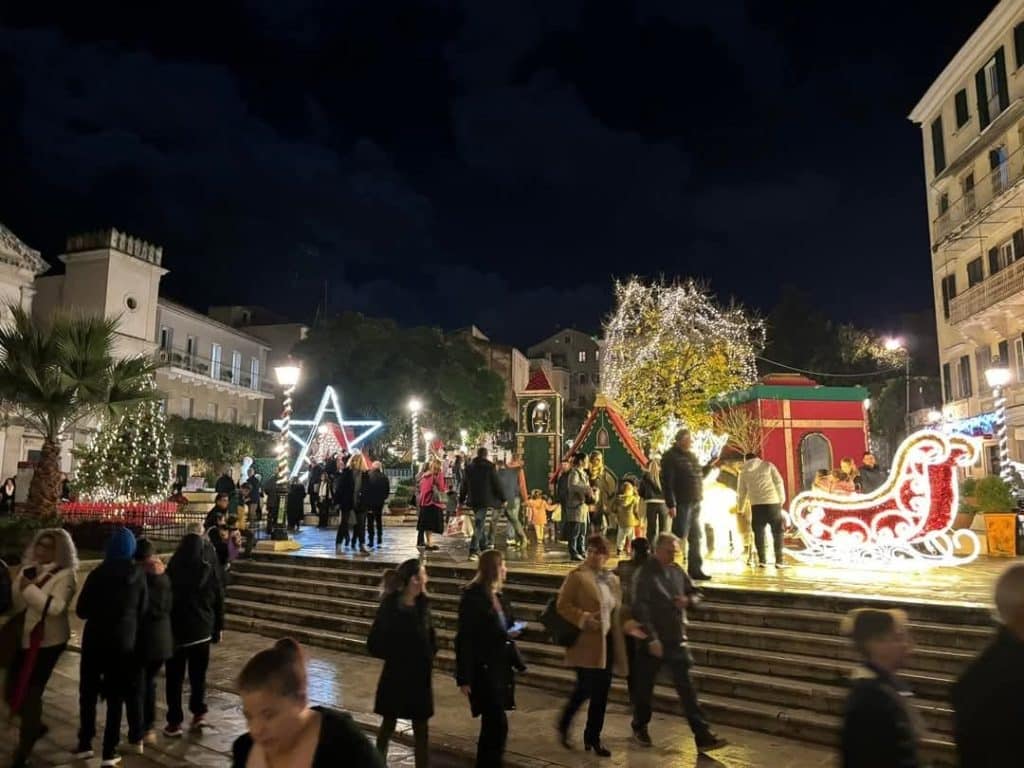
Christmas is one of the nicest periods for a winter visit because Corfu Town remains active and decorated while the island is firmly outside the tourism season.
Lights, local events, concerts and seasonal activities take place around the town, with Corfu’s strong musical tradition adding to the atmosphere.
The exact programme changes every year, so check the Corfu Events Calendar before your visit.
Explore Villages & Viewpoints
Clear winter days can be excellent for driving around the island.
Paleokastritsa, Kassiopi, Lakones, Pelekas, Afionas, Old Perithia and mountain villages can feel completely different outside the summer season.
You may find beaches almost empty and viewpoints where you are the only person there.
However, do not assume that restaurants, cafés or public toilets will be open in every tourism-oriented village.
Take water and a snack when travelling into quieter parts of the island.
Walking & Hiking in Winter
For walkers, winter can be much more comfortable than July and August.
Corfu’s olive groves, countryside lanes and forest paths become intensely green after the autumn rains.
The main difficulty is mud.
Paths can become slippery after prolonged rain, streams may carry considerably more water and daylight hours are shorter.
Wear waterproof shoes with good grip and avoid difficult mountain or cliff routes immediately after severe weather.
Are Restaurants & Shops Open?
Yes — if you choose your location carefully.
Corfu Town continues functioning throughout the year, with supermarkets, bakeries, pharmacies, cafés, restaurants, shops, banks and other services remaining available.
Residential areas such as Garitsa, Kanoni, Alepou and Kontokali are also much more practical for winter living than purely seasonal resorts.
Gouvia and Benitses retain some year-round activity as well, although the choice is naturally smaller than in summer.
In highly seasonal resorts, the difference can be dramatic.
A street with twenty restaurants in August may have very few open businesses in January.
Winter Accommodation in Corfu
Winter accommodation is generally easier to find than summer accommodation because some properties move from short-term holiday rentals to longer winter lets.
However, I would not use €400 per month as a general “average rent for Corfu”.
You may find small apartments around that price or occasionally below it, particularly outside the centre or through longer private arrangements, but renovated properties in convenient parts of Corfu Town can cost significantly more.
The final price depends on location, size, condition, length of stay, heating, furniture and what is included in the rent.
There is another important complication: some apparently long-term rentals are actually winter-only lets.
A landlord may rent the property from October until April or May and then return it to the much more profitable short-term tourism market for summer.
Always confirm the exact final date of the rental before paying a deposit.
Questions to Ask Before Renting
Before agreeing to a winter apartment, ask:
• What exactly is included in the monthly rent?
• Is electricity charged separately?
• Is water included?
• Is internet included?
• What type of heating does the property have?
• Is there a dehumidifier?
• Has the property had damp or mould problems?
• Does the bedroom have double glazing?
• Is hot water available continuously?
• Is there a washing machine?
• Is the kitchen genuinely equipped for a long stay?
• Is there parking?
• Until what exact date can you remain in the property?
• Are there additional communal building charges?
If you are considering relocating rather than simply spending a few months here, our Moving to Corfu guide covers long-term renting and practical issues in more detail.
Corfu for Digital Nomads
Winter can work particularly well for remote workers.
The island is quieter, accommodation availability improves and Corfu Town has cafés, restaurants, gyms, supermarkets, medical services and everyday facilities throughout the year.
But do not choose accommodation based only on price.
For a digital nomad, a cheap remote apartment with poor heating, unstable internet and no nearby services can become much more expensive and inconvenient than paying slightly more for the right location.
Best Areas for Digital Nomads in Winter
Corfu Town: The easiest option without a car. Best choice of cafés, restaurants, services and transport.
Garitsa: Close enough to walk into town while offering a more residential atmosphere and seafront promenade.
Kanoni: Residential, reasonably close to town and airport, although check the exact bus connection and walking distance.
Alepou: Practical for supermarkets and everyday life, especially if you have transport.
Kontokali: Useful for people with a car and close to Corfu Town, hospital and Gouvia area.
Gouvia: Some year-round life and relatively easy access to town, although many tourism businesses close.
Benitses: One of the better southern coastal choices if you want village and sea while retaining some year-round activity.
Internet for Remote Work
Never accept “the Wi-Fi is good” as enough information when your income depends on it.
Ask the landlord to send you a recent speed-test screenshot taken inside the actual apartment.
If possible, ask for both download and upload speeds.
Upload speed becomes particularly important if your work includes video calls, cloud backups or sending large files.
A Greek mobile SIM with a generous data allowance can provide useful backup internet.
Reception varies from property to property, so if mobile data is essential, test it at the actual accommodation.
When Should Digital Nomads Book?
I would not claim that everyone needs to book exactly three or four months in advance.
The better advice is to start looking early if you want a modern, well-heated apartment in Corfu Town at a reasonable winter price.
The best winter properties are not necessarily the cheapest ones. Good heating, low humidity, a comfortable desk, dependable internet and a practical location are worth paying attention to.
If you are flexible about location and have a car, you can often search much closer to your arrival date.
Direct Winter Flights Between Corfu & London
One particularly useful development for winter 2026–2027 is the extension of easyJet flights between London Gatwick (LGW) and Corfu (CFU) beyond the traditional summer tourism season.
As of August 2026, easyJet’s own Low Fare Finder displays bookable fares on the London Gatwick–Corfu route during November and December 2026 and January 2027.
The current calendar does not show February service, with flights appearing again in March 2027.
This is significant because direct winter international connections from Corfu are normally much more limited than during summer.
It makes late autumn, Christmas and the beginning of January considerably easier for British residents, property owners, long-stay visitors and remote workers.
Schedules can still be changed by the airline, so always check your exact travel dates before arranging accommodation around a flight.
Check London Gatwick to Corfu flights with easyJet
Check Corfu to London Gatwick flights with easyJet
What About February?
At the time this guide was reviewed in August 2026, easyJet’s current fare calendar showed flights in January and again in March but no February fares on the Gatwick–Corfu route.
Do not assume this will remain unchanged. Airline schedules are dynamic and additional flights, cancellations or timetable adjustments can occur.
For winter travel, always check the airline directly rather than relying on a timetable copied months earlier.
Getting Around Corfu in Winter
Public buses continue operating in winter because they serve local residents, not only tourists.
However, frequencies and routes can be different from summer schedules, particularly for beaches and heavily seasonal destinations.
Corfu Town remains the easiest place to live without a car.
If you want to spend your winter exploring remote villages, mountain areas and different coasts, having a car gives you considerably more flexibility.
See our Getting Around Corfu guide and always check current bus timetables rather than relying on summer schedules.
Driving in Winter
Heavy rain creates different driving conditions from summer.
Water can collect on roads, leaves can make surfaces slippery and rural roads may occasionally be affected by fallen branches, loose stones or small landslides after severe weather.
Drive more slowly on mountain roads and narrow village routes after storms.
In the unlikely event of significant snow on higher ground, do not drive towards Pantokrator simply because you want a photograph unless road conditions are confirmed as safe.
Can You Swim in Corfu During Winter?
Yes, some people swim throughout the year.
But winter swimming is very different from ordinary summer beach swimming.
The sea is much colder and winter weather can create strong wind, waves and rapidly changing conditions.
If you are not accustomed to cold-water swimming, there is no reason to treat entering the sea in January as something you need to prove.
Choose a sheltered location, avoid swimming alone and never enter rough water simply because the air temperature happens to feel mild.
My Local Tip: Buy a Good Dehumidifier
If I had to give somebody moving to Corfu for the winter one piece of practical advice, this would be near the top of the list.
Buy or rent a good-quality dehumidifier.
Corfu’s humidity can make a home feel colder, slow down clothes drying and encourage condensation or mould in badly ventilated properties.
A proper dehumidifier can make a surprisingly large difference to everyday comfort.
For a larger apartment, do not assume that the smallest inexpensive machine will be enough.
Look for a model suitable for the size of the property, ideally with automatic humidity control and a laundry mode.
Ventilation still matters. On dry days, open windows for a short period and allow fresh air to circulate.
Affordable Homemade Food Near Corfu Town
Another advantage of living near Corfu Town is access to inexpensive cooked food.
You do not need to eat in a conventional restaurant every day and you certainly do not need to cook every lunch yourself.
There are local businesses selling mageirefta — ready-cooked Greek dishes such as lentils, beans, meatballs, chicken, vegetables, pastitsio and other daily specials.
Two places I personally suggest checking are Mr. 2,90 – Katsarola and Tsoukali.
These are the kind of places where you can buy a proper cooked meal without paying tourist-restaurant prices.
Menus and prices change, so I would not promise that every dish still costs between €2.90 and €7.
Check the daily dishes and current prices when you visit.
Supermarkets also sell prepared meals, but personally I usually prefer freshly cooked food from this type of local kitchen.
Check the Heating Before Paying a Deposit
Never rent a property for January based entirely on photographs taken in August.
Ask exactly how the home is heated.
An air-conditioning unit with heating mode can work well in a relatively small modern apartment, but heating a larger poorly insulated property with several air conditioners can become expensive.
Ask the owner what previous winter tenants normally used and, if possible, what typical winter electricity consumption was.
Also ask whether the heating system works in every room rather than only in the living area.
Do Not Leave Clothes Against Cold Exterior Walls
This sounds like a tiny detail until you discover mould on a suitcase or leather jacket.
Do not push wardrobes, suitcases or boxes tightly against damp exterior walls.
Leave some room for air circulation and periodically check clothes, shoes and stored luggage.
This is particularly important in ground-floor properties, older buildings and houses surrounded by dense vegetation.
What to Wear in Corfu in Winter
You do not normally need Arctic clothing.
What you need is clothing that deals well with rain, wind and humidity.
I would bring:
• Waterproof shoes with good grip
• Waterproof or water-resistant jacket
• Several layers rather than one extremely heavy coat
• Warm clothing for evenings
• Umbrella
• Comfortable walking shoes
The stone paving in Corfu Town and traditional villages can become slippery when wet, so footwear with decent grip is more useful than fashionable shoes with smooth soles.
Advantages of Visiting Corfu in Winter
• Considerably fewer visitors
• Less traffic
• Easier access to popular viewpoints
• More opportunity to experience everyday local life
• Green landscapes and full olive groves
• Comfortable temperatures for walking on mild days
• Better availability of medium-term accommodation
• Potentially lower accommodation costs than peak summer
• Easier photography without crowds
• A very different atmosphere in Corfu Town
Disadvantages of Visiting Corfu in Winter
• Frequent rain and high humidity
• January and February can feel cold
• Many seasonal hotels and restaurants close
• Beach resorts can feel extremely quiet
• Fewer boat excursions and tourism activities
• Reduced public-transport frequency on some routes
• Much more limited international flight choice
• Some holiday apartments are poorly equipped for winter
• Sea conditions are less suitable for ordinary recreational swimming
• Outdoor plans often need flexibility
Who Will Enjoy Winter in Corfu?
Digital nomads: Particularly those who want several quiet months rather than a party destination.
Writers and creatives: Winter Corfu can be wonderfully quiet and atmospheric.
Photographers: Dramatic weather and empty locations provide completely different images from summer.
Walkers: Mild days are far more comfortable than hiking under the August sun.
Long-stay visitors: Especially people interested in local life rather than tourism infrastructure.
Property owners: Winter is when you discover how a Corfu house actually behaves in rain and humidity.
Who Probably Won’t Enjoy It?
Winter is probably not your ideal season if your holiday depends on:
• Hot beach weather every day
• Beach clubs
• Nightclubs in summer resorts
• Daily boat excursions
• Watersports
• Large resort hotels
• Guaranteed outdoor weather
• A huge choice of direct international flights
Keep Your Plans Flexible
Corfu can give you a beautiful sunny winter morning followed by heavy rain in the afternoon.
Do not fight that rhythm.
When the weather is good, use the opportunity for a village drive, hike, viewpoint or long walk.
When it rains, spend time in Corfu Town, visit a museum, have a long lunch or simply work from a café.
Winter becomes much more enjoyable once you stop expecting it to behave like summer.
Is Corfu Worth Visiting in Winter?
Yes — for the right traveller.
Winter is not the best season for somebody whose image of Corfu consists entirely of beaches, boats and nightlife.
But it can be an excellent season for people interested in food, history, countryside, local life and slower travel.
It is also the period when Corfu stops performing primarily as a holiday destination and returns to being the home of the people who live here.
That is precisely what makes it interesting.
My Local Advice for a Longer Winter Stay
If you plan to stay for a month or longer, I would prioritise these things in this order:
• A genuinely dry property
• Good heating
• A proper dehumidifier
• Reliable internet
• A practical year-round location
• Easy supermarket access
• Transport if you are outside Corfu Town
• A clear rental agreement showing exactly how long you can remain
A spectacular sea view comes after all of those.
Final Thoughts
Winter in Corfu is quieter, wetter and less predictable than the island most visitors meet in July.
But it is also greener, less crowded and much more connected with ordinary Corfiot life.
You can walk through Corfu Town without summer crowds, drive to an empty beach, spend an afternoon in a village café, explore the countryside and discover restaurants where most of the customers are local residents.
For remote workers, writers, photographers and anyone considering spending longer periods on the island, winter can reveal a side of Corfu that a one-week August holiday never does.
Just choose your accommodation carefully.
A warm, dry apartment with good internet can make a Corfu winter wonderful. A damp summer apartment with no proper heating can make exactly the same winter feel very long indeed.
This guide was reviewed in August 2026. Flight schedules, rental prices, restaurant opening hours, bus timetables and seasonal services can change. Always confirm time-sensitive information directly before making travel or accommodation arrangements.