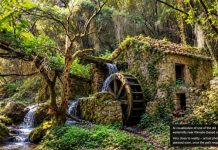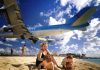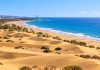
Corfu is famous for its turquoise waters, beautiful beaches, endless olive groves and picturesque villages. But beyond the places most visitors know, the island hides some remarkable natural landscapes protected because of their ecological importance.
Corfu features vital protected ecosystems included in the European Union’s Natura 2000 conservation network. These include lagoons, wetlands, sand dunes, coastal habitats and important marine ecosystems that reveal a quieter and much wilder side of the island.
An older article published in The Corfiot magazine in November 2007 described some of the most important protected natural areas around Corfu as the island’s “Famous Five”. Today, these landscapes remain some of the most interesting places to visit for nature lovers, walkers, birdwatchers and photographers.
If you enjoy discovering Corfu away from the busiest resorts, you can also explore our
Corfu Nature & Parks guide
and our guide to
hiking and walking trails in Corfu.
🌿 What Is Natura 2000?
Natura 2000 is the European Union’s network of protected natural areas. Its purpose is to protect valuable habitats and species while still allowing people to experience and enjoy these places responsibly.
Protection does not necessarily mean that an area is closed to visitors. In many Natura 2000 locations you can still walk, swim, photograph wildlife and explore the landscape, provided that sensitive habitats, dunes, vegetation and wildlife are respected. Corfu is particularly rich in wetlands, lagoons, forests, sand dunes, coastal habitats and marine ecosystems, all of which form an important part of the island’s natural heritage.
🌿 Corfu’s Famous Five Natura 2000 Areas
Lake Korission – My Favourite
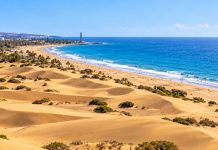
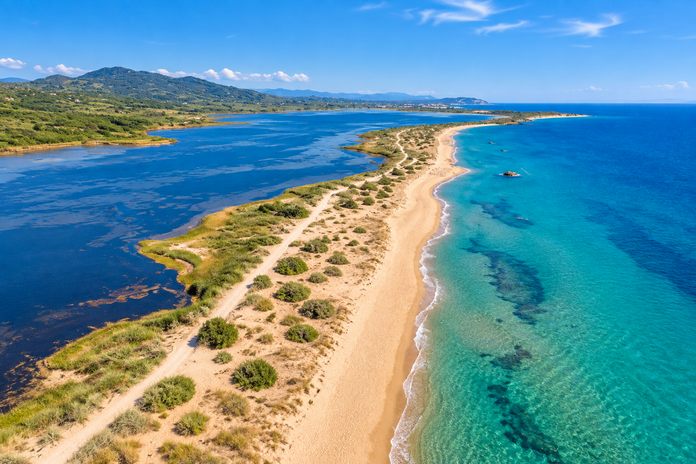
Located in southwest Corfu, Lake Korission – or Korissia Lagoon – is one of the island’s most impressive protected natural environments. The lagoon is separated from the Ionian Sea by a long strip of sand, while the surrounding landscape includes enormous sand dunes and a rare forest of prickly juniper, often locally described as a cedar forest.
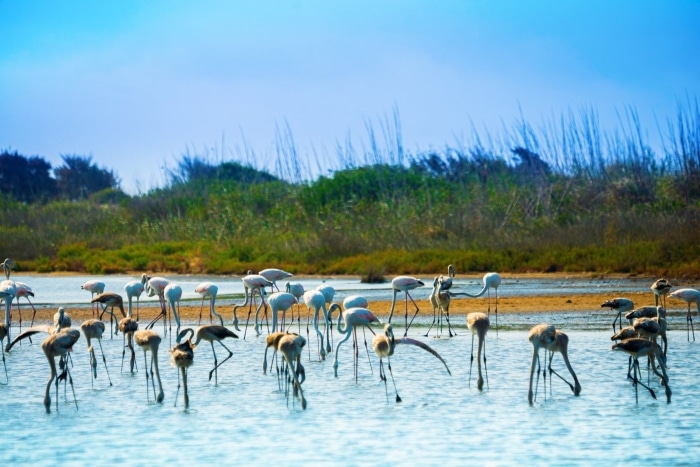
🐦 The wider wetland is an important stopover and feeding area for migratory and resident birds. More than 120 bird species have been recorded around the area, and during suitable migration periods visitors may see herons, egrets, cormorants and, if they are lucky, Greater Flamingos.
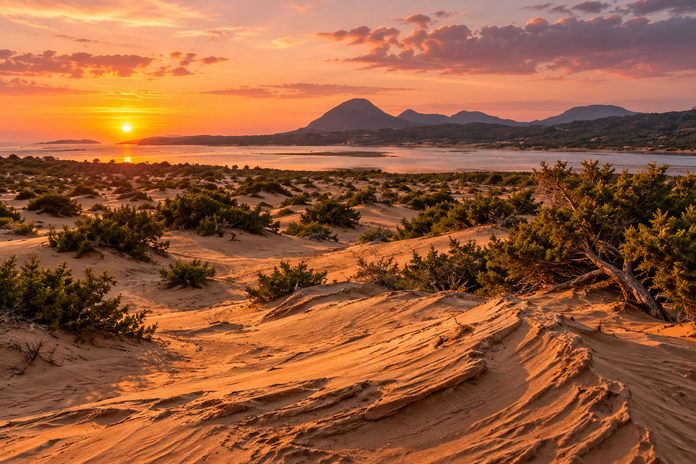
I have visited most of the protected areas described in this article, but Lake Korission is definitely my favourite. I especially love coming here towards sunset, when the light over the lagoon and the huge sand dunes completely changes the landscape. One of my most memorable visits was when I saw flamingos together with several other bird species around the lagoon.
🌅 Even without the birds, simply walking between the dunes, lagoon and sea makes this one of the most unusual landscapes in Corfu. For me, the final hours of daylight are the best time to experience it, especially when the setting sun gives the sand dunes a warm golden colour.
🎬 Lake Korission’s James Bond Connection
There is another reason why this landscape may look strangely familiar to film fans. The spectacular sand dunes and beaches around Lake Korission were used as filming locations for the 1981 James Bond movie For Your Eyes Only, starring Roger Moore.
Several scenes were filmed around the huge dunes of Issos Beach
and the wider Lake Korission coastline. One of the memorable sequences filmed in this part of Corfu shows Bond and Countess Lisl walking across the beach before they are attacked.
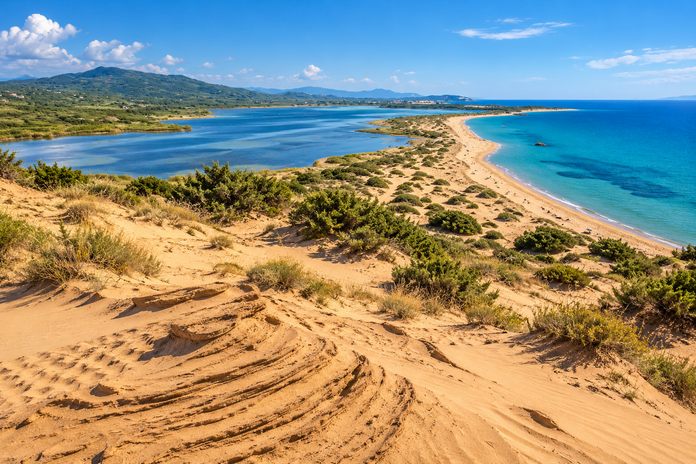
More than four decades later, much of the landscape still feels remarkably wild and undeveloped. Standing among the enormous dunes, it is easy to understand why the filmmakers chose this part of Corfu. If you are a James Bond fan, Lake Korission and Issos therefore offer something beyond wildlife and scenery — you are also walking through one of Corfu’s memorable cinema locations.
📷 Combine Lake Korission With Chlomos
I also like combining Lake Korission with a visit to
Halikounas Beach
and the traditional hilltop village of
Chlomos.
It makes an excellent half-day or full-day route through South Corfu, particularly if you enjoy photography.
You can also approach the lagoon from the Issos side. Read our
Agios Georgios South, Issos & Lake Korission guide
for more ideas about exploring this part of the island.
📍
Get directions from Corfu Town to Lake Korission
Antinioti Lagoon – The Durrells’ “Lake of Lilies”
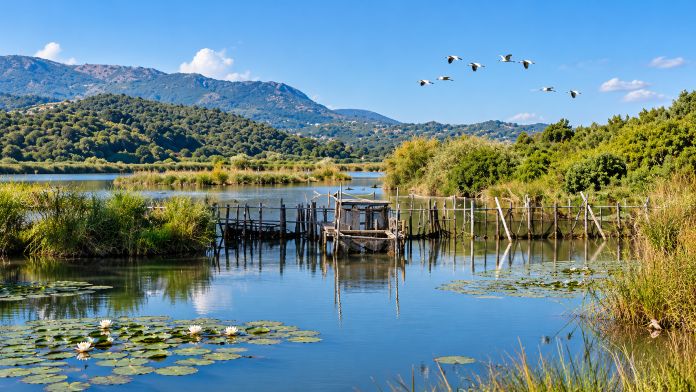
At the northern tip of Corfu near Agios Spyridon lies Antinioti Lagoon, one of the island’s most important brackish wetlands. The lagoon and surrounding wetland contain reedbeds, dunes, wild vegetation and an impressive variety of plants.
🐦 More than 90 bird species have been recorded in the wider area, together with water lilies and numerous species of wild orchids. Antinioti is also particularly important because it provides habitat for the endangered Eurasian otter (Lutra lutra).
Seeing an otter is extremely difficult and should certainly never be expected, but its presence demonstrates just how valuable this ecosystem is.
The lagoon also has an important connection with the Durrell family. Gerald Durrell described it as the “Lake of Lilies” in My Family and Other Animals, and the area became closely associated with the family’s exploration of Corfu’s wildlife and natural world. If you are interested in the family’s connection with the island, see our guide to
10 beautiful places in Corfu the Durrells made famous.
This is one of those parts of northern Corfu where it is better to slow down rather than simply stop for a photograph. Walk quietly around the wetland, look across the reedbeds and keep your binoculars ready if you are interested in birds.
📍
Get directions from Corfu Town to Antinioti Lagoon
Lefkimmi Salt Pans & South Corfu Protected Zones
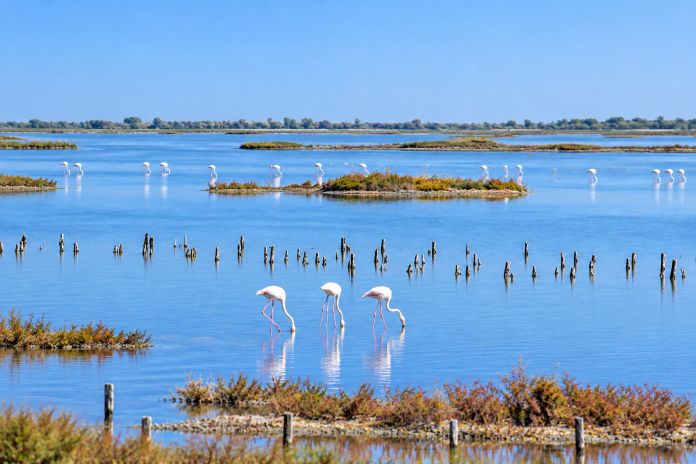
The Lefkimmi Salt Pans, also known as Alykes Lefkimmis, form another important protected wetland environment in southern Corfu. Salt production continued here until 1988, while today the former saltworks, lagoons, salt meadows, waterways and surrounding vegetation provide valuable habitat for birds and coastal plant life.
This is actually the only one of the main protected areas described in this article that I have not yet personally explored properly. It is on my list, and when I visit I will update this guide with my own photographs and observations.
It is important to understand that South Corfu contains several separate protected ecosystems rather than one single Natura 2000 zone. These include the Lefkimmi Salt Pans, the
Halikounas
and Lake Korission environment, the Messonghi River area and protected marine habitats farther along the southeast coast.
Together they make southern Corfu particularly interesting for anyone interested in wetlands, birdlife, coastal ecosystems and low-impact nature tourism.
📍
Get directions from Corfu Town to Lefkimmi
Kanoni to Messonghi Coastal Marine Zone
🌊 One of Corfu’s least obvious protected natural environments is not primarily on land at all. A protected marine and coastal zone extends from
Kanoni
southwards towards
Messonghi.
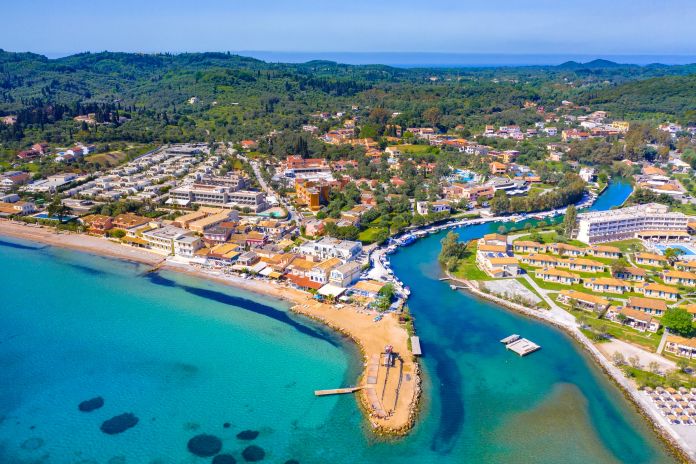
An important feature of this marine environment is the presence of Posidonia oceanica seagrass meadows. Posidonia is one of the Mediterranean’s most important marine habitats, providing shelter, feeding areas and breeding habitat for many marine species while contributing to healthy coastal ecosystems.
This is a good reminder that Natura 2000 protection in Corfu is not limited to forests and wetlands. Some of the island’s most valuable habitats are hidden beneath the surface of the Ionian Sea.
Visitors arriving in
Messonghi
may simply see a seaside resort, river and beach without realising that the surrounding marine environment forms part of a much larger protected ecological system.
📍
Get directions from Corfu Town to Messonghi
Paxos & Antipaxos Marine Environment
South of Corfu, the islands of Paxos and Antipaxos and their surrounding marine environment are also part of the wider Natura 2000 network. Their dramatic limestone coastline, sea caves, clear waters, coastal vegetation and marine habitats create one of the most spectacular natural environments close to Corfu.
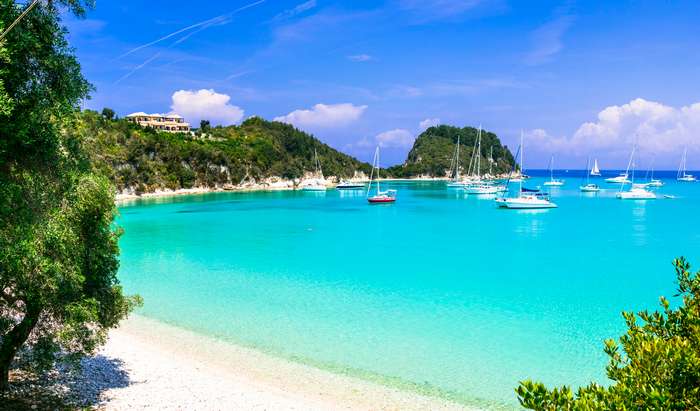
I have visited Paxos and Antipaxos as well, and although the landscape is completely different from Lake Korission or Antinioti, it shows another side of the extraordinary environmental diversity found around the Ionian Islands.
If you are planning to visit, see our complete
Paxos & Antipaxos travel guide
or our guide to
islands near Corfu.
🥾 Top Hiking Trails Around Corfu’s Wetlands
Antinioti West, Gialiskari & Agios Spyridon Beach Trail
One of the easiest ways to experience Antinioti is the Antinioti West, Gialiskari and Agios Spyridon Beach Trail.
The approximately 3.3-mile (5.3 km) out-and-back route is generally considered easy and follows relatively flat terrain around the northern coast and wetland.
The walk combines Antinioti Lagoon with wild coastal scenery and beaches around Gialiskari and Agios Spyridon. The wider area is also connected with the northern end of the famous Corfu Trail, the approximately 180 km long-distance walking route crossing the island from south to north.
🥾 For more walks around the island, see our Corfu hiking trails guide.
Lake Korission & Sand Dunes Loop
For a longer walk, the Korission landscape offers routes of roughly 7–8 miles, depending on the exact trail and starting point. The route can take you between the lagoon, Halikounas, Issos, the juniper forest and the huge sand dune system.
Although the terrain is mostly flat, do not underestimate it. Walking for several kilometres on deep, soft sand can become physically demanding, particularly in hot weather. There is also very little shade along large sections of the coast, so carry considerably more drinking water than you think you will need.
💧 Tip: In warm weather, bring plenty of water, wear a hat and avoid the exposed dunes around midday.
See our full Halikounas Beach guide before exploring the western side of the lagoon.
🐦 Best Birdwatching Spots
Lake Korission – Southern Lagoon, Issos & Halikounas
For me, Lake Korission is the best place in Corfu to combine birdwatching with a spectacular landscape. More than 120 bird species have been recorded around the wider wetland, and depending on season and conditions you may see herons, egrets, cormorants, ducks and other waterbirds.
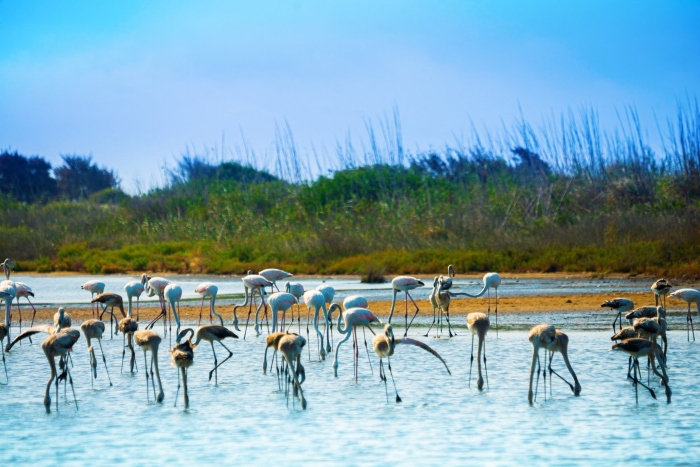
🦩 Flamingos are the stars of the show when they appear, but they are seasonal wild birds and sightings can never be guaranteed. I was lucky enough to see flamingos here myself, together with several other bird species, and it completely changed the experience of visiting the lagoon.
Antinioti Lagoon Reedbeds
🐦 Antinioti is another excellent location for patient birdwatching. Herons, cormorants, kingfishers and many smaller species can be found around the lagoon and surrounding vegetation.
The wetland is also one of Corfu’s important habitats for the Eurasian otter. Actually seeing one, however, requires exceptional luck, patience and perfect timing.
🕗 Best Time of Day to Visit
For most of these natural areas, I recommend visiting early in the morning, roughly between 08:00 and 11:00, or later in the day after around 18:00 during the warmer months.
Early morning is excellent for walking, cooler temperatures, softer light and bird activity. Late afternoon is better for photography, cooler walks and, on the west and southwest coast, spectacular evening light.
🌅 Lake Korission is particularly beautiful during the hours before sunset. The dunes take on a warmer colour, the light reflects across the lagoon and the entire landscape feels completely different from the middle of the day.
Outside summer, sunset can of course be considerably earlier than 18:00, so simply aim for the final two or three hours of daylight rather than following a fixed time.
📅 Best Seasons to Visit
| Season | Best For | What to Expect |
|---|---|---|
| Spring – March to May | Wildflowers, orchids & walking | Milder temperatures, greener landscapes and excellent conditions for walking. Wetlands and surrounding countryside are colourful, with orchids, wildflowers and increased bird activity. |
| Summer – June to August | Beach & nature | Excellent if you want to combine the lagoons with Issos, Halikounas or Agios Spyridon, but exposed walking routes can become extremely hot. Visit early or late and carry plenty of water. |
| Autumn – September to October | Bird migration & flamingos | One of my favourite periods. Crowds become smaller, the sea often remains warm enough for swimming and migration can bring flamingos and many other birds through Corfu’s wetlands. |
| Winter – November to February | Quiet landscapes & wetlands | Far fewer visitors and much greener scenery, although rain, muddy tracks and changing weather can make some routes less suitable for long walks. |
☀️ Avoid serious hiking across Korission’s exposed dunes during the middle of the day in July and August. There is almost no shade, the sand becomes extremely hot and walking through deep sand takes considerably more effort than the distance suggests.
❤️ My Favourite Natura 2000 Experience in Corfu
I have now visited all the main places described in this guide except the Lefkimmi Salt Pans, which I still want to explore properly. If I had to choose only one, however, it would definitely be Lake Korission.
There is something special about arriving there later in the day, walking beside the enormous dunes and seeing the lagoon on one side and the Ionian Sea on the other. When I was lucky enough to see flamingos and other birds there, the area felt even more remote than it actually is.
My favourite combination is to explore Lake Korission and the dunes, stay for the late-afternoon light or sunset and combine the trip with Chlomos village. The contrast between the wild lagoon landscape and the narrow streets and elevated views of an old Corfiot village makes it one of my favourite South Corfu routes.
♻️ Respect the Protected Landscape
These environments are beautiful precisely because parts of them remain relatively wild. Stay on established paths wherever possible, avoid driving onto dunes or sensitive vegetation, take rubbish away with you and never approach or disturb nesting or feeding birds simply to get a better photograph.
🌊 Around marine protected zones, boat users should also avoid anchoring on visible Posidonia oceanica seagrass whenever possible. Photography and birdwatching are much more rewarding when wildlife is observed quietly from a distance.
Why These Places Are Worth Discovering
Corfu has no shortage of famous attractions, but some of the island’s most memorable experiences are found away from the crowds. Its lagoons, wetlands, enormous sand dunes, reedbeds, coastal forests and underwater seagrass meadows reveal just how diverse the island’s natural environment really is.
If you love nature, photography, walking or simply discovering another side of the island, I strongly recommend adding at least one of these protected landscapes to your itinerary.
For more ideas, explore our
Nature & Parks in Corfu,
Corfu Hiking Trails
and
Best Beaches in Corfu.
Corfu is not only an island of beautiful beaches. It is an island of extraordinary nature — and there is still so much of it waiting to be discovered.
Historical inspiration: “The ‘Famous Five’ of Corfu’s Natura 2000 sites” by John Waller, published in The Corfiot, November 2007. Natura 2000 details have been updated using more recent information on Corfu’s protected areas.
Discover the Best of Corfu!
Get local events, travel tips and important Corfu updates delivered straight to your inbox.