
However, visiting Corfu for a holiday and living on the island throughout the year are two completely different experiences. Island life can be peaceful and rewarding, but it also comes with practical challenges that tourists rarely notice during a one-week summer holiday.
As a local, I believe Corfu can offer an excellent quality of life to the right person. The secret is to arrive with realistic expectations and understand that the island has two very different personalities: the busy, expensive and energetic summer season and the quieter, wetter winter months.
This is an honest look at the main pros and cons of living in Corfu, including employment, salaries, accommodation, schools, healthcare, transport and the real cost of everyday island life.
Quick Navigation
- Living in Corfu at a Glance
- The Pros of Living in Corfu
- The Cons of Living in Corfu
- Finding a Home in Corfu
- Humidity and Damp Homes
- Living in Corfu With Pets
- Working and Seasonal Employment
- Salaries, Bonuses and Unemployment Benefits
- The Real Cost of Living
- Food and Eating Out
- Parking and Transport
- Healthcare in Corfu
- Schools for Foreign Families
- The Expat Community
- Best Areas to Live
- What Winter Is Really Like
- Who Is Corfu Suitable For?
- What to Check Before Moving
- Upcoming Free Job and Property Listings
- Final Thoughts
Living in Corfu at a Glance
| The Advantages | The Challenges |
|---|---|
| Beautiful beaches and green countryside | Damp and rainy winters |
| A slower and more relaxed lifestyle | Serious shortage of long-term rentals |
| Friendly local communities | Many landlords do not accept pets |
| Fresh food and good local products | Seasonal employment and modest salaries |
| A large international community | Traffic and difficult parking in summer |
| Airport and ferry connections | Limited public healthcare resources |
| Outdoor lifestyle for much of the year | A car is useful in most areas |
| Good seasonal employment opportunities | Some tourist areas have become expensive |
The Pros of Living in Corfu
1. You Are Surrounded by Natural Beauty
One of the greatest advantages of living in Corfu is that beautiful scenery becomes part of everyday life rather than something reserved for holidays.
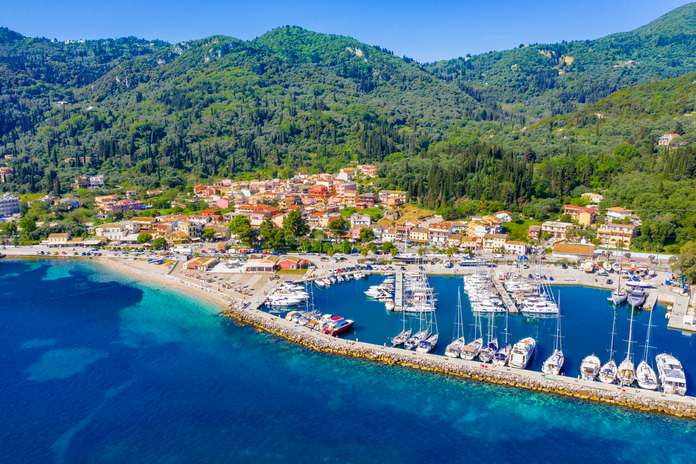
You can work in the morning, have lunch in a traditional village and swim at a beach in the afternoon. Olive groves, mountains, coastal paths, hidden bays and green countryside are never very far away.
Even after living here for many years, it is difficult to become completely used to the views. A drive along the northeast coast, a walk around Garitsa Bay or a sunset on the west coast can still feel special.
2. Life Can Be Slower and Less Stressful
Corfu generally offers a slower pace of life than Athens, London or other large European cities.
People often take more time to enjoy coffee, meet friends, eat with their families and have conversations without constantly checking the time. For someone who wants to escape the pressure of a large city, this can be one of the island’s biggest attractions.
However, the relaxed rhythm also requires adjustment. Repairs, paperwork and public services may not always move as quickly as you would like.
3. There Is a Strong Sense of Community
Many villages in Corfu still have a genuine sense of community. Neighbours know one another, local celebrations bring people together and families often remain closely connected.
It may take time for a newcomer to become part of a small traditional community. Once people know and trust you, however, they can be extremely welcoming and helpful.
Learning even a few basic Greek words makes a noticeable difference. You do not need to speak perfect Greek, but making an effort is always appreciated.
4. Corfu Has a Large International Community
Corfu has attracted residents from the United Kingdom, Albania, Italy, Germany, France, the Netherlands, Romania, Bulgaria, Ukraine, Russia and many other countries.
This makes it easier for newcomers to meet people who have already experienced the process of moving to Greece, renting a home, opening a bank account and dealing with Greek paperwork.
English is widely understood in tourist areas and among younger residents. Nevertheless, everyday life becomes much easier when you gradually learn Greek, particularly when speaking with tradespeople, older neighbours, landlords and public authorities.
5. The Food Is Very Good
Corfu has excellent food, from traditional dishes such as pastitsada, sofrito and bourdeto to fresh fish, grilled meat, local cheeses, vegetables, olive oil and seasonal fruit.
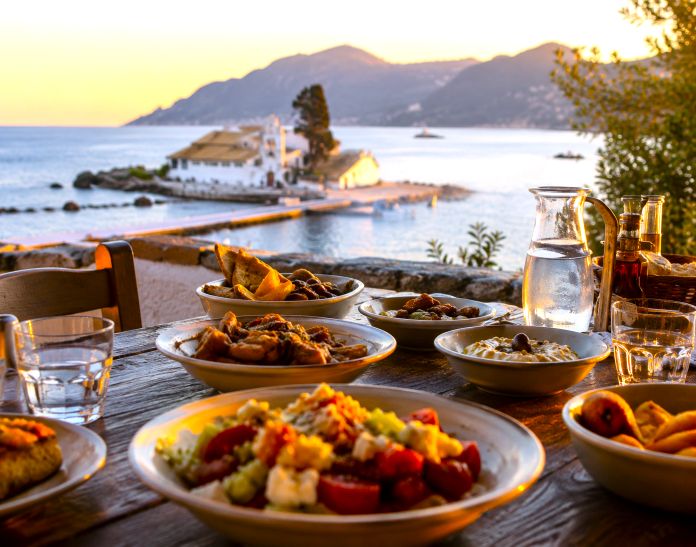
Shopping at local markets, bakeries, butchers and village shops can be one of the pleasures of everyday life. Many local families also produce their own olive oil, wine, vegetables and fruit.
There are many excellent restaurants, but eating out regularly is no longer especially cheap. The quality can be very good, but residents need to choose carefully and avoid treating every evening like a holiday evening.
6. There Is a Long Outdoor Season
Spring and autumn are often the most enjoyable seasons for residents. Temperatures are comfortable, the countryside is green and the busiest tourist crowds have either not arrived or have already left.
Walking, gardening, swimming, cycling and eating outdoors are possible for a large part of the year.
7. Corfu Town Offers Culture and Year-Round Life
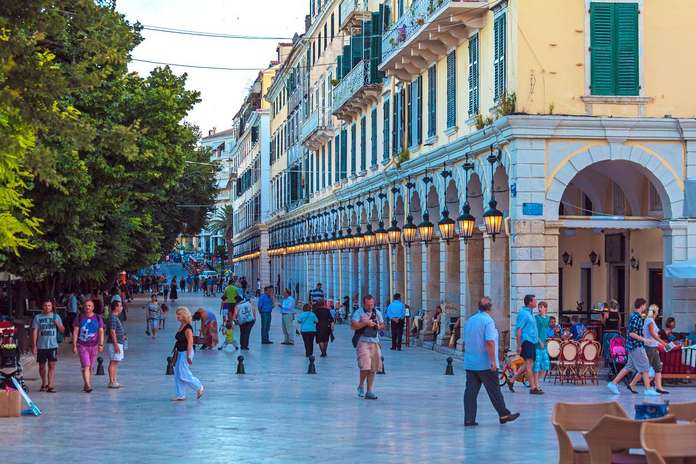
Corfu is not simply a collection of beaches and holiday resorts. Corfu Town offers cafés, shops, restaurants, museums, music, cultural events and beautiful historic architecture.
The Old Town has Venetian, French, British and Greek influences and remains active throughout most of the year.
This makes Corfu feel more complete than some smaller Greek islands that become almost completely inactive during winter.
8. Summer Connections Are Excellent
Corfu has an international airport close to Corfu Town and regular ferry connections with mainland Greece.

During the summer season, there are direct flights to many European cities. This is especially useful for foreign residents who want friends and relatives to visit without travelling through Athens.
Winter connections are more limited, and some journeys require a flight through Athens or a ferry to the mainland.
9. Corfu Is a Good Base for Regional Travel
Residents can travel relatively easily to mainland Greece, Paxos, the Greek coast and Albania. Italy can also be reached by ferry, depending on the season and available routes.
This gives Corfu an interesting geographical position for people who enjoy short trips and exploring different countries.
10. Ordinary Days Can Still Feel Special
Living on an island does not mean that every day is a holiday. You will still have work, bills, appointments and ordinary responsibilities.
However, there are evenings when you finish work, drive to the sea, order a simple meal and remember why you chose to live here. Those moments are difficult to include in a financial calculation, but they are a major part of Corfu’s appeal.
The Cons of Living in Corfu
1. Finding a Year-Round Home Is Extremely Difficult
For many new residents, the most difficult part of moving to Corfu is not finding work. It is finding somewhere to live.
The problem becomes especially serious during summer. Many property owners prefer short-term holiday rentals because they can earn much more during the tourist season.

Some apartments are advertised as long-term rentals but are actually available only from October until April or May. The tenant is then expected to leave before the summer season begins.
This is particularly difficult for seasonal employees who arrive in May to work in hotels, restaurants, bars, travel agencies or rental companies. They may find a job quickly but struggle to find an affordable room or apartment.
Some employers provide staff accommodation, but the quality varies considerably. Employees should ask to see photographs and receive clear written information before accepting a job that includes accommodation.
2. Many Landlords Do Not Accept Pets
Finding a rental becomes even more difficult if you have a dog or cat.
Many landlords in Corfu prefer tenants without animals, particularly when the property is furnished or may later return to the holiday rental market.
Some owners may accept a very small and quiet dog or cat, especially if the tenant can provide references and agrees to cover any damage. Larger dogs are generally more difficult to place.
Never hide your pet from the landlord. Ask for permission in writing and make sure the rental agreement clearly states that the animal is accepted.
3. Winter Humidity Can Be a Serious Problem
Corfu is one of Greece’s greenest islands because it receives a significant amount of rain. That beautiful green landscape comes with a price: humidity.
Older homes may have poor insulation, single-glazed windows, cold exterior walls and limited ventilation. Dampness and mould can appear behind furniture, inside wardrobes, around windows and in rooms that receive little sunlight.
A house that looks perfect in July may feel completely different in January.
4. Employment Is Highly Seasonal
A large part of Corfu’s economy depends on tourism. Hotels, restaurants, bars, travel companies, boat trips, car rental offices and tourist shops employ thousands of people between spring and autumn.
During summer, there can be many job opportunities. During winter, the employment market becomes much smaller.
Seasonal work can also involve long hours, weekend work and considerable pressure during July and August.
5. Salaries Are Not High
A common salary for many tourism and service jobs is around €1,000 per month, although the actual amount depends on the position, experience, working hours, tips and whether accommodation or meals are included.
From 1 April 2026, the statutory minimum monthly salary in Greece is €920 gross for a full-time employee.
A salary of around €1,000 may sound reasonable until you add rent, electricity, fuel, food and the cost of maintaining a car.
6. Summer Traffic and Parking Can Be Exhausting
Traffic increases dramatically during July and August, particularly around Corfu Town, the port, the airport and popular resorts.
Parking in Corfu Town is one of the most frustrating parts of everyday life. Residents may spend a long time searching for a space, especially during working hours, evenings and days when several cruise ships are visiting.
Before renting a home near Corfu Town, ask whether it has private parking. An apartment may look perfect, but your opinion can change after spending 30 minutes every evening looking for somewhere to leave your car.
7. Road Conditions Vary
Some roads are in reasonable condition, while others have potholes, poor lighting, narrow sections, sharp bends or faded road markings.
Extra care is needed at night and after heavy rain. Scooters and quad bikes may appear convenient, but they can be dangerous for people who are unfamiliar with Corfu’s roads.
A small car is usually more practical than a large vehicle, particularly if you regularly drive through villages or Corfu Town.
8. Public Transport Is Not Convenient Everywhere
Corfu has urban buses and Green Buses connecting Corfu Town with many villages and resorts. However, the usefulness of public transport depends greatly on where you live.
Some areas have regular daily services, while smaller villages may have limited connections, especially on Sundays and outside the tourist season.
If you live near Corfu Town, Garitsa, Kanoni, Kontokali, Gouvia or another well-connected area, living without a car may be possible. In most rural areas, a car makes everyday life considerably easier.
9. Public Healthcare Is One of the Island’s Weakest Points
In my honest opinion, the public hospital and the general standard of public healthcare are among the biggest disadvantages of living in Corfu.
Corfu has a General Hospital, health centres, private doctors, diagnostic centres, dentists and pharmacies. Everyday medical needs can usually be handled on the island.
However, the public system has faced serious staff shortages. A 2026 report citing the Greek public hospital workers’ federation stated that medical and nursing staffing at Corfu General Hospital was around 45% of the established positions.
Waiting times, staff shortages and difficulties accessing certain specialists are common concerns. For complicated procedures, specialist examinations or second opinions, residents may need or prefer to travel to Ioannina, Thessaloniki or Athens.
Anyone with a serious or chronic health condition should investigate the availability of the required specialist, treatment and medication before relocating.
10. Bureaucracy Requires Patience
Opening utility accounts, obtaining documents, registering a vehicle, handling taxes or completing residence procedures can take time.
Requirements depend on your nationality and personal circumstances. A good accountant can become one of the most important people in your Corfu life.
Do not rely entirely on social media advice. A procedure that applied to another resident several years ago may no longer be correct.
11. Some Tourist Areas Have Become Expensive
Corfu is not always the inexpensive destination that some visitors remember from the past.
Prices vary greatly between businesses, but certain popular locations have become very expensive during peak summer.
For example, visitors in Paleokastritsa have reported being quoted as much as €90 for two sunbeds and one umbrella in the front row, with a second-row set costing around €70.
This is not the normal price everywhere in Corfu, and more affordable options are available. However, it demonstrates how expensive the most popular locations can become in July and August.
12. Winter Can Feel Very Quiet
Many hotels, beach bars, restaurants and seasonal businesses close between late autumn and spring.

Popular resorts that are full of visitors in August can feel almost deserted in January.
Some people love this peace. Others find it isolating, particularly if they live alone or choose a remote village without a strong year-round community.
13. Island Deliveries and Repairs Can Take Longer
Most everyday products are easy to find, but specialist equipment, furniture, replacement parts and imported goods may cost more or take longer to arrive than on the mainland.
Finding a reliable electrician, plumber or technician during the busiest summer months can also require patience.
14. Summer and Winter Feel Like Different Worlds
During summer, Corfu is busy, international and full of activity. During winter, the island becomes quieter, wetter and more local.
This contrast is not necessarily negative, but newcomers should experience both seasons before making a permanent decision.
A two-week holiday in August will not show you what living in Corfu feels like during a cold and rainy week in February.
Finding a Home in Corfu
Housing is probably the single most important issue to solve before moving to the island.
Do not assume that you will arrive in May and easily find an inexpensive apartment. The summer rental market is extremely competitive, particularly near Corfu Town and the main tourist areas.
Before agreeing to rent a property, confirm:
- Whether it is available for the entire year
- Whether you must leave before the summer season
- The exact monthly rent and deposit
- Whether electricity, water and internet are included
- Whether pets are accepted
- Whether there is private parking
- What type of heating is installed
- Whether there are signs of dampness or mould
- Whether the landlord will provide a legal rental agreement
Never rely only on photographs. Visit the property, inspect every room and ask direct questions.
Humidity, Damp Homes and the Importance of a Dehumidifier
The appliance used to remove excess moisture from the air is called a dehumidifier.
In Greek, it is called an afygrantiras or αφυγραντήρας.
A good dehumidifier can be one of the most useful household appliances for anyone living in Corfu during winter.
It helps reduce moisture in the air, limits condensation around windows, makes rooms feel more comfortable and helps clothes dry indoors.
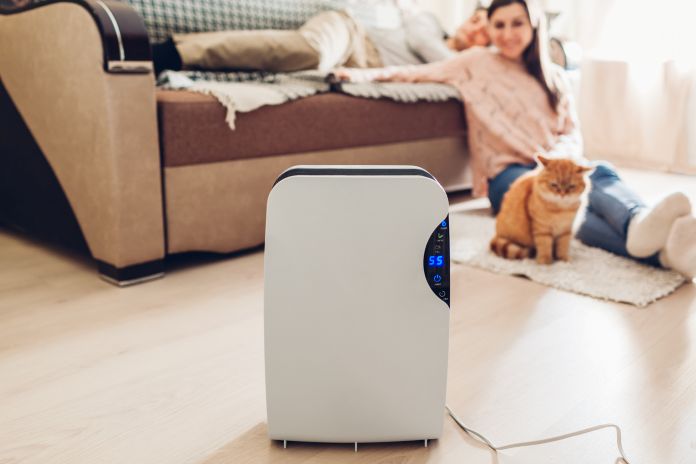
However, a dehumidifier cannot solve serious structural problems. If water is entering through the roof, walls or foundations, the property needs proper repair.
When viewing a home, check behind wardrobes, beds and large furniture. Smell the rooms and look carefully around windows, external walls and ceilings.
Also ask how much sunlight the property receives. A beautiful north-facing stone house surrounded by trees may remain cold and damp for much of the winter.
For year-round living, good insulation, heating, ventilation and sunlight may be more important than having a perfect sea view.
Living in Corfu With Pets
Corfu can be a lovely place for pets, especially if you live near the countryside or have a garden. However, finding suitable rental accommodation can be difficult.
Many landlords do not accept dogs or cats. Others may accept only a very small pet, such as a small dog or cat, after discussing the situation with the tenant.
Owners may worry about damaged furniture, noise, garden damage or problems when the property returns to the holiday rental market.
Pet owners should begin searching early and be prepared to:
- Provide references from a previous landlord
- Explain the pet’s size, age and behaviour
- Offer to pay for professional cleaning when leaving
- Accept responsibility for any damage
- Obtain written permission in the rental agreement
Remember that summer heat can be dangerous for animals. Dogs should not be walked on hot roads during the middle of the day, and all pets need shade, clean water and protection from parasites.
Working and Seasonal Employment in Corfu
Tourism is the island’s largest employment sector. Jobs are commonly available in:
- Hotels and villas
- Restaurants, cafés and bars
- Travel agencies and tour companies
- Airport and transfer services
- Boat trips and water sports
- Car and scooter rental companies
- Property management and cleaning
- Tourist shops
- Construction and maintenance
A typical summer season may run from May until October, although some businesses open earlier or close later.
Finding seasonal work is generally easier than finding year-round work. Good English is valuable, and additional languages such as German, Italian or French can improve employment opportunities.
Experience in tourism, hospitality, sales, customer service or online marketing is also useful.
Always ask for the working hours, salary, days off, insurance, accommodation and meals in writing before accepting a position.
Salaries, Seasonal Bonuses and Unemployment Benefits
A person employed from May until October normally receives six monthly salaries for the six months worked.
At the end of the employment period, the worker may also be entitled to additional amounts including:
- Payment for any annual leave that was earned but not taken
- The proportional holiday allowance
- A proportional Christmas bonus
- Any unpaid overtime or other contractual amounts
The exact calculation depends on the employment dates, salary, days worked and whether annual leave was already taken.
People sometimes describe this informally by saying that a six-month seasonal worker receives income equivalent to approximately seven or even close to eight monthly salaries when all proportional bonuses and holiday payments are included.
However, this should not be understood as an automatic guarantee of two complete additional salaries. The Christmas bonus and holiday payments are calculated proportionally according to Greek employment law.
A fixed-term contract that simply reaches its agreed end date also does not always produce a separate dismissal payment. Employees should check their final settlement carefully and ask an accountant or the Labour Inspectorate for advice if something appears to be missing.
Seasonal Unemployment Benefit
After completing sufficient insured working days, a seasonal employee may qualify for unemployment benefit during winter.

Some workers become eligible after building an insurance record over two summer seasons, but approval is not automatic simply because someone has worked for two years.
Eligibility depends on factors including:
- The number of insured working days
- The period during which those days were completed
- Whether the contract ended or was terminated by the employer
- Previous unemployment benefits received
- Whether the applicant remains registered and available for work
As of April 2026, the standard monthly unemployment benefit can reach approximately €565, with possible increases for qualifying dependent family members.
For seasonal tourism workers, payments may last for several months, commonly around three to five months in suitable cases. The final duration is determined by DYPA according to the applicant’s insured days and benefit history.
Applications must normally be submitted within the required deadline after the employment relationship ends. Workers should not wait until several months later to investigate their rights.
Important: Employment and unemployment rules can change. Anyone relying on these payments should confirm the current conditions directly with DYPA, an accountant or the Greek Labour Inspectorate.
The Real Cost of Living in Corfu
Corfu can be affordable for someone who owns a home, cooks regularly and has a stable income. It can feel expensive for someone paying summer rent, maintaining a car and eating out frequently.
Your main monthly expenses are likely to include:
- Rent or mortgage payments
- Electricity and heating
- Water and internet
- Groceries and household products
- Fuel, insurance and car maintenance
- Private doctors or medical insurance
- Flights and ferry journeys
- Property maintenance
- A dehumidifier and winter heating costs
Electricity use can increase significantly during winter if the home relies on air-conditioning units, electric heaters and a dehumidifier.
Before moving, prepare a realistic monthly budget and keep an emergency fund. Island life becomes much less relaxing when every car repair or medical appointment creates a financial crisis.
Food, Coffee and Eating Out
Corfu offers very good food, but eating outside every day is no longer an economical lifestyle for most residents.
A pita gyros can cost close to €5 in some locations. A cappuccino at a café around the Liston may cost a similar amount.
If two people regularly order coffee, lunch, drinks and dinner outside, the monthly total can quickly become very high compared with a salary of approximately €1,000.
Residents save money by shopping at supermarkets, local markets, bakeries and butchers and by cooking at home.

There are also small local tavernas and takeaway businesses with more reasonable prices, particularly outside the most famous tourist locations.
My advice is to enjoy Corfu’s restaurants, but not to eat as though you are on a seven-day holiday for twelve months of the year. Your bank account may eventually request a ferry ticket back to the mainland.
Parking, Driving and Public Transport
Parking should be considered before choosing where to live.
Corfu Town, Garitsa and nearby residential areas are convenient, but parking can be very difficult. Some historic buildings have no private parking, and residents may need to leave their vehicles a considerable distance from home.
Parking problems become worse during summer because of rental cars, visitors, tour buses and cruise traffic.
If you work in Corfu Town but live outside it, consider:
- How long the journey takes during July and August
- Where you will park
- The cost of fuel
- Whether a reliable bus route is available
- How you will travel during heavy rain
Living without a car is possible in Corfu Town and some nearby areas. In rural villages, a car is normally essential.
Healthcare in Corfu
Corfu has a public General Hospital, health centres, private clinics, pharmacies, dentists, diagnostic centres and many private doctors.
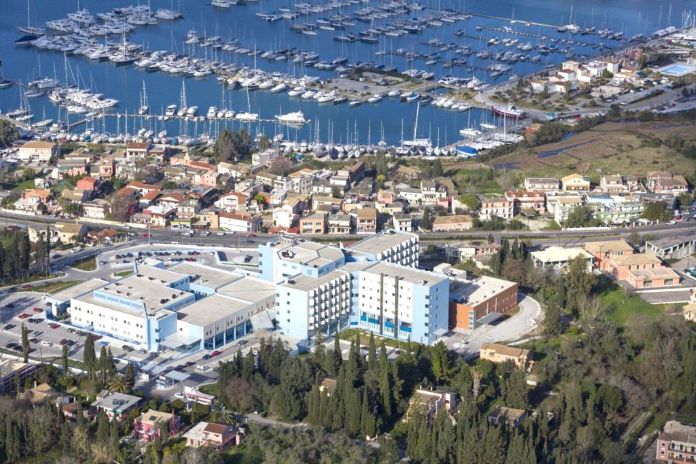
For common illnesses, routine tests and minor emergencies, residents can usually receive treatment on the island.
However, public healthcare faces serious staffing and organisational problems. Waiting times can be long, and some specialist services are limited or unavailable.
Many residents use private doctors for faster appointments and then use private diagnostic centres for examinations.
For serious, unusual or complicated medical conditions, travelling to Ioannina, Athens or Thessaloniki may be necessary.
Families, retired residents and anyone with an existing health condition should investigate:
- Which specialists are available on the island
- How quickly appointments can be arranged
- Whether private health insurance is appropriate
- How emergency travel to the mainland would be handled
- Whether required medication is readily available
Schools for Foreign Families With Children
Foreign children living legally in Corfu can attend Greek public schools. The school is generally assigned according to the family’s residential address.
Public education is provided in Greek, so children arriving without knowledge of the language may need additional support and private Greek lessons, especially during their first year.
Younger children often adapt more quickly because they learn the language through daily interaction. Older children may find the transition more demanding, particularly when preparing for examinations.
For kindergarten and primary school registration, parents may need:
- Proof of permanent residence
- Identification documents
- Taxisnet access where electronic registration is required
- A birth certificate
- Health and vaccination documents
- Previous school records
- Official Greek translations of foreign documents
The exact requirements depend on the child’s age and school level. Families arriving after the normal registration period should contact the local Directorate of Primary or Secondary Education.
Are There International Schools in Corfu?
Corfu does not currently have the same range of established full-time international schools found in Athens or Thessaloniki.
Families should not assume that they will find a conventional British, American or International Baccalaureate day school on the island.
Private language schools, bilingual educational programmes and international online-schooling support are available or developing, but parents must carefully confirm:
- Whether the programme is officially recognised
- Which curriculum is followed
- Whether qualifications are accepted in Greece and abroad
- Whether it replaces or only supplements local school attendance
- The legal requirements applying to the child
Families whose children need full-time education in English should research this issue before signing a long-term rental agreement or moving permanently.
How Many Expats Live in Corfu?
There is no reliable live register showing exactly how many expatriates currently live in Corfu.
The number also changes throughout the year because some foreign property owners stay only during spring and summer, while others live on the island permanently.
The 2021 Greek census recorded 21,377 residents with non-Greek citizenship across the entire Ionian Islands region. This includes Corfu, Paxos, Lefkada, Kefalonia, Ithaca and Zakynthos, so it should not be presented as a Corfu-only figure.
The largest foreign-national communities recorded across the Ionian Islands included people from:
- Albania
- The United Kingdom
- Bulgaria
- Romania
- Germany
- Ukraine
- Russia
- Italy
- The Netherlands
- Poland
Corfu is the largest and most populated island in the region and has a particularly visible British and European community, together with many long-term Albanian residents who are an important part of local working and social life.
You can find international social groups, language exchanges, charity activities and online communities, but it is also worth building relationships with local residents rather than remaining only inside an expat circle.
Best Areas to Live in Corfu
The best location depends on your work, budget, family needs and whether you own a car.
Corfu Town
Corfu Town is suitable for people who want shops, cafés, schools, medical services, public transport and year-round activity nearby.
The disadvantages are traffic, difficult parking, noise and higher demand for accommodation.
Homes inside the historic centre may also have steep stairs, no lift, limited natural light, dampness and no private parking.
Garitsa and Anemomylos
These areas are within walking distance of Corfu Town and offer access to the sea, cafés and the Garitsa promenade.
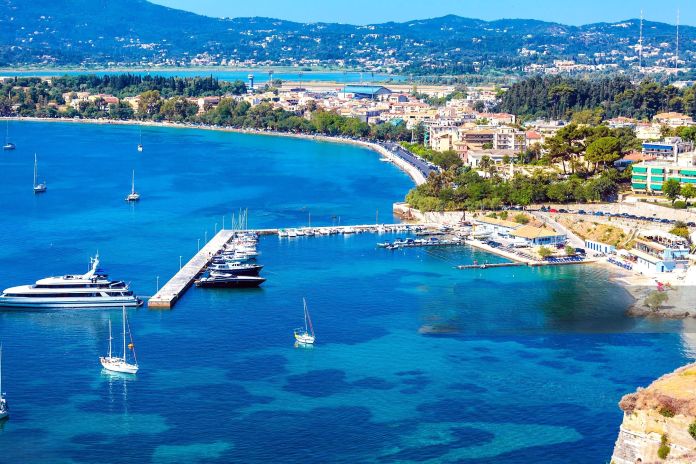
They are popular and convenient, but parking can be difficult and rental prices may be relatively high.
Kanoni and Perama
Kanoni and Perama provide access to Corfu Town, the airport and the eastern coast.
Aircraft noise should be considered in some locations. Visit a property at different times of day before deciding.
Kontokali, Gouvia and Dassia
These areas are popular because they are reasonably close to Corfu Town and have supermarkets, restaurants, public transport and year-round residents.
They can be practical for newcomers who want access to services without living directly in the town centre.
Northeast Corfu
Barbati, Nissaki, Kalami, Kassiopi and surrounding areas offer attractive scenery and beautiful coastal living.
Property prices can be high in desirable locations, and daily travel to Corfu Town may become tiring.
North Corfu
Acharavi and nearby areas have supermarkets, schools, pharmacies, restaurants and a substantial year-round community.
The main disadvantage is the distance from Corfu Town, the airport and the hospital.
South Corfu
Southern Corfu may offer more space, traditional villages and better value than the most fashionable parts of the island.
However, journey times to Corfu Town and the hospital can be considerably longer.
West Coast and Mountain Villages
The west coast has spectacular beaches and sunsets, while inland villages offer peaceful surroundings and traditional local life.
These areas are best suited to people who drive and do not need immediate access to Corfu Town every day.
What Is Winter in Corfu Really Like?
Winter is when you discover whether Corfu genuinely suits you.
The island remains green because it receives plenty of rain. Storms, strong winds, high humidity and several days of grey weather are possible.
There are also many beautiful winter days with sunshine and mild temperatures. On those days, walking in the countryside or having coffee beside the sea can be wonderful.
The main difficulty is often not the outdoor temperature but the condition of the house. A poorly insulated property can feel surprisingly cold and damp inside.
Heating costs, condensation, mould and drying clothes indoors become part of everyday winter life.
This is why a good heating system and a dehumidifier are often more valuable than a large balcony with a summer sea view.
Who Is Corfu Suitable For?
Corfu may be a good choice for:
- People who enjoy nature, beaches and outdoor living
- Remote workers with a reliable income
- Retired people who have planned their healthcare needs
- Families comfortable with Greek-language education
- People who enjoy a smaller community
- Anyone interested in Greek culture and local life
- People who can adapt to major seasonal changes
Corfu may be less suitable for:
- People who need a large-city employment market
- Anyone who strongly dislikes rain or humidity
- People who expect services to operate quickly at all times
- Those who require frequent specialist medical care
- Families requiring a conventional full-time international school
- People who do not drive but want to live in an isolated village
- Anyone expecting the island to feel like a permanent summer holiday
What to Check Before Moving to Corfu
- Visit Corfu during both summer and winter.
- Secure year-round accommodation before accepting seasonal work.
- Confirm in writing that pets are accepted.
- Inspect the property for humidity, dampness and mould.
- Ask about heating and winter electricity costs.
- Check whether the home has private parking.
- Test the internet connection at the exact property.
- Calculate the cost of owning and maintaining a car.
- Investigate healthcare services relevant to your needs.
- Research school options before moving with children.
- Check current residence, tax and employment requirements.
- Keep enough savings for unexpected expenses.
- Start learning basic Greek.
Spend time in your preferred area before signing a long contract. A location that appears close on a map may involve a slow daily journey along narrow and busy roads.
Free Job and Long-Term Rental Listings on EnjoyCorfu.com
We know that finding employment and year-round accommodation are two of the biggest difficulties facing people who want to move to Corfu.
EnjoyCorfu.com plans to introduce free listings for:
- Seasonal and year-round job vacancies
- People looking for work in Corfu
- Long-term apartments and houses
- Rooms and accommodation for seasonal employees
- People searching for a home or flatmate
Subscribe to our newsletter to receive updates when the new service becomes available and to stay informed about local news, events, travel information and important developments in Corfu.
The newsletter subscription form appears automatically below this article.
Final Thoughts: Is Living in Corfu Worth It?
For many people, living in Corfu is absolutely worth it. The sea, scenery, food, climate and human connections can create a quality of life that is difficult to find in a large city.
But Corfu is not perfect, and it should not be presented as a paradise where everything is cheap and easy.
Housing shortages, seasonal work, modest salaries, humidity, parking, traffic, healthcare limitations and bureaucracy are real considerations.
The people who are happiest here are usually those who accept the island as it really is. They enjoy its beauty but also prepare for its practical difficulties.
My personal advice is simple: spend time in Corfu during winter, rent before buying and do not rush your decision. If you still love the island after experiencing a wet February as well as a sunny August, Corfu may genuinely feel like home.
And finally, an old-fashioned local solution for anyone completely determined to stay:
If you are a single woman who has fallen hopelessly in love with Corfu, you could always consider marrying a local man. It may not solve every problem, but at least there is a reasonable chance his family knows someone with an apartment.
We are joking, of course.
Mostly.
Have Something to Add?
If you have personal experience to share, disagree with something in this article or would like to ask a question, please leave a comment in the form below.
Your email address will not be displayed publicly.
Another member of the EnjoyCorfu.com community may be able to answer your question. If not, we will reply ourselves whenever we can help.
Any advice or assistance provided through the comments is, of course, completely free.
Discover the Best of Corfu!
Get local events, travel tips and important Corfu updates delivered straight to your inbox.