Wildfire conditions can change within hours. Always check official local alerts, your accommodation provider and your airline before travelling to an affected region.
Is Greece safe to visit right now? For most travellers, the answer is still yes — provided that their destination is not close to an active wildfire, evacuation zone or closed road.
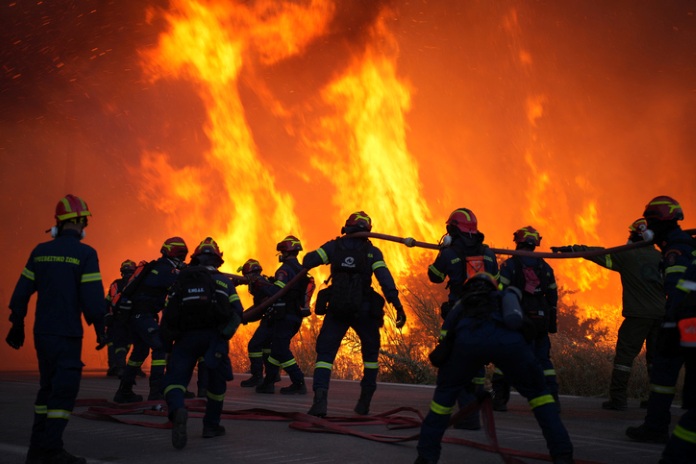
Greece is a large country with thousands of islands, coastal resorts, mountain regions and mainland destinations. A serious wildfire in one part of the country does not automatically make every Greek island or holiday resort unsafe.
However, the situation during the summer of 2026 is serious in several affected communities. High temperatures, dry vegetation and strong winds can cause a small fire to spread very quickly. Visitors should therefore check the exact location of their hotel rather than making a decision based only on a headline saying that there are “wildfires in Greece”.

Quick Navigation
- Is Greece safe to visit right now?
- Which areas have recently been affected?
- Should you cancel your holiday?
- How to check your exact destination
- Understanding the daily fire-risk map
- How to receive Greece’s 112 alerts
- What to keep in an emergency bag
- What to do if a fire starts nearby
- How to protect yourself from wildfire smoke
- Flights, airports and road closures
- Refunds and travel insurance
- Is Corfu affected by the wildfires?
- Frequently asked questions
- Official sources and live updates
Is Greece Safe to Visit Right Now?
At the time of this update, there is no general official recommendation telling travellers to avoid Greece as a whole. The UK Foreign, Commonwealth & Development Office continues to warn about the high summer wildfire risk but is not advising against travel to the entire country.
The most sensible answer depends on four questions:
- Is there an active wildfire close to your accommodation?
- Has a 112 evacuation alert been issued for your area?
- Are the roads leading to your hotel or resort open?
- Is your airline, tour operator or hotel still operating normally?
If the answer is yes to normal hotel access and transport, and there is no local evacuation order, your trip will often be able to continue as planned.
Travellers should avoid comparing the situation to a storm covering an entire country. Wildfires are usually localised, although smoke, road closures and strong winds can affect a wider area.
Which Areas Have Recently Been Affected? ( click the map for live updates )
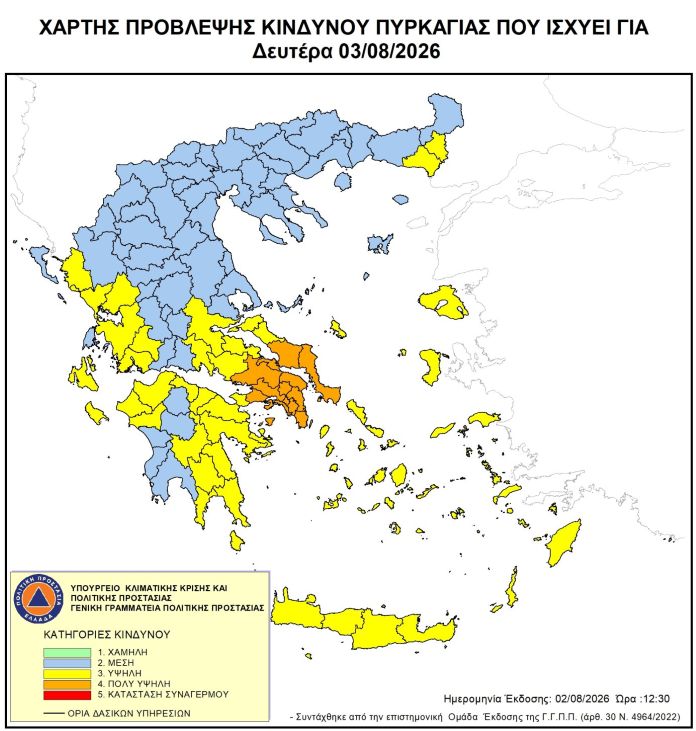
During the final days of July and the beginning of August 2026, major or widely reported wildfire incidents have included parts of:
- Western Attica and the area west of Athens, including locations near Psatha, Porto Germeno and Megara.
- Kefalonia, where precautionary evacuations were reported in southern parts of the island.
- Crete, particularly parts of the Rethymno region and other areas affected by fire and smoke.
- The Peloponnese, including several mainland locations affected during the recent extreme weather period.
- Paros, Naxos, Lesvos, Andros and other islands where fires or emergency operations have recently been reported.
Even on the same island, one region can be affected while resorts many kilometres away continue to operate normally. Before changing your plans, check the name of the village, municipality or resort mentioned in the alert and compare it with the exact address of your accommodation.
Should You Cancel Your Holiday?
Do not automatically cancel a holiday simply because you have seen dramatic images from Greece on television or social media.
You should seriously consider changing your plans when:
- Your hotel is inside or very close to an active fire or evacuation zone.
- Local authorities have ordered residents and visitors to leave.
- The only road to your accommodation has been closed.
- Your hotel has suspended operations or cannot safely receive guests.
- Your airline or package-holiday provider has cancelled the trip.
- You have a serious respiratory or heart condition and the destination is experiencing heavy smoke.
If none of these conditions applies, contact your hotel directly before cancelling. Local accommodation owners often have a much clearer picture of what is happening in the immediate area than general international news reports.
Ask the hotel:
- Is there an active fire anywhere near the property?
- Are the main access roads open?
- Has the resort received a 112 warning or evacuation message?
- Is there visible smoke or poor air quality?
- Are transfers, excursions and local buses running normally?
How to Check Your Exact Destination
Before leaving home — and again on the morning of your journey — check the following:
- Greek Civil Protection: View the official daily Fire Risk Forecast Map.
- 112 Greece: Follow official emergency and evacuation alerts.
- Your airline: Check the live flight status rather than relying only on news reports.
- Your hotel or villa: Contact the property directly and ask about access roads and local conditions.
- Your tour operator: Package-holiday companies may have representatives already monitoring the resort.
- Your travel insurer: Ask what evidence is required before changing or cancelling the trip.
Be careful with photographs and videos shared on social media. Old footage from fires in previous years is sometimes reposted as if it happened today. Always look for the original publication date and the exact location.
Understanding Greece’s Daily Fire-Risk Map
Greek Civil Protection publishes a Fire Risk Forecast Map during the wildfire season. It predicts the likelihood of fires starting and spreading during the following day.
- Category 1 – Low: Fire conditions are relatively limited.
- Category 2 – Moderate: Normal summer caution is required.
- Category 3 – High: Fires may start and spread more easily.
- Category 4 – Very High: Authorities and visitors should be on heightened alert.
- Category 5 – State of Alert: Extreme conditions are expected and strict access restrictions may apply.
A Category 4 or Category 5 warning does not mean that a wildfire is already burning everywhere inside the coloured region. It means that the weather and vegetation could allow a fire to become dangerous very quickly.
On high-risk days, access to forests, nature reserves, parks, walking trails or protected areas may be temporarily prohibited. These closures are preventive and should always be respected, even when there is no visible fire.
How to Receive Greece’s 112 Emergency Alerts
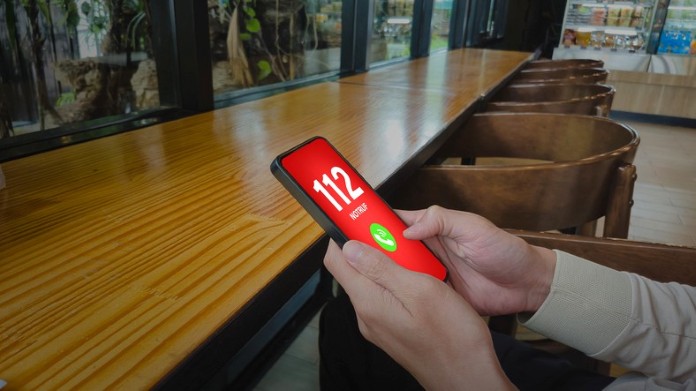
Greece uses the European emergency number 112 to send location-based alerts during wildfires, floods and other emergencies.
Keep your mobile phone switched on, charged and connected to a mobile network. Make sure emergency alerts have not been disabled in your phone settings.
- iPhone: Open Settings, select Notifications and check the Emergency Alerts options near the bottom of the screen.
- Android: Search your settings for Wireless Emergency Alerts, Emergency Alerts or Safety and Emergency.
- Samsung: The option may appear under Safety and Emergency, Notifications, Messages or Wireless Emergency Alerts, depending on the model and software version.
Keep mobile data and roaming available when travelling. Save a screenshot of the address of your hotel and download an offline map in case the local internet connection becomes unreliable.
A 112 message may tell you to remain ready, avoid a road or evacuate towards a named location. Read the entire message and follow the route given by the authorities.
What to Keep in an Emergency Grab Bag
You do not need to travel in fear, but keeping a few essentials together can save valuable time if you are asked to leave quickly.
- Passport, identity card and copies of important documents
- Mobile phone, charger and a fully charged power bank
- Essential medication and a copy of your prescription
- Bank cards and a small amount of cash
- Travel-insurance documents and emergency contact numbers
- Bottled water and a small amount of food
- Closed shoes, long trousers and a lightweight long-sleeved top
- FFP2 or N95 masks for smoke and ash
- Car keys and accommodation keys
- Basic supplies for children, older travellers or anyone with a disability
Keep the bag close to the exit rather than packed at the bottom of a suitcase. Make sure everyone in your group knows where it is.
What to Do If a Wildfire Starts Nearby
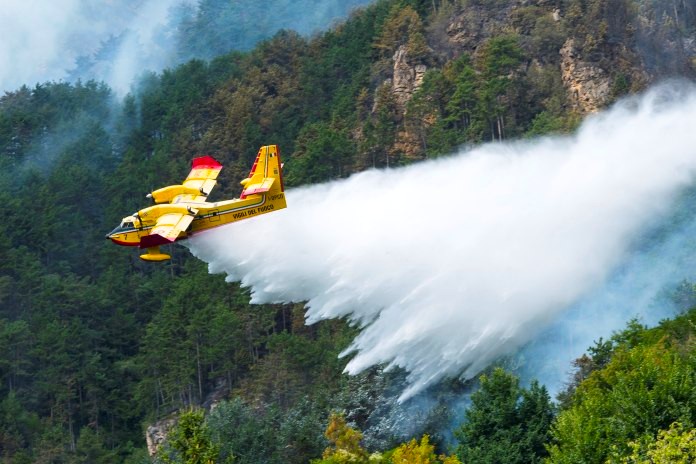
Stay calm and rely on official instructions rather than rumours from other guests or social-media groups.
- Call 112 immediately if you are in danger or see a new fire.
- Give the exact location, nearest road or landmark and the direction in which the fire appears to be moving.
- Follow evacuation routes provided by the authorities.
- Do not drive towards smoke simply because it appears to be the shortest route.
- Do not block narrow roads used by fire engines and emergency vehicles.
- Do not stop to film the fire or take photographs.
- Keep your vehicle facing the direction of escape when parked near a forested area.
- If staying at a hotel, follow the instructions of staff and emergency services.
If flames, thick smoke or fallen trees have blocked your route, do not attempt to drive blindly through them. Stop in a safer location, call 112, share your position and ask for instructions.
Do not automatically head towards a beach or enter the sea. Evacuation by boat should be organised by the Coast Guard or emergency authorities. A beach with cliffs, vegetation or only one narrow access road can become dangerous.
If you are staying in an isolated villa, identify the access road, a second possible escape route and the nearest open area before an emergency occurs.
How to Protect Yourself from Wildfire Smoke
Smoke can travel much farther than the flames and may affect resorts that are not in immediate danger from the fire itself.
If the air becomes smoky:
- Stay indoors when it is safe to do so.
- Close windows and external doors.
- Set air conditioning to recirculate indoor air, where possible.
- Avoid unnecessary outdoor exercise.
- Wear a well-fitting FFP2 or N95 mask if you must go outside.
- Drink water regularly and keep essential medication nearby.
- Move to cleaner air if smoke begins entering your accommodation.
Children, pregnant women, older people and travellers with asthma, chronic lung disease or heart conditions are more vulnerable to wildfire smoke.
Seek medical assistance if you experience serious breathing difficulty, chest pain, confusion, severe dizziness or symptoms that are rapidly becoming worse.
Flights, Airports and Road Closures
A wildfire on an island does not automatically mean that its airport is closed. During recent fires on Crete, Chania and Heraklion airports continued operating at the time of reporting, despite evacuations taking place in other parts of the island.
However, smoke, strong winds, aircraft availability and road closures can cause delays or last-minute disruption.
Before travelling to the airport:
- Check your flight directly with the airline.
- Check the airport’s official arrivals and departures page.
- Ask your hotel whether the normal transfer route is open.
- Allow extra travel time if roads have been diverted.
- Do not assume that an open airport means every nearby resort is accessible.
If you are already in an affected area, do not leave for the airport without checking the roads. Emergency services may close a route even when flights are still operating normally.
Refunds, Cancellations and Travel Insurance
Your right to a refund depends on who cancels the trip, how you booked it and the wording of your insurance policy.
If you simply decide that you no longer wish to travel while flights and accommodation remain available, this may be treated as a voluntary cancellation. Standard cancellation fees may apply.
If your tour operator cancels a package holiday because the resort or accommodation is no longer available, you may normally be offered an alternative trip or a refund under the rules that apply to your booking country.
UK travellers with an eligible package holiday may also have protection under Package Travel Regulations and, where applicable, ATOL arrangements. This protection does not normally mean that every traveller can cancel simply because they feel worried.
Travellers who booked flights, accommodation and transfers separately will usually need to deal with each company individually and may depend more heavily on travel insurance.
Check whether your policy includes:
- Wildfires or natural catastrophes
- Emergency evacuation
- Trip cancellation or curtailment
- Additional accommodation and transport
- Missed departure caused by road closures
- Medical treatment related to smoke exposure
Do not cancel before speaking with your insurer. Some companies require written confirmation from the hotel, airline, tour operator or local authorities before accepting a claim.
Is Corfu Affected by the Wildfires?
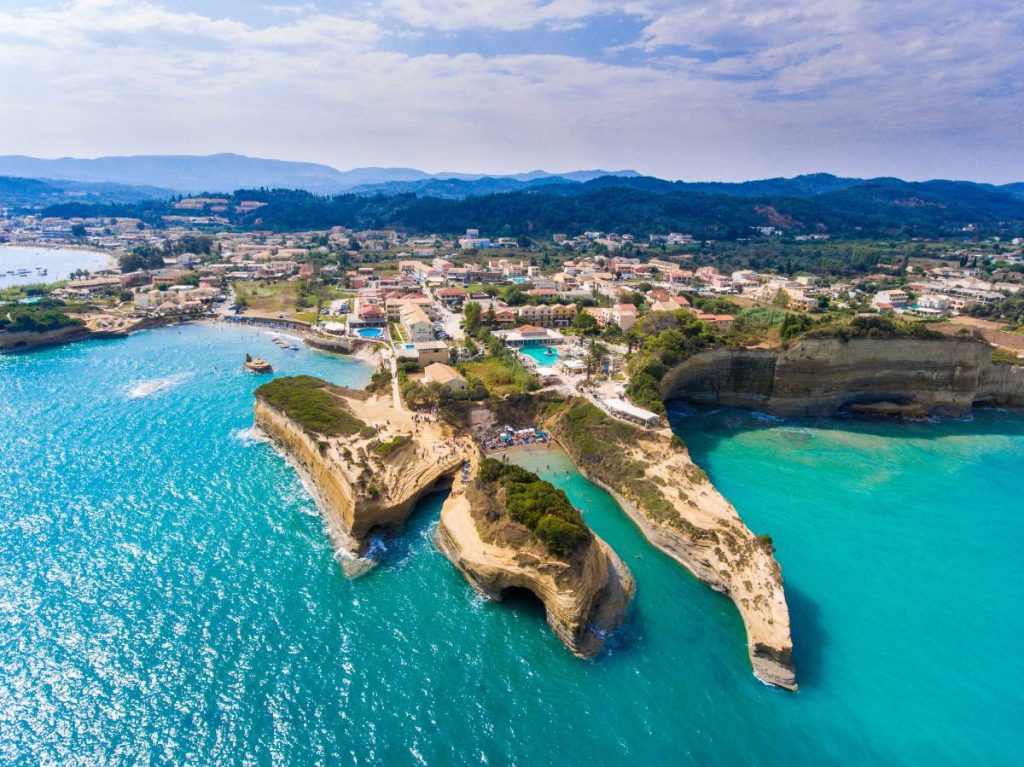
At the time of this update, Corfu was not listed among the main locations affected by the major national wildfire incidents reported around western Attica, Kefalonia, Crete and parts of the Aegean and mainland Greece.
A wildfire at Livadi Ropa in Corfu was reported as being brought under control on July 25, 2026. No major ongoing wildfire affecting Corfu’s main tourist resorts was identified in the sources reviewed for this update.
That does not mean that the risk in Corfu is zero. The island has extensive olive groves, forests and dry vegetation, while strong summer winds can increase the danger.
On high-risk days, temporary restrictions may be introduced in forested and protected areas such as Issos Cedar Forest, Agios Mattheos Forest, Arkoudilas, Porto Timoni, Erimitis and other Natura areas.
Visitors should respect closures, avoid smoking near dry vegetation and never light a barbecue in or close to woodland during the wildfire season.
Frequently Asked Questions
Is the whole of Greece affected by wildfires?
No. Fires usually affect specific municipalities, villages or parts of an island. Many destinations may remain hundreds of kilometres away and operate normally.
Can a wildfire start without much warning?
Yes. During hot, dry and windy weather, a fire can develop and spread very quickly. This is why travellers should keep emergency alerts enabled.
Should I avoid all Greek islands?
No. Check your individual island, resort and accommodation rather than treating every island as having the same conditions.
What should I do if I see smoke?
Check official information immediately. If you can see a new fire or believe people may be in danger, call 112 and provide the exact location and direction of the smoke.
Can I travel if my airport is open?
An open airport is a positive sign, but you should also confirm that your hotel is operating and that the road between the airport and resort is open.
Will I receive an emergency alert in English?
Greek 112 alerts sent in areas with international visitors commonly include information that foreign travellers can understand. Read the full message carefully and ask hotel staff for help if anything is unclear.
Is it safe to stay in a forest villa?
It may be, but isolated properties require more preparation. Ask about mobile coverage, road access, nearby vegetation, alternative exits and the property’s emergency plan.
Should I rent a car so I can evacuate?
A car can be useful, but it is not a guarantee of safety. Narrow roads can become blocked, and driving through smoke can be extremely dangerous. Always follow the route given by authorities.
Our Honest Advice
Greece remains one of Europe’s most popular and welcoming summer destinations, and most visitors will complete their holidays without encountering a wildfire emergency.
At the same time, wildfires should never be underestimated. Conditions can change quickly, especially during heatwaves and periods of strong wind.
The best approach is not panic and not complacency. Check the exact location, stay connected to official alerts, keep a few emergency essentials ready and follow the authorities immediately if instructions are issued.
If your destination is far from an active fire, your hotel and transport are operating normally and no evacuation warning has been issued, there is usually no reason to abandon your holiday solely because fires have occurred elsewhere in Greece.
Official Sources and Live Updates
- Greek Ministry for Climate Crisis and Civil Protection
- Official Daily Fire Risk Map
- Official Forest Fire Safety Instructions
- UK Foreign Office Travel Advice for Greece
- EU Current Wildfire Situation and EFFIS Information
- World Health Organization Wildfire Health Advice
This page provides general travel information and does not replace instructions issued by Greek emergency services, local authorities, airlines or tour operators.
Discover the Best of Corfu!
Get local events, travel tips and important Corfu updates delivered straight to your inbox.