- High on the green slopes of Mount Pantokrator, far from Corfu’s busy resorts and beach roads, lies Lafki — a small mountain village that most visitors to the island will never see. At around 420 metres above sea level, this quiet settlement offers old stone houses, traditional village life and wonderful views across northern Corfu.
Lafki may be little known to tourists, but it is certainly not new. Historical records document the village as far back as 1347, giving it a recorded history of almost 700 years. For travellers who enjoy discovering the quieter, more authentic side of Corfu, Lafki is exactly the kind of place worth leaving the coast for.
Where Is Lafki?
Lafki is located in northern Corfu, on the slopes of Mount Pantokrator, the highest mountain on the island. The village stands at an altitude of approximately 420 metres and is around 36 kilometres from Corfu Town.
Although it is not far from the busy northern coastal areas of Acharavi and Roda, the atmosphere changes dramatically as you climb into the mountains. Tourist resorts give way to olive groves, cypress trees, winding roads and small traditional settlements.
Tip: If you are driving, take your time on the mountain roads. Some sections are narrow, and stopping safely for photographs is not always possible.
A Corfu Village Documented Since 1347
What makes Lafki particularly interesting is its age. The village appears in one of the important surviving documents connected with the history of Mount Pantokrator.
A parchment dating from 1347, preserved in the Historical Archive of Corfu, records the involvement of residents from Lafki and other villages of northern Corfu in the establishment of the church and monastery of Ypsilos Pantokrator at the summit of the mountain.
The document records that inhabitants of the surrounding villages contributed not only their labour but also land, trees, animals and other possessions to the monastery.
This means that Lafki was already an established community nearly seven centuries ago. Its history almost certainly reaches further back, but 1347 gives us a rare documented point from which we can trace the village’s existence.
The Connection With Mount Pantokrator
It is difficult to understand Lafki without looking towards Mount Pantokrator.
Rising to more than 900 metres, Pantokrator dominates northern Corfu. For centuries, the mountain shaped the lives of the communities scattered across its slopes. Paths linked villages with fields, churches, neighbouring settlements and the monastery at the summit long before modern roads reached this part of the island.
The historical connection between Lafki and the monastery is especially significant because Lafki is specifically named among the communities whose inhabitants helped with its establishment.
Today, Mount Pantokrator remains one of the most impressive places to visit in northern Corfu, and Lafki makes an interesting stop for travellers exploring the mountain villages rather than simply driving directly to the summit.
What Does Lafki Look Like Today?
Lafki is not a polished tourist attraction, and that is part of its appeal.
.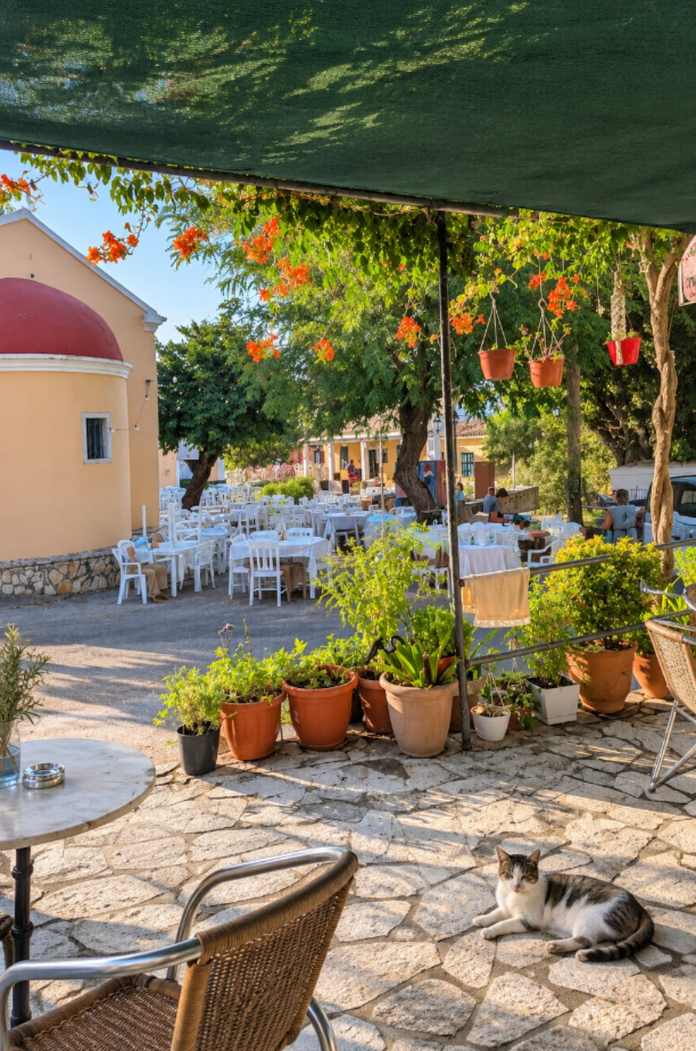
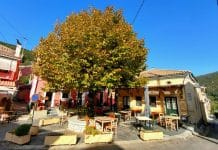
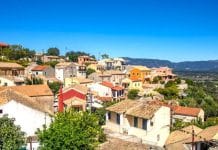
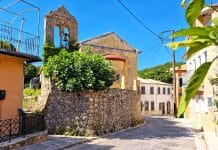
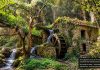
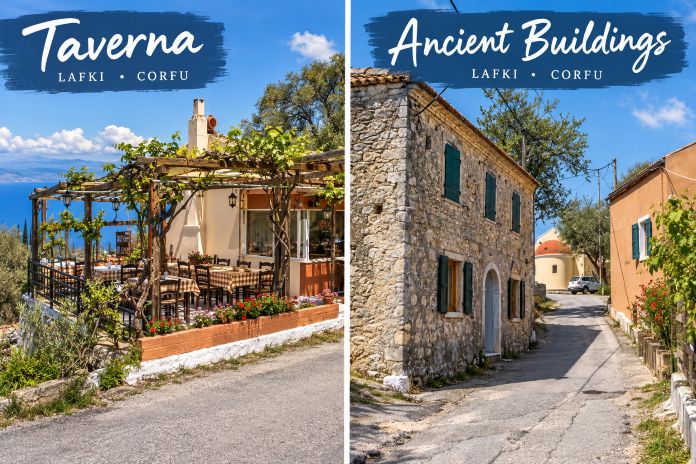
You come here to walk slowly through a real Corfiot mountain village: old stone houses, narrow lanes, small courtyards, traditional buildings, olive trees and the everyday details of village life.
Some buildings reveal the traditional architecture of rural northern Corfu, while others show the inevitable changes that have taken place over generations.
Do not expect rows of souvenir shops, organised attractions or crowds carrying cameras. Lafki is still primarily a place where people live.
That makes it particularly interesting for travellers looking for the Corfu that exists beyond the island’s famous beaches.
The Views From Lafki
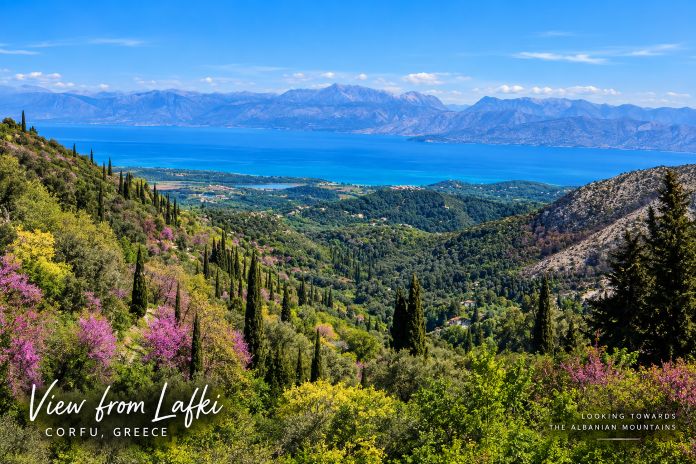
One of the rewards of climbing to Lafki is the landscape. At around 420 metres above sea level, the village sits high above the northern part of Corfu and feels very different from the busy coastal resorts below.
From Lafki and the surrounding slopes, there are views across parts of northern and northeastern Corfu. On clear days, you may also see across the Corfu Channel towards the mountains of Albania.
The landscape changes dramatically with the seasons. Spring covers the mountainsides in fresh green vegetation and wildflowers, while summer brings the bright colours and clear skies associated with Mediterranean Corfu.
Autumn is particularly atmospheric. After the first rains, the countryside becomes greener again, clouds gather around Mount Pantokrator and visibility can be exceptionally good after a passing storm.
Does It Snow in Lafki?
Yes, it can. Snow is relatively rare in Corfu, particularly along the coast, but Lafki experiences noticeably colder winter conditions because of its elevation and its position on the slopes of Mount Pantokrator.
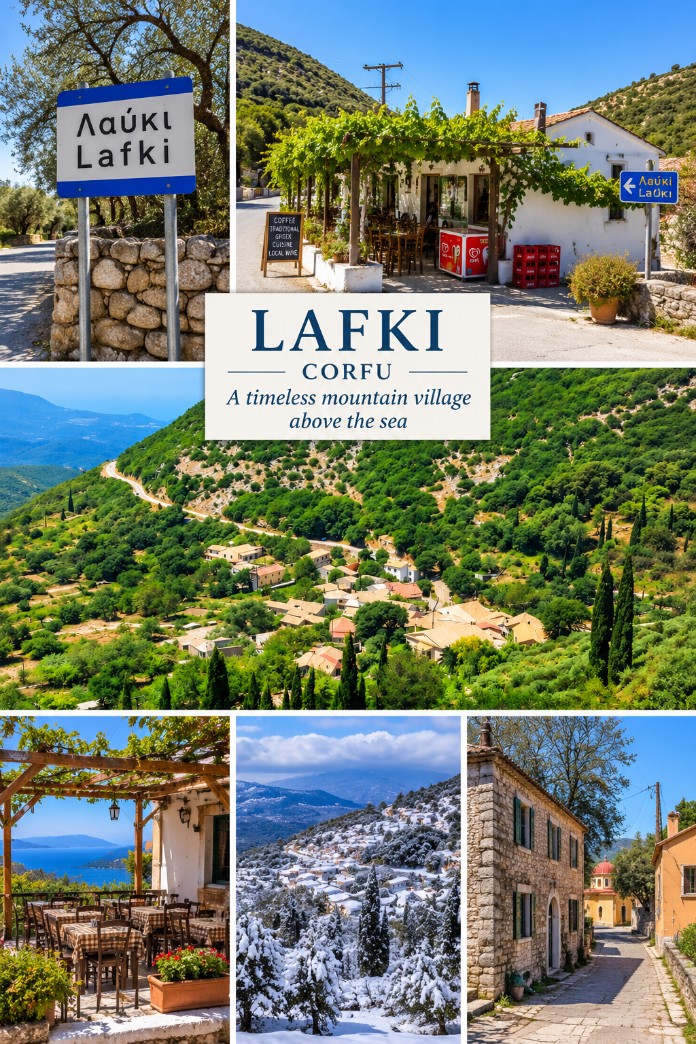
At approximately 420 metres above sea level, Lafki is one of the northern mountain villages where snowfall and settling snow are more likely during the occasional strong cold spells that affect Corfu.
This does not mean that Lafki is always the first place on the island where snow settles. The higher slopes and summit area of Mount Pantokrator rise considerably above the village and are naturally even more exposed to winter conditions.
However, when temperatures fall sufficiently, Lafki can experience a completely different winter scene from Acharavi, Roda and the other coastal settlements below. Snow can cover roofs, olive trees, gardens and the surrounding countryside while conditions near sea level remain much milder.
For visitors who know Corfu only as a summer destination, photographs of a snow-covered Lafki can be quite a surprise. They are a reminder that northern Corfu has a genuine mountain landscape as well as beaches.
Winter in the Mountains of North Corfu
Even without snow, winter in Lafki can feel considerably colder than the coast. Temperatures drop with altitude, and wind, cloud and high humidity can make the mountain villages feel particularly cold during periods of unsettled weather.
If you visit between December and February, bring proper winter clothing and check the weather before driving into the mountains. During unusual cold spells, conditions on the higher roads towards Mount Pantokrator can be very different from those at sea level.
Snow should therefore be considered an occasional bonus rather than something visitors should expect every winter.
A Village With More Than One Name
Older records and maps may not always show the village under exactly the same spelling.
Until around 1940, Lafki was also recorded as Lafka or Lafki (Λαύκα / Λαύκη). Variations in the spelling and transliteration of Corfiot place names are common, particularly when comparing older Greek documents with modern maps and English-language sources.
Today the name normally appears as Λαύκι in Greek and Lafki in English.
Why Lafki Never Became a Tourist Village
Geography probably tells much of the story.
Corfu’s modern tourism developed primarily around its coastline. Places such as Acharavi, Roda, Sidari, Kassiopi and Ipsos grew because visitors came looking for beaches, hotels and easy access to the sea.
Mountain villages such as Lafki remained largely outside that development.
For decades this may have been an economic disadvantage, but today it is also what makes these places interesting. Lafki has not been transformed into an attraction designed specifically for visitors.
You are seeing a village rather than a resort.
Walking Around Lafki
You do not need a detailed itinerary to explore Lafki. Park where you can do so safely without blocking the narrow village roads and continue on foot.
Look beyond the main road. Small lanes, old doors, stonework, gardens and views between the houses often reveal more about a Corfiot village than its most obvious landmark.
If you enjoy photography, Lafki is particularly suited to detail shots: weathered doors, traditional buildings, old walls, balconies, village signs, olive trees and the surrounding mountain landscape.
Please remember that these are people’s homes. Photograph private property and residents respectfully, and always ask permission before taking close photographs of local people.
Traditional Village Life
One of the pleasures of exploring the smaller villages of northern Corfu is discovering places that still feel connected to everyday local life rather than tourism.
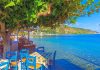
Take time to stop if you find a small traditional cafe or taverna open. Sitting beneath a vine-covered terrace with a coffee or something to eat can be just as memorable as visiting a famous attraction.
Opening hours in small mountain villages can vary considerably according to the season, so it is better not to plan your entire visit around a particular business being open.
Lafki and the Old Mountain Communities
Lafki forms part of a much wider network of historic settlements around Mount Pantokrator.
For centuries these communities were connected by footpaths and mule tracks rather than today’s road network. People travelled between villages for work, agriculture, religious celebrations and trade.
The surrounding mountain and foothill settlements make this part of Corfu especially rewarding for travellers who enjoy exploring by car or on foot.
Rather than visiting Lafki as an isolated attraction, consider it one piece of the historical landscape of northern Corfu.
Combine Lafki With Old Perithia
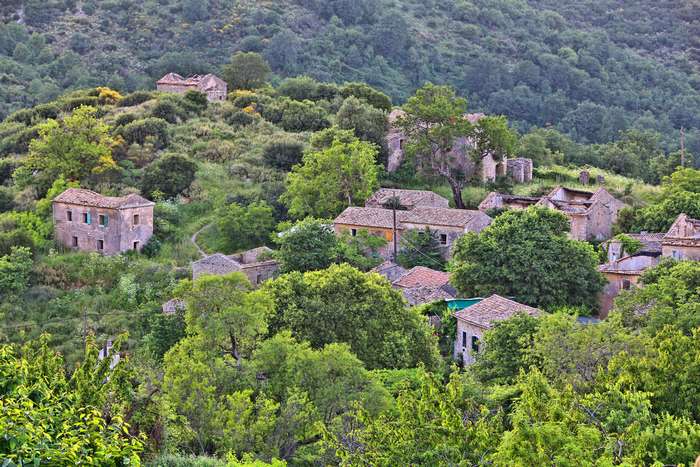
If you have a car, one of the best ways to experience this part of Corfu is to combine Lafki with a visit to Old Perithia.
Old Perithia is one of Corfu’s best-known historic mountain settlements, lying beneath Mount Pantokrator. Its stone houses, old churches and mountain setting make it an excellent companion to a visit to Lafki.
The two places offer very different experiences. Old Perithia has become a destination in its own right and receives many visitors during the tourist season, while Lafki remains a much quieter, inhabited mountain village that most tourists never discover.
Seeing both on the same trip gives you a much better picture of the traditional settlements that developed around Mount Pantokrator and how life in Corfu’s mountains differed from life along the coast.
Stop for Traditional Food at Foros in Old Perithia
If you combine Lafki with Old Perithia, you can also stop for a traditional meal at Foros, in the heart of the old village.
A meal in Old Perithia works particularly well as part of a mountain road trip. Explore Lafki in the morning, continue through the Pantokrator countryside and then spend some time walking among the old stone houses and churches of Old Perithia before sitting down for lunch.
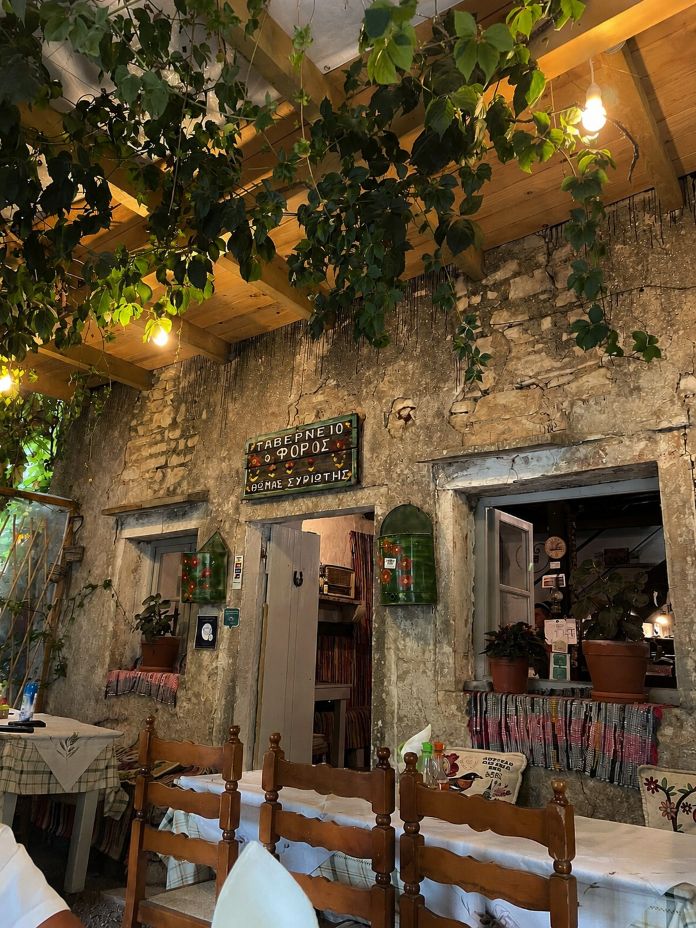
Rather than rushing from one attraction to another, allow enough time to enjoy the atmosphere of the villages. Traditional mountain Corfu is best experienced slowly.
Continue Towards Mount Pantokrator
Another option is to continue your mountain drive towards the summit of Mount Pantokrator.
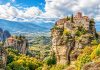
At more than 900 metres, this is the highest mountain on Corfu. The religious site at the summit has centuries of history and is directly connected with Lafki through the surviving historical record from 1347.
On a clear day, the mountain provides extraordinary views across Corfu, the Ionian Sea and towards mainland Greece and Albania.
The mountain roads are winding and sometimes narrow, so allow considerably more time than the distance on a map might suggest.
A Half-Day Mountain Road Trip
A simple itinerary from the north of Corfu could look like this:
Acharavi → Lafki → Mount Pantokrator area → Old Perithia → traditional meal at Foros → return to the north coast.
You could easily turn this into a half-day trip, while travellers who enjoy photography, walking and exploring old villages may want to allow most of the day.
The distances on the map can appear short, but mountain roads are narrow and winding. Drive slowly and allow extra time for stops, viewpoints and photographs.
When Is the Best Time to Visit Lafki?
Spring is one of my favourite times to explore Corfu’s mountain villages. The countryside is intensely green, wildflowers appear along the roads and paths, and temperatures are usually comfortable for walking.
Summer offers bright weather and long days. Lafki’s altitude can make it feel somewhat different from the coast, although afternoons can still be hot. Morning and late afternoon usually provide better light for photography.
Autumn brings a different atmosphere. Rain gradually returns, vegetation becomes greener and changing clouds around Pantokrator can create dramatic views. Clear periods immediately after rain can be excellent for landscape photography.
Winter reveals a side of Corfu that relatively few visitors experience. Lafki becomes colder and quieter, and during occasional strong cold spells there is even the possibility of snowfall and settling snow. Higher areas of Mount Pantokrator have an even greater chance of experiencing winter conditions.
How Long Do You Need in Lafki?
For Lafki itself, allow around 45 minutes to an hour if you simply want to walk through the village, take photographs and enjoy the mountain atmosphere.
However, I would not recommend driving into the mountains just to spend an hour here and immediately return to the coast.
Combine Lafki with Old Perithia and the Pantokrator area and turn the journey into a half-day road trip through northern Corfu. If you enjoy stopping for photographs and exploring slowly, it can easily become a full-day experience.
Is Lafki Worth Visiting?
If your idea of Corfu is limited to beaches, resorts and famous viewpoints, Lafki probably will not appear on your itinerary.
But if you want to understand the island beyond tourism, places like this matter.
Lafki has no need to compete with Corfu’s major attractions. Its appeal lies precisely in its simplicity: a small mountain community, documented for almost seven centuries, still sitting quietly on the slopes of Pantokrator while thousands of visitors pass along the coast below.
For me, these are often the places where Corfu becomes most interesting.
Practical Information
Location: Northern Corfu, on the slopes of Mount Pantokrator
Altitude: Approximately 420 metres
Distance from Corfu Town: Approximately 36 km
Best for: Traditional villages, photography, mountain scenery, history and slow travel
Transport: Car recommended
Time in Lafki: Around 45–60 minutes
Recommended trip: Combine Lafki with Mount Pantokrator and Old Perithia
Food stop: Traditional meal at Foros in Old Perithia
Winter: Colder than the coast, with occasional snowfall possible during strong cold spells
Discover a Different Side of Corfu
Lafki is one of many places that show a completely different side of the island from its famous resorts. Northern Corfu is full of old villages, mountain roads, forgotten paths and small communities where everyday life continues far from the busiest tourist areas.
Visit Lafki, continue into the mountains, explore Old Perithia, enjoy some traditional Corfiot food and take your time along the way.
That is the Corfu I enjoy searching for — and the Corfu I want to share with you.
Discover the Best of Corfu!
Get local events, travel tips and important Corfu updates delivered straight to your inbox.