There are places in Corfu that almost every visitor knows. Paleokastritsa, Old Perithia, Kassiopi, the Old Fortress.
And then there are places that even people who have been coming to Corfu for years have never heard about.
This was one of them.
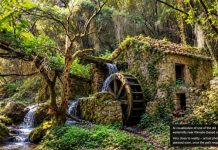
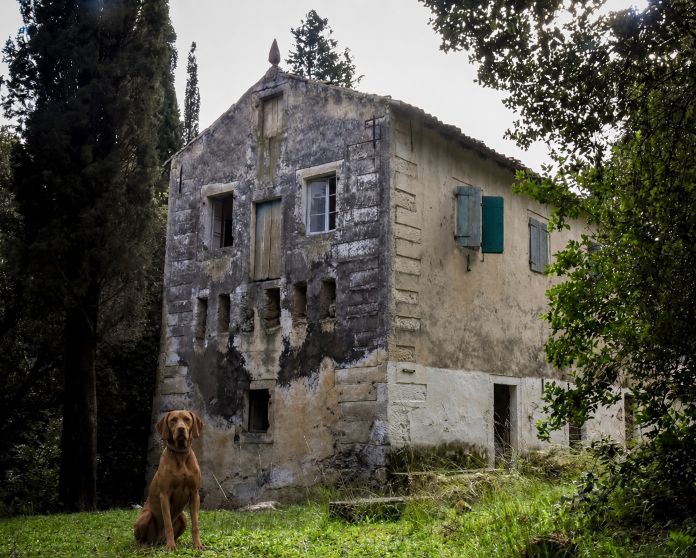
Hidden deep in the forest near the village of Nymfes in northern Corfu, I discovered an abandoned religious complex surrounded by enormous trees, running water, old stone walls and a silence that makes the place feel much further from civilisation than it really is.
It is called the Askitario of Nymfes.

I had heard about it before, but photographs never really convinced me what kind of place it was. So one day I decided to see it for myself.
I left Corfu Town in my car with a good friend, my camera and my dog Bruno. It turned into one of those simple Corfu days that I remember far more clearly than many organised excursions I have taken over the years.
But there was one moment inside the abandoned building that I was definitely not expecting.
A Forgotten Place Hidden in the Forest
The Askitario lies outside Nymfes, one of the greenest villages in northern Corfu.
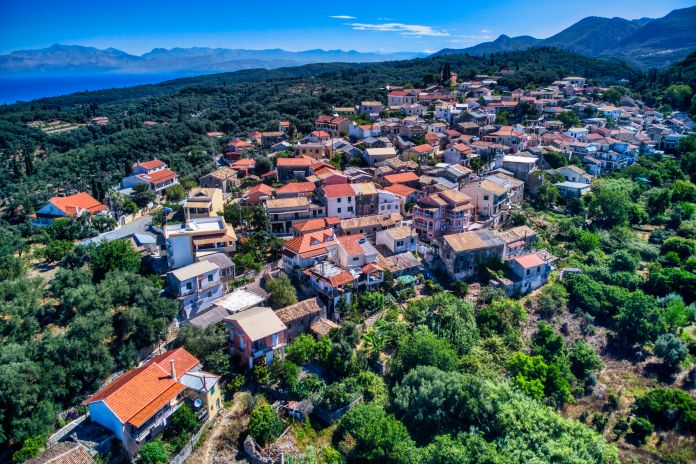
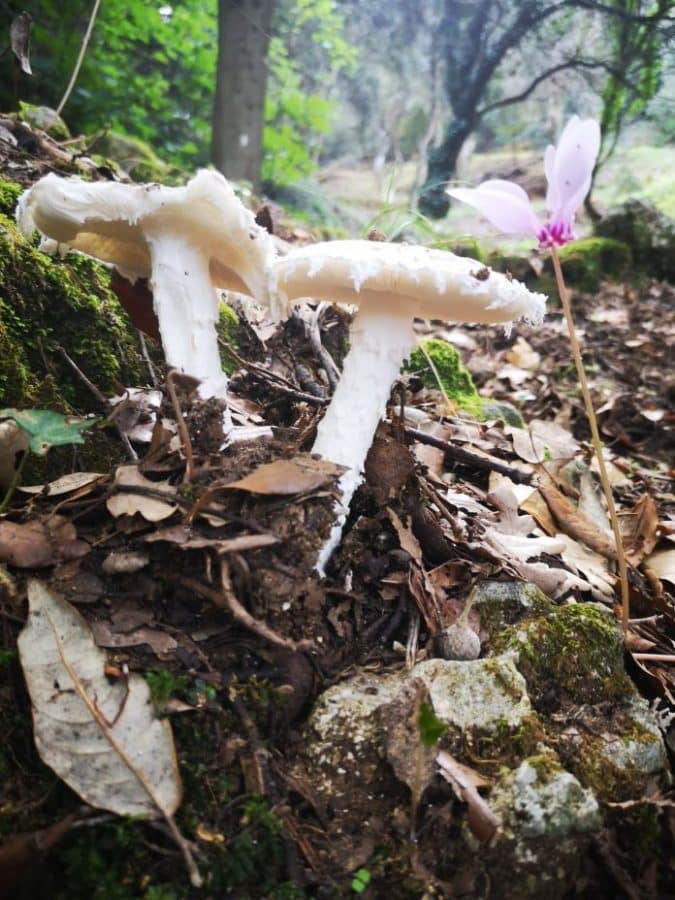
The surroundings are extraordinary. Cypress trees, oaks, chestnut trees, olives, figs and thick vegetation almost completely isolate the old complex from the modern world.
When you arrive, it does not feel like a conventional tourist attraction. There is no polished entrance, souvenir shop or organised visitor centre. That is precisely what I liked about it.
The old buildings appear through the forest almost unexpectedly, and for a moment you get the feeling that you have discovered something that has been forgotten.
If you enjoy this kind of place, you may also like my guide to Corfu’s forest and mountain trails, because the island has a completely different character once you leave the beaches and main roads behind.
The Strange History of the Askitario of Nymfes
The history of the site goes back many centuries and is mixed with local tradition and legend.
According to tradition, an ascetic monk from Epirus named Artemios Paisios arrived in this area around the 5th century AD. Attracted by the isolation of the forest and the abundance of water, he is said to have carved a place for himself into the rock where he could live, pray and remain away from the outside world.
Whether every part of the story can be historically verified is difficult to establish today, but the monastery itself certainly has a very long documented history.
A written document from 1371, when Corfu was under Angevin rule, already refers to the monastery at Askitario.
During the Byzantine and post-Byzantine periods it became an important religious property, and historical accounts suggest that the monastery once controlled considerable land and wealth.
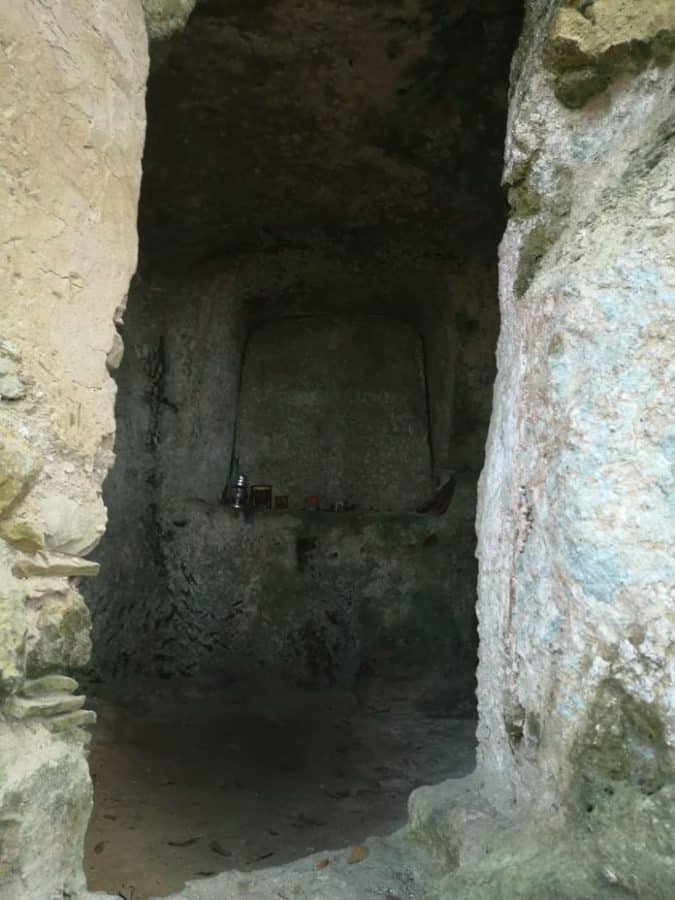
What remains today includes ruins of monastic cells, parts of the Church of the Pantokrator and other stone buildings belonging to the old complex.
One of the most interesting structures contains the remains of an old animal-powered olive press. The same building was later used by the Agricultural School of Corfu around 1932.
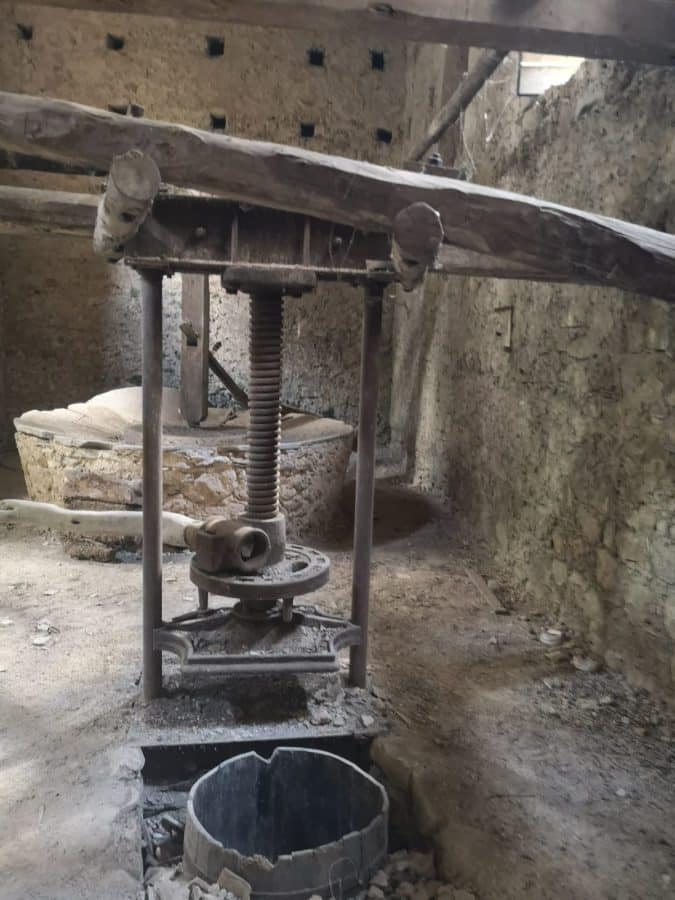
Standing inside it today, surrounded by silence and vegetation, it is strange to imagine how much activity must once have taken place here.
For more religious and historic sites around the island, see my guide to churches and monasteries in Corfu.
My Drive from Corfu Town to Nymfes
From Corfu Town, I would allow roughly 55–60 minutes by car, depending on traffic and exactly where you start.
The distance to Nymfes is around 34 km by road.
A practical route is:
• Corfu Town
• Kontokali
• Gouvia / Tzavros
• Skripero
• Valanio
• Nymfes
The final part of the journey feels very different from the busy coast. Houses become less frequent, vegetation becomes denser and the roads lead deeper into the countryside.
I recommend using navigation rather than relying only on road signs, particularly when looking for the smaller roads around Nymfes.
Open Askitario of Nymfes in Google Maps
Do not blindly follow your navigation if it tries to send you down a road that looks unsuitable for your car. This is rural Corfu, and a line on Google Maps does not always mean that the road ahead is something you want to attempt with a normal vehicle.
Where to Park and How Much Walking Is Involved?
The Askitario is about 20 minutes walk from the main village.
When I went, we drove towards the village and left the car before continuing on foot rather than trying to push the car further along a rougher section.
I recommend doing the same whenever the road conditions begin to look uncomfortable. Never block a track, gate or access route used by local residents or agricultural vehicles.
Visitors who prefer a proper walk can start around Nymfes and follow the local walking routes through the countryside. Recorded routes in the area suggest approximately 20 minutes of walking, depending on the starting point and route chosen.
If you drive closer before parking, your walk can be 5 minutes.
This is not mountain climbing, but I would still describe it as a countryside walk rather than an ordinary sightseeing stop.
For the Askitario itself, photographs and a relaxed walk around the surrounding forest, I would allow at least 30-40 minutes once you reach the area. If you also want to see the Nymfes waterfalls and explore the village, allow two to three hours in the wider Nymfes area.

Walking Into the Abandoned Buildings
This was the part I enjoyed most.
I had my camera with me, Bruno was exploring beside us, and the deeper we walked into the forest the quieter everything became.
Old stone walls appear between the trees. Open doorways lead into dark rooms. Parts of the complex have been slowly reclaimed by vegetation. It is beautiful, but it also has that slightly uncomfortable atmosphere abandoned buildings sometimes have.
You cannot help wondering who walked through the same doors hundreds of years before you.
I spent quite a while photographing the buildings, stonework and surrounding forest.
Then I entered one of the darker areas.
Then I Looked Up
If you visit, there is one thing you should know before walking confidently into every dark room.
There are reports of bats roosting inside parts of the old complex.
Visitors have specifically reported seeing bats hanging from the ceiling of the old building containing the remains of the olive press.
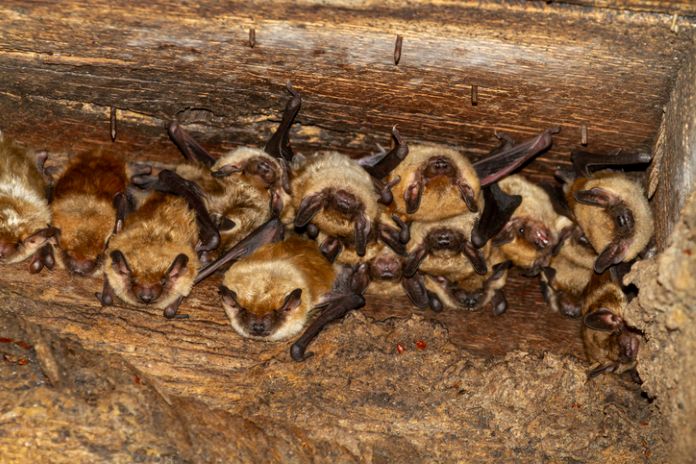
Bats normally want absolutely nothing to do with people, and seeing them should not be a reason to avoid the Askitario.
But it is a very good reason to behave sensibly.
Do not touch them. Do not try to wake them. Do not throw anything towards them and do not walk underneath a colony simply to get a better photograph.
I would also avoid flash photography directly at roosting bats. They are wild animals resting in what has become their home, not part of the attraction.
If a bat is flying around inside a room, give it space and move calmly towards the exit.
And if you are visiting with a dog, as I did with Bruno, I strongly recommend keeping the dog close and on a lead around the abandoned buildings. I would not allow a dog to chase or investigate a bat, particularly one found on the ground.
Direct contact with bats should always be avoided. If anyone is bitten or scratched by a bat, medical advice should be sought promptly.
What I Recommend Taking With You
You do not need serious hiking equipment for a normal visit, but I would definitely take a few basic things.
• Proper walking shoes rather than flip-flops or smooth sandals.
• Water, especially from late spring to early autumn.
• A small torch or phone flashlight for looking into dark areas without walking blindly inside.
• Insect repellent, particularly during the warmer months.
• A charged mobile phone and preferably offline navigation.
• Your camera. This is one place where I was very glad I had mine.
• A small backpack so your hands remain free while walking.
• Dog lead and water if you bring your dog.
In spring, autumn or after wet weather, I would also take a light waterproof jacket.
Would I Go Alone?
I went with a good friend, and I am glad I did.
I would not describe the area as dangerous, but it is isolated enough that I prefer visiting with somebody else.
If you slip, hurt an ankle, have a problem with the car or simply take a wrong path, having another person with you makes everything easier.
I would also avoid making my first visit close to sunset.
The forest can become dark surprisingly quickly, and finding your way back along an unfamiliar track is much easier in daylight.
Can You Take Children?
Older children who enjoy nature and walking may find the place fascinating, but this is not a conventional family attraction.
There are ruined buildings, uneven ground, vegetation and potentially unstable areas.
Young children should remain very close to an adult, and I would not allow them to explore the buildings independently.
When Is the Best Time to Visit?
I prefer this part of Corfu outside the hottest hours of a summer day.
Spring is probably one of the best periods because the countryside is intensely green and there is a better chance of seeing plenty of water around the nearby waterfalls.
Early summer is also beautiful, especially in the morning.
September and October can be excellent for walking when temperatures begin to fall.
During July and August, I would go relatively early in the morning rather than starting the walk in the strongest afternoon heat.
After heavy rain, expect mud and slippery surfaces and reconsider entering any old structure.
Do Not Miss the Nymfes Waterfalls
If you have travelled all the way to Nymfes, it makes little sense to see only the Askitario.
The village is famous for its water, springs and waterfalls, and the surrounding landscape is one of the reasons this area feels so different from the dry image many people associate with Greek islands.
The waterfalls are especially worthwhile when there has been enough rainfall. By late summer the amount of water can be considerably reduced.
You can find more natural places around the island in my guide to Corfu’s nature and countryside.
Make It a Full Northern Corfu Road Trip
This is exactly what I would recommend.
Do not drive from Corfu Town, visit the Askitario and immediately return home.
There are several excellent places you can combine with it.
Nymfes Village
Take some time to walk through the village itself. Nymfes is surrounded by springs, forest and fertile countryside and feels very different from Corfu’s coastal resorts.
Nymfes Waterfalls
The obvious combination with the Askitario. Depending on the season and rainfall, the waterfalls can be one of northern Corfu’s nicest short nature stops.
Roda
If you want the sea afterwards, Roda is relatively close and offers a long beach, cafés and restaurants.
Acharavi
Acharavi is another useful stop if you want shops, coffee, food or a walk beside the sea before continuing your trip.
Old Perithia
This was our choice.
After exploring the forest, taking photographs and spending time around the Askitario, my friend, Bruno and I got back into the car and continued towards Old Perithia.
It was the perfect ending to the excursion.
Old Perithia is one of my favourite historic villages in northern Corfu. Stone houses, abandoned buildings, old churches and Mount Pantokrator rising behind the village make it feel like another journey into the island’s past.
You can read more about it in my guide to traditional Corfu villages worth visiting.
We stopped for food at Foros, one of the traditional tavernas in the village.
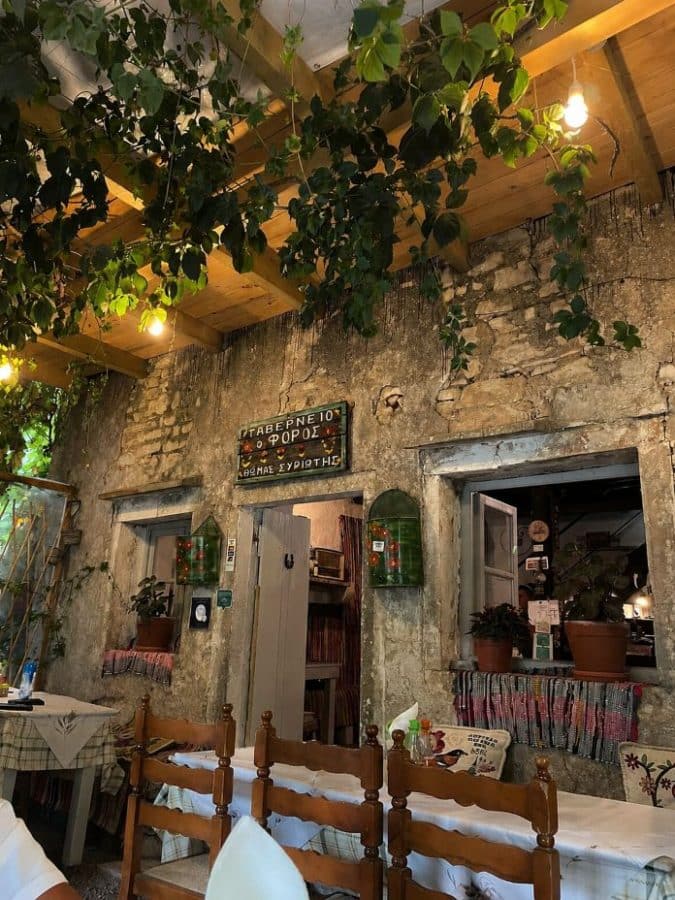
After walking through a damp forest, exploring abandoned buildings and spending half the day with a camera around my neck, sitting down in Old Perithia for a proper Corfiot meal felt particularly good.
You Can Also Continue to Mount Pantokrator
If you start early and enjoy driving mountain roads, another possibility is to continue towards Mount Pantokrator, Corfu’s highest mountain at 906 metres. The summit offers extraordinary views over Corfu, the Ionian Sea, Albania and mainland Greece on a clear day.
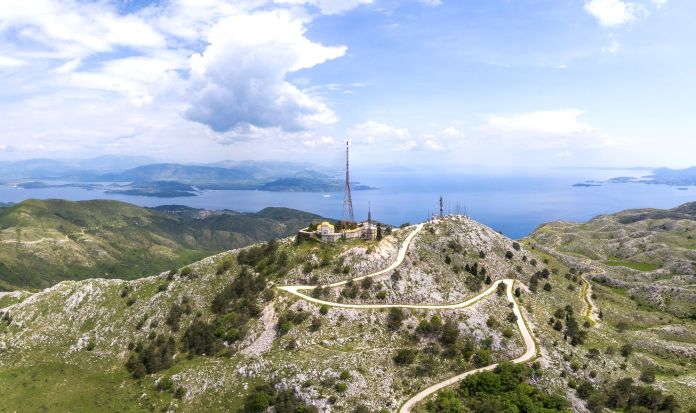
Do not try to fit everything into the same day simply to tick places off a list, though. The roads in northern Corfu are winding, and places like these are much better when you have time to stop.
You can find more mountain ideas in my guide to the best viewpoints in Corfu.
How Much Time Should You Allow?
If you are starting from Corfu Town, I would plan the day roughly like this:
• Around 55–60 minutes to reach the Nymfes area by car.
• Around 1–2 hours for the walk, Askitario and photography, depending on where you park and how much you explore.
• Another 30–60 minutes if you want to include the waterfalls.
• Allow extra time for Nymfes village, coffee or spontaneous stops.
• Continue to Old Perithia for a late lunch if you want to make it a memorable full-day road trip.
This is not a day I would organise with a stopwatch.
The whole point is to slow down.
Is the Askitario of Nymfes Worth Visiting?
For me, absolutely.
But I would not recommend it to everybody.
If your idea of sightseeing is an organised attraction with parking, signs, cafés and facilities, there are easier places to visit in Corfu.
If, however, you enjoy forests, photography, forgotten buildings, local history and places where you may spend half an hour without seeing another tourist, put the Askitario on your list.
What I remember most is not one particular building.
It is the combination of everything: the drive through northern Corfu, walking into the forest with my friend and Bruno, the sound of water and birds, the old stone structures appearing between the trees, the darkness inside the abandoned rooms and that moment when I looked towards the ceiling and realised that we were definitely not the only ones inside.
Corfu still has places like this.
You just have to leave the main road to find them.
Before You Go
• Visit during daylight.
• Wear proper shoes.
• Take water and a flashlight.
• Do not enter any section that looks unstable.
• Do not touch or disturb bats or other wildlife.
• Keep dogs close and preferably on a lead around the ruins.
• Do not leave rubbish behind.
• Respect the religious and historical character of the site.
• Download the location before entering the forest in case mobile reception becomes weak.
• After heavy rain, expect slippery ground and reconsider entering old structures.
You can also use our Corfu map to plan other stops around northern Corfu.
Have You Been There?
Have you visited the Askitario of Nymfes, or do you know another forgotten place hidden somewhere in Corfu’s countryside?
Share your experience, tips or local stories in the comments below. Places like this often have stories that never appear in guidebooks.
Discover the Best of Corfu!
Get local events, travel tips and important Corfu updates delivered straight to your inbox.