
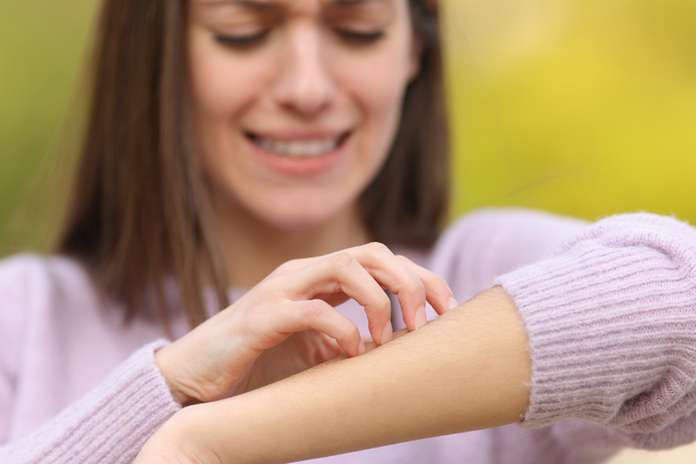
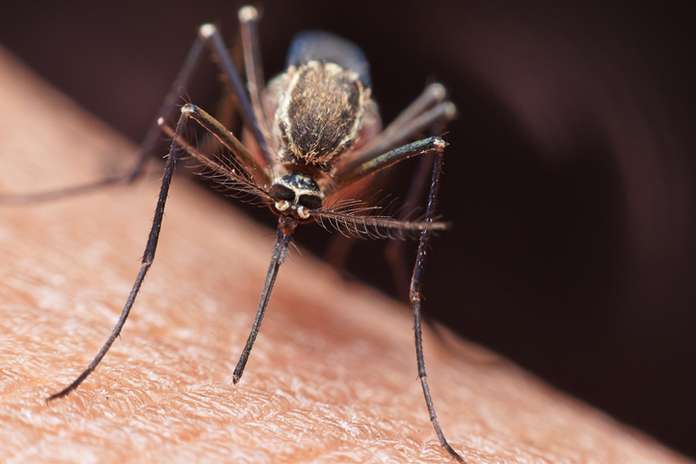
The following tips combine practical mosquito-prevention advice with suggestions frequently shared by regular Corfu visitors. We have also included important information about protecting children and pets, as well as what to do after a bee or wasp sting.
Are Mosquitoes a Serious Problem in Corfu?
Mosquitoes are present in Corfu, especially during the warmer months, but this does not mean that every visitor will have a serious problem.
Experiences vary considerably. One family may stay for two weeks and receive only a few bites, while another visitor staying nearby may find mosquitoes extremely annoying.
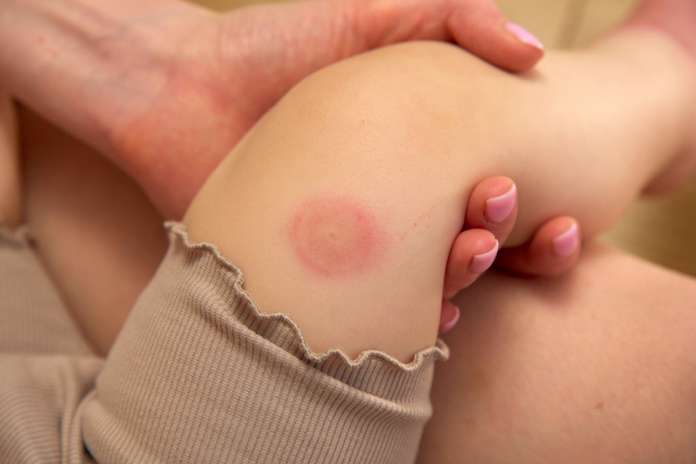
This can depend on the accommodation, nearby vegetation, standing water, recent rain and how attractive an individual person is to mosquitoes.
Areas with thick gardens, streams, ponds, uncovered water containers or poorly maintained outdoor spaces may have increased mosquito activity. Ground-floor rooms and rural villas can also be more exposed than upper-floor apartments in built-up areas.
Many visitors notice increased mosquito activity around sunset and during the first hours of the evening. However, some mosquitoes also bite during the daytime, so protection should not be limited to after dark.
There is no reason to panic or avoid Corfu because of mosquitoes. A small amount of preparation can make a significant difference.

What Regular Visitors Recommend Packing
Visitors who return to Corfu regularly often arrive with a small mosquito kit already packed. It does not take up much space and can save you from searching for products after an uncomfortable first night.
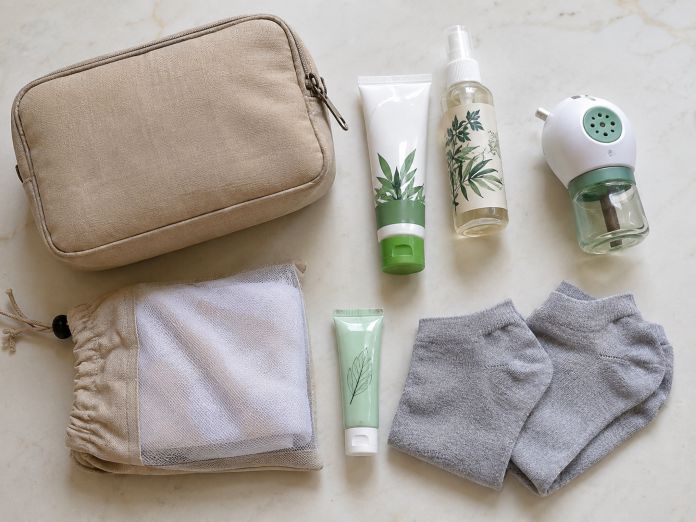
A useful mosquito kit may include:
- A reliable insect repellent for exposed skin
- A plug-in mosquito device for the bedroom
- Spare tablets or liquid refills for the plug-in device
- A soothing bite-relief cream or gel
- Lightweight long trousers for evening use
- A loose, long-sleeved top
- Thin socks for protecting the ankles
- A compact travel mosquito net when staying in basic or rural accommodation
- A small quiet rechargeable fan for balconies or outdoor seating areas
Many mosquito products are available in Corfu’s pharmacies and larger supermarkets. However, bringing your preferred skin repellent from home may be helpful, particularly if you have sensitive skin or already know which product works well for you.
Mosquito Products Recommended by Regular Visitors
Regular visitors to Corfu have tried many different mosquito products. Results vary from person to person, but several brand names appear repeatedly in Corfu travel forums and visitor discussions.
Frequently mentioned products include:
- Odomos mosquito repellent cream
- Jungle Formula Max spray, roll-on or lotion
- Jungle Formula plug-in devices for bedrooms
- Autan mosquito repellent
- Boots Repel products
- Mosi-Guard spray or stick
- Bug Off
- Mosquito Off
- Avon Skin So Soft
Odomos deserves a special mention because a number of travellers say they find the cream convenient and effective, particularly when applied to the ankles, legs and arms.
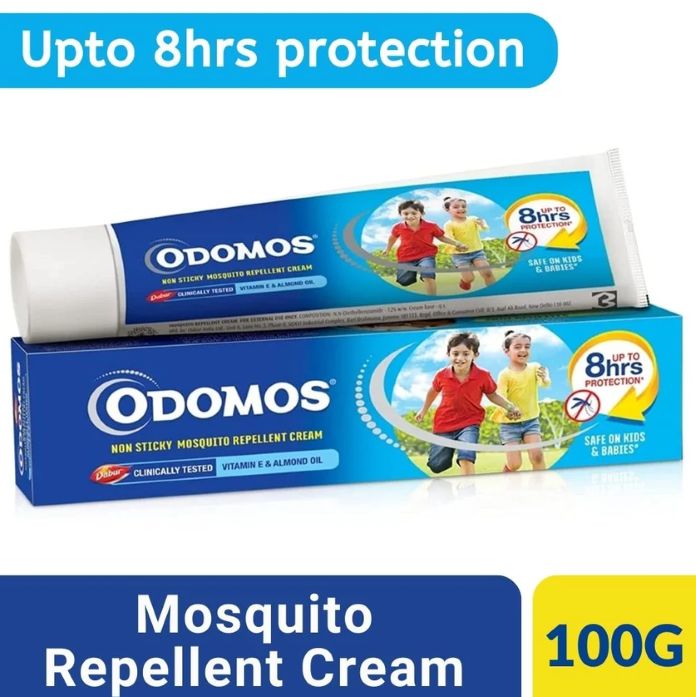
Some visitors prefer Odomos because it is easy to spread and does not feel like a strong aerosol spray. However, results differ between individuals and the product should always be used according to the instructions on its packaging.
Jungle Formula Max is another frequently recommended choice, especially among visitors who describe themselves as mosquito magnets. Some travellers combine the skin repellent with a Jungle Formula plug-in device in the bedroom.
Autan is widely available in Europe and is also regularly mentioned by Corfu visitors. Different Autan products may use different active ingredients, so always check the label.
Mosi-Guard is often selected by travellers looking for a plant-derived repellent. As with every product, check the active ingredient, concentration and recommended age range.
Bug Off and Mosquito Off are products that some visitors say they purchase locally in Corfu.
Some regular visitors strongly recommend Avon Skin So Soft, while others say it makes very little difference. It may work well for some people, but visitors who are frequently bitten should consider using a product specifically labelled as an insect repellent.
No single brand works perfectly for everyone. The best product is usually one that contains a recognised repellent ingredient, is suitable for your age and personal circumstances, and is applied correctly and frequently enough.
Check the Active Ingredient, Not Only the Brand
Different versions of the same brand may contain different active ingredients. When buying a mosquito repellent, check the product label rather than relying only on the brand name.
Common active ingredients used in properly formulated mosquito repellents include:
- DEET
- Icaridin or picaridin
- IR3535
- Oil of lemon eucalyptus or PMD
- 2-undecanone
A higher concentration may provide protection for a longer period, but it does not mean that visitors should apply more product than recommended.
Always follow the individual instructions, including how often the product should be reapplied.
Apply mosquito repellent before going outside rather than waiting until mosquitoes begin to bite. Remember to protect:
- Your ankles
- The tops of your feet when wearing sandals
- Your lower legs
- Your arms
- The back of your neck
Do not spray repellent directly onto your face. Spray or place a small amount onto your hands first, and then carefully apply it while avoiding the eyes and mouth.
Do not apply repellent to cuts, irritated skin or underneath clothing. When using sunscreen and mosquito repellent together, apply the sunscreen first and the mosquito repellent afterwards.
Natural Products Can Help, but Do Not Depend on Them Alone
Citronella candles, scented bracelets, essential oils and similar products are popular with travellers. Some visitors believe they help, while others notice little or no difference.
There is nothing wrong with using these products as an additional measure, but visitors who react badly to mosquito bites should not depend on them as their only protection.
A properly formulated skin repellent, combined with screens, closed windows and bedroom protection, is generally more dependable.
Phone applications that claim to repel mosquitoes using ultrasonic sounds should not replace proper mosquito protection. Mosquitoes appear to be considerably less impressed by smartphone technology than the advertisements suggest.

Discover the Best of Corfu!
Get local events, travel tips and important Corfu updates delivered straight to your inbox.
Protecting Your Hotel Room or Apartment
A plug-in mosquito device is one of the products most frequently recommended by repeat visitors.
Place it near the sleeping area and switch it on according to the manufacturer’s instructions.
Some visitors switch the plug-in device on before leaving for dinner so that it has time to work before they return. Only do this if the product instructions allow it and the device is positioned safely.
If the room has window screens, check that they close correctly and do not have holes.
Avoid leaving unscreened windows and balcony doors with the lights on after sunset. This can attract mosquitoes and other insects into the room.
Air conditioning can help because it allows you to keep the windows and doors closed. Cooler indoor temperatures and moving air may also make the room less comfortable for mosquitoes.
Before sleeping, check:
- Behind curtains
- Around the bathroom
- Near wardrobes
- Behind the headboard
- In dark corners of the room
Mosquitoes have an impressive ability to disappear until the exact moment you switch off the light.
If you find mosquitoes inside the room every night despite taking precautions, speak to the accommodation owner or reception. There may be an window, damaged screen, uncovered drain or nearby source of standing water that needs attention.
Ask for a Mosquito Net Over the Bed
A simple mosquito net placed over the bed can be one of the cheapest and most effective solutions, especially in ground-floor rooms, countryside villas or accommodation surrounded by gardens and olive trees.
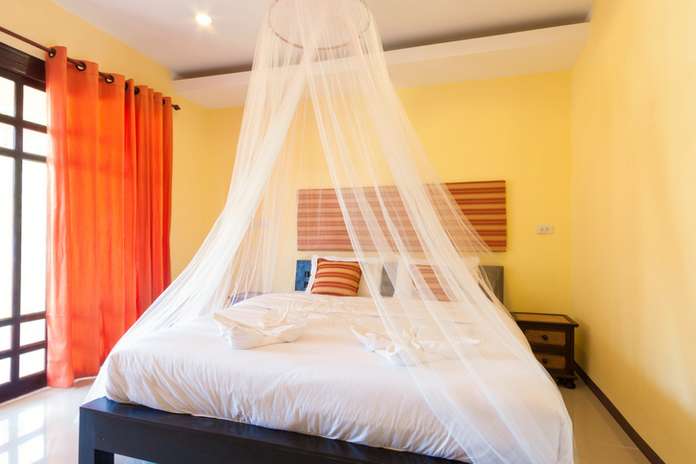
Before arriving, visitors can contact their hotel, apartment owner or villa host and ask for a mosquito net as a special request. Some properties may already have one available, even if it is not mentioned in the accommodation description.
Mosquito nets are generally inexpensive, lightweight and relatively easy to install above most beds. Because they are a low-cost item, some accommodation owners may be willing to purchase or install one when a guest explains that they are particularly sensitive to mosquito bites.
It is best to make the request before arrival, giving the hotel or apartment owner enough time to organise it. Visitors can write:
“I am very sensitive to mosquito bites. Would it be possible to provide and install a mosquito net over the bed as a special request?”
If the accommodation cannot provide one, visitors who react badly to mosquito bites may bring a compact travel mosquito net from home or purchase one locally.
Check that the net is large enough to cover the entire bed and that there are no holes or sections. The edges should be tucked underneath the mattress or secured so that mosquitoes cannot enter from below.
The mosquito net should not rest directly against the body while sleeping because mosquitoes may still be able to bite through the material where it touches the skin.
A mosquito net can be particularly useful for:
- Babies and young children
- Visitors who react badly to mosquito bites
- Rooms without window screens
- Ground-floor apartments
- Rural villas and garden accommodation
- Guests who prefer not to use plug-in products during the night
- Visitors who like sleeping with the windows
A mosquito net works best when combined with closed or screened windows, a suitable skin repellent and the removal of standing water around the accommodation.
Remove Standing Water Around Your Accommodation
Mosquitoes can reproduce in relatively small amounts of standing water.
If you are staying in a villa or apartment with a private garden, check for water collecting in:
- Plant-pot trays
- Buckets
- Watering cans
- Children’s toys
- Uncovered containers
- Blocked gutters
- Outdoor showers
- Drains
- Unused paddling pools
- Plastic covers or outdoor furniture
Emptying, cleaning or covering small containers can help reduce mosquito breeding close to the accommodation.
Guests should inform the property owner rather than attempting to treat ponds, swimming pools, drains or larger areas themselves.
Can Indoor Plants Keep Mosquitoes Away?
Plants such as lavender, basil, mint, rosemary, lemongrass and scented geraniums are often advertised as natural mosquito repellents.
They may smell pleasant, but visitors should not expect a few plants beside the bedroom window to keep mosquitoes away.
The mosquito-repellent properties associated with these plants generally come from concentrated essential oils or specially formulated products. A normal potted plant does not usually release enough of these substances into the air to provide reliable room protection.
Plants commonly associated with mosquito-repellent scents include:
- Lavender
- Basil
- Mint
- Rosemary
- Lemongrass
- Citronella grass
- Scented geranium
- Catnip
You can keep these plants on a balcony or windowsill because they are attractive and aromatic, but treat them as decoration or an additional measure rather than your main mosquito defence.
Continue using window screens, an effective skin repellent, a bedroom plug-in device, a mosquito net and closed doors or windows.

Indoor plants may sometimes make the situation worse if water remains in their trays. Mosquitoes can lay eggs in surprisingly small quantities of standing water.
Empty and clean plant-pot saucers regularly and avoid leaving water underneath pots for several days.
Visitors travelling with pets should also check whether particular plants or essential oils are safe for cats and dogs. Some concentrated oils and plants can be irritating or harmful to animals.
Tips for Evenings, Balconies and Restaurants
Dining outside is one of the pleasures of a Corfu holiday, and mosquitoes should not force you to spend every evening indoors.
Apply repellent before leaving your room rather than trying to spray yourself beside other customers at a restaurant.
Pay particular attention to your ankles, lower legs, arms and the back of your neck.
Lightweight, loose-fitting clothing can provide additional protection without making you feel too hot.
Long trousers, a long summer dress or a loose, long-sleeved shirt may be particularly helpful near:
- Gardens
- Beaches
- Rivers and streams
- Olive groves
- Countryside tavernas
- Accommodation with dense vegetation
When selecting a restaurant table, a position with some air movement may be more comfortable than a sheltered corner surrounded by plants.
Mosquitoes are generally less successful when competing with a good breeze or a nearby fan.
Outdoor mosquito coils may provide additional protection, but they should only be used according to the instructions.
Never use burning coils in an enclosed bedroom, close to children or pets, or near dry vegetation. During periods of high wildfire risk, avoid mosquito products involving a flame, burning material or hot ash.
Do Not Forget Your Ankles
Many visitors carefully protect their arms and shoulders but completely forget their feet and ankles.
These are common places to receive bites, especially when sitting underneath a restaurant table.
If you are wearing sandals, apply repellent around your ankles and the tops of your feet.
Thin socks and closed shoes can provide additional protection during evening walks, especially for visitors who react badly to mosquito bites.
Clothing Colours and Outdoor Mosquito Protection
The colour of your clothing may make a small difference when spending time outdoors. Research involving certain mosquito species suggests that darker, high-contrast colours and some red or orange tones may be more visually attractive to mosquitoes after they have detected a nearby person.
This does not mean that wearing a black shirt will automatically result in mosquito bites or that white clothing will make you invisible. Body heat, breathing, skin odour, sweat and the surrounding environment remain important factors.
As a practical precaution, visitors may prefer light-coloured clothing such as:
- White
- Beige or cream
- Light grey
- Pale blue
- Soft green
- Other light pastel colours
Loose-fitting clothing is more important than colour alone. Mosquitoes may sometimes bite through thin fabric when it is stretched tightly against the skin.
For evenings outdoors, consider wearing a loose, long-sleeved shirt, lightweight trousers, thin socks and closed shoes.
What to Do When Mosquitoes Are Annoying You Outdoors
If mosquitoes are particularly active on a balcony, in a garden or at an outdoor restaurant, try combining several simple measures:
- Apply an effective skin repellent before going outside.
- Reapply it according to the instructions, especially after swimming or heavy sweating.
- Wear loose, light-coloured clothing that covers the arms and legs.
- Protect the ankles, feet and back of the neck.
- Choose a table with natural airflow rather than a completely sheltered corner surrounded by plants.
- Use a quiet portable fan directed towards the legs or seating area.
- Move away from standing water, overflowing plant pots or heavily watered garden areas.
- Use mosquito netting over baby pushchairs and carriers.
- Keep balcony and patio doors closed so mosquitoes do not enter the bedroom.
Mosquitoes may bite during both the day and night. Do not assume that protection is only necessary after sunset.
Citronella candles, bracelets and scented products may provide limited additional help, but they should not replace an effective skin repellent and protective clothing.
During periods of high wildfire risk, avoid mosquito coils, candles or other products that involve burning material, flames or hot ash near dry vegetation.
Fan or Mini Air Cooler: Which Works Better?
A fan can be surprisingly useful because mosquitoes are relatively weak flyers. Strong, directed airflow makes it more difficult for them to approach, land and bite.
Some visitors avoid fans because of the noise and consider buying a small USB air cooler, portable air conditioner or air purifier instead.
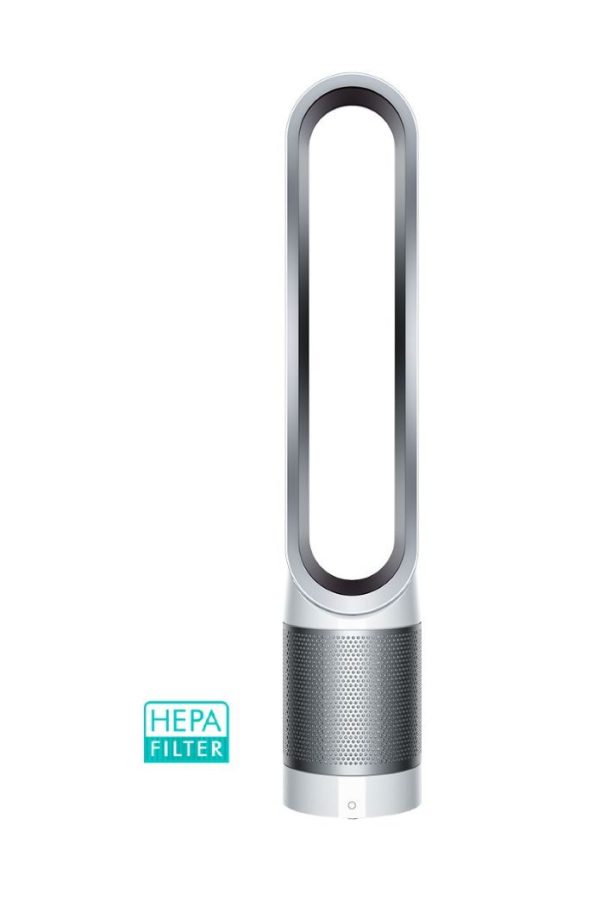
However, a cheap mini air cooler or ordinary air purifier should not be considered a mosquito-repellent device.
A small USB air cooler normally produces less airflow than a proper fan. Many models cool the air by passing it over cold water or a wet filter.
This means the water reservoir must be emptied, cleaned and dried regularly. Water should not be allowed to remain inside the device for long periods.
An air purifier may help remove dust, smoke, pollen or other airborne particles, but an ordinary purifier will not normally stop mosquitoes from flying towards you.
For mosquito protection, a quiet fan is generally the better option.
Visitors who are sensitive to fan noise can consider:
- A quiet brushless USB fan
- A larger fan operating at its lowest speed
- A tower fan with a sleep or silent mode
- A rechargeable fan positioned one or two metres away
- A fan directed towards the bed rather than the face
- A fan aimed towards the ankles and lower legs
A larger fan running slowly can sometimes be quieter than a small fan operating at maximum speed.
Normal air conditioning is also helpful because it allows the windows and balcony doors to remain closed.
A small USB evaporative air cooler is not an effective replacement for either normal air conditioning or a proper fan.
The most practical bedroom combination is usually:
- Closed or screened windows
- A properly fitted mosquito net over the bed
- Air conditioning or quiet airflow
- A suitable plug-in mosquito device
- Skin repellent when needed
Mosquito Protection for Children
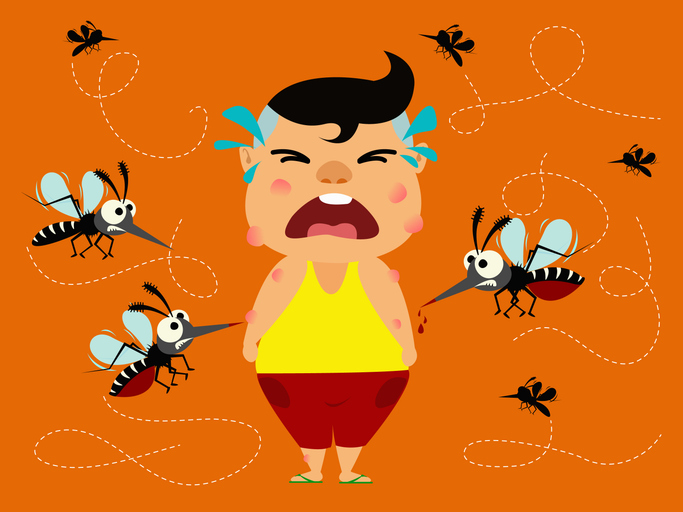
Children should only use mosquito repellents that are suitable for their age.
Always read the label carefully because not every product is suitable for babies or very young children.
An adult should apply the repellent. Do not spray it directly onto a child’s face.
Place a small amount onto your hands first and then apply it carefully, avoiding:
- The eyes
- The mouth
- The child’s hands
- Broken skin
- Irritated areas
Products containing oil of lemon eucalyptus or PMD should not be used on children under three years old.
Other useful measures include:
- Dressing children in lightweight clothing that covers their arms and legs
- Using mosquito netting over pushchairs and baby carriers
- Asking for a mosquito net over the cot or bed
- Checking that bedroom windows have screens
- Keeping doors and windows closed when indoor lights are on
- Using air conditioning or a quiet fan where available
- Emptying standing water around the accommodation
Parents who are unsure about a particular product should ask a pharmacist, doctor or paediatrician for advice.
How to Protect Dogs and Cats From Mosquitoes
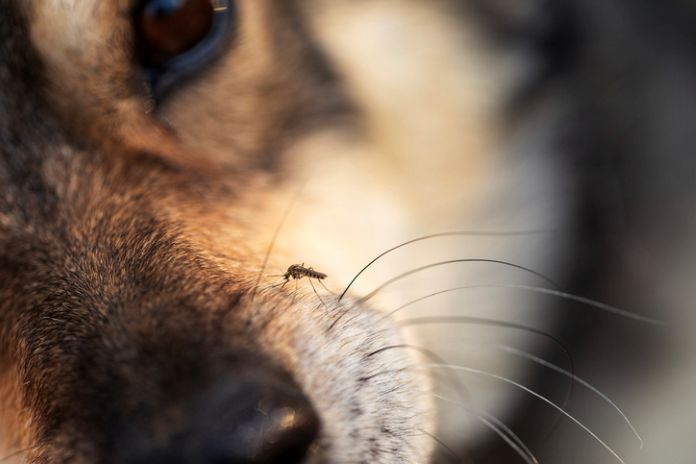
Mosquitoes can bite dogs and cats as well as people. Bites may cause itching, redness, swelling or skin irritation, particularly around areas with thinner fur such as the ears, nose, belly and inner legs.
Mosquitoes can also transmit parasites and diseases to animals. One important example is heartworm, also known as Dirofilaria immitis, which is spread through infected mosquito bites and can affect both dogs and cats.
Pet owners travelling to Corfu should speak to their veterinarian before the journey and ask whether their animal needs heartworm prevention or another parasite-control product suitable for Greece.
Heartworm protection is not the same as simply preventing visible mosquito bites. Veterinary preventive medication may be needed even when an animal does not appear to be bitten frequently.
Never Apply Human Mosquito Repellent to a Pet
Do not apply Odomos, Jungle Formula, Autan, DEET sprays or any other human mosquito repellent directly to a dog or cat unless a veterinarian has specifically confirmed that the exact product is safe for that animal.
Animals may absorb the product through their skin or lick it from their fur. Exposure to unsuitable repellents may cause drooling, vomiting, diarrhoea, weakness, poor coordination, tremors, seizures or other serious symptoms.
Never assume that a product is safe because it is described as natural. Concentrated citronella, tea tree, eucalyptus and other essential oils may also be harmful to pets, particularly cats.
Products designed only for dogs must never be applied to cats. Some dog parasite products containing permethrin can be extremely dangerous or life-threatening to cats.
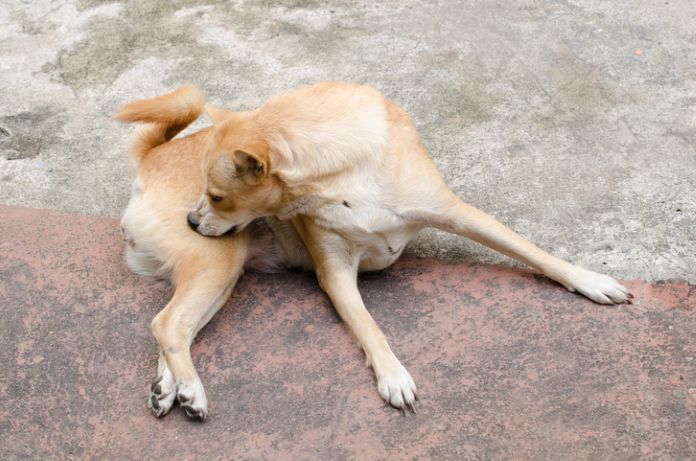
Practical Ways to Reduce Mosquito Bites on Pets
- Ask a veterinarian for a mosquito and parasite-prevention plan suitable for the pet’s species, age, weight and health.
- Use only products clearly labelled for that particular animal.
- Keep pets indoors or in screened areas when mosquitoes are particularly active.
- Repair damaged window and door screens.
- Use air conditioning or a fan to create airflow in the room.
- Remove standing water from buckets, plant-pot trays, toys and outdoor containers.
- Wash the pet’s outdoor water bowl regularly and replace the water with fresh water every day.
- Never restrict a pet’s access to clean drinking water in hot weather.
- Keep plug-in devices, liquid refills, coils and insecticide containers where pets cannot lick, chew or knock them over.
- Read the instructions before using any room mosquito product around cats, dogs, birds or fish.
If a pet develops severe facial swelling, difficulty breathing, weakness, collapse, repeated vomiting, tremors or seizures after an insect bite or exposure to a repellent, contact a veterinarian immediately.
What to Check Before Booking Your Accommodation
If mosquitoes are a major concern for you, ask a few questions before booking:
- Are mosquito screens fitted to the bedroom windows?
- Does the room have air conditioning?
- Is a plug-in mosquito device provided?
- Can the property provide a mosquito net over the bed?
- Can a mosquito net be installed as a special request before arrival?
- Is the bedroom on the ground floor?
- Is the property beside a stream, pond or heavily planted garden?
- Can the balcony and patio doors be closed securely?
- Is mosquito netting available for beds, cots or pushchairs?
- Are there reviews mentioning mosquitoes?
- If travelling with a pet, are animals allowed inside the air-conditioned or screened areas?
A beautiful villa surrounded by olive trees may offer privacy and wonderful views, but it may also have more insects than a hotel room in a busy resort centre.
This does not necessarily make it a bad choice. It simply means you may need to arrive better prepared.
Because mosquito nets are usually inexpensive, it may be worth asking the hotel or apartment owner whether they can purchase and install one before your arrival.
Keep Doors Closed During Housekeeping
In villas and apartments, balcony doors are sometimes left for long periods while the property is being cleaned or aired.
If possible, close the doors before evening and activate the plug-in mosquito device before going out for dinner.
When you return, you will be less likely to discover that a mosquito family has moved into your bedroom during your absence.
What to Do After a Mosquito Bite
Even with good protection, an occasional mosquito bite can be difficult to avoid.
Try not to scratch it, as scratching may damage the skin and increase the risk of infection.
Wash the area gently with soap and water. A cold compress can help reduce swelling, itching and discomfort.
Pharmacies in Corfu sell soothing gels, calamine products and other bite-relief treatments. Ask the pharmacist which product is suitable for you or your child.
Keep fingernails short, especially for children who may scratch mosquito bites while sleeping.
If the skin becomes broken, keep the area clean and watch for:
- Increasing redness
- Increasing warmth
- Increasing pain
- Discharge
- Swelling that continues to worsen
What to Do After a Bee or Wasp Sting
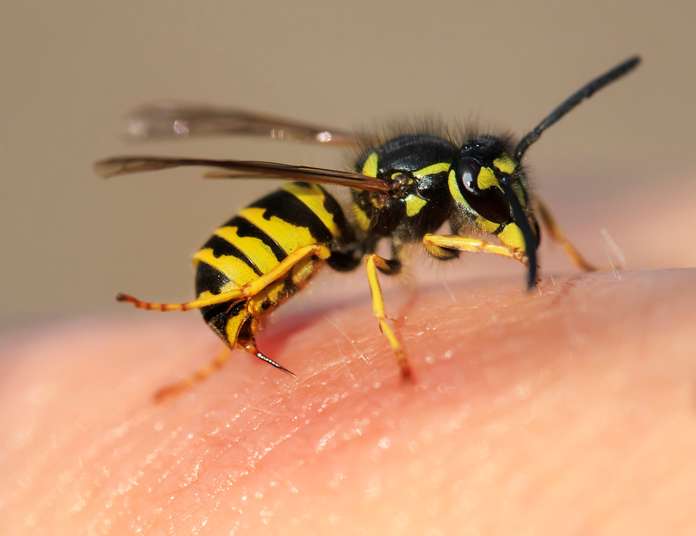
Corfu’s warm climate, gardens, vineyards and outdoor dining areas naturally attract bees and wasps. Most stings cause temporary pain, redness and swelling, but a severe allergic reaction can develop very quickly and may become life-threatening.
Visitors should be particularly careful when eating grapes, figs and other fruit, desserts or sweet foods outside. A wasp can hide between grapes or underneath pieces of fruit without being noticed.
Wasps may also enter soft-drink cans, beer cans, bottles, glasses and children’s juice containers. Before eating clustered fruit, separate and inspect the pieces carefully.
When drinking outdoors, keep drinks covered whenever possible. Avoid drinking directly from a can if you cannot clearly see inside it.
A Mild Sting on the Skin
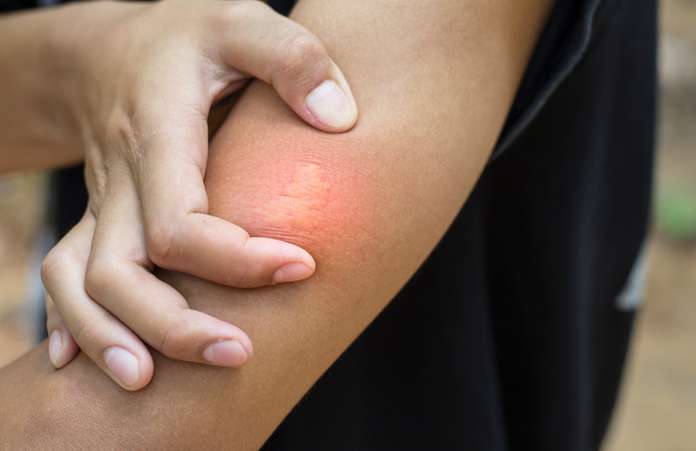
If the person has only local pain, redness or mild swelling:
- Move calmly away from the area to avoid further stings.
- If a bee sting is visible, remove it promptly by brushing or scraping it sideways with a fingernail or the edge of a card.
- Wasps normally do not leave their sting behind and may sting more than once.
- Wash the affected area gently with soap and water.
- Apply a cold pack wrapped in a cloth for approximately 20 minutes.
- Remove rings, bracelets, watches or tight items if the sting is on a hand or arm because swelling may increase.
- Ask a pharmacist about suitable pain relief, antihistamines or creams if the discomfort continues.
Do not scratch the area because broken skin may become infected.
A Sting Inside the Mouth or Throat Is an Emergency
A sting inside the mouth, on the tongue or in the throat requires urgent medical attention. Swelling in these areas may affect the airway, even when the person has never previously experienced a serious allergic reaction.
This can happen when someone accidentally bites into fruit containing a hidden wasp or drinks from a glass, bottle or can that an insect has entered.
Call 112 immediately in Greece. Do not wait to see whether the swelling becomes worse.
While waiting for emergency assistance:
- Keep the person calm and watch their breathing closely.
- Do not give them food, tablets or drinks if they are having difficulty swallowing or breathing.
- If they have been prescribed an adrenaline auto-injector, help them use it immediately according to their emergency allergy plan.
- Do not allow the person to walk around, even if they initially feel better.
Signs of a Severe Allergic Reaction
Anaphylaxis can begin within minutes after a bee or wasp sting. Call 112 immediately if the person develops any of the following:
- Swelling of the lips, mouth, tongue, face or throat
- Difficulty breathing, wheezing or noisy breathing
- A tight throat, hoarse voice or difficulty swallowing
- Dizziness, confusion, unusual weakness or fainting
- A widespread raised, swollen or itchy rash
- Vomiting, diarrhoea or severe abdominal pain
- Pale, blue or grey lips or skin
- Symptoms that are rapidly becoming worse
If the person carries a prescribed adrenaline auto-injector, such as an EpiPen or Jext, it should be used immediately according to their emergency allergy plan. Call 112 even if the person begins to feel better after using it.
Have the person lie down and raise their legs if possible. If breathing is difficult, they may sit up slowly with their legs extended. Do not allow them to stand or walk.
If symptoms have not improved after five minutes and a second prescribed adrenaline auto-injector is available, follow the person’s emergency allergy plan and the product instructions.
If the person becomes unconscious and is not breathing normally, begin CPR if you know how and follow the instructions given by the 112 emergency operator.
Visitors With a Known Insect-Sting Allergy
Anyone with a known serious allergy to bee or wasp stings should travel with their prescribed adrenaline auto-injectors and keep them nearby rather than leaving them in the hotel room.
Travel companions should know where the injectors are stored, when they should be used and how to use them.
Emergency assistance is still required after adrenaline has been administered, even if the person appears to recover.
Adrenaline auto-injectors should not be left inside a hot car or exposed to direct summer sunlight. Check their expiry date before travelling.
When to Seek Medical Advice
Most mosquito bites and minor insect stings cause temporary itching, redness, pain or mild swelling.
However, seek medical advice if you develop:
- Severe or rapidly increasing swelling
- Difficulty breathing
- Swelling around the mouth, tongue or throat
- A widespread allergic reaction
- Signs of a skin infection
- High fever
- Severe headache
- Confusion
- Unusual weakness
- Symptoms that continue to worsen rather than improve
- Multiple bee or wasp stings
- A sting inside the mouth, throat or near the eyes
Public-health authorities recommend consistent mosquito protection throughout the mosquito season because mosquitoes can occasionally transmit illnesses such as West Nile virus.
Serious illness is uncommon, but older travellers, people with weakened immune systems and people with chronic health conditions should take prevention particularly seriously.
This information is not intended to frighten visitors. It is simply another good reason to take the same sensible precautions used by local residents and regular Corfu visitors.
Regular Visitor Mosquito and Insect Safety Checklist
Before travelling:
- Pack a reliable skin repellent such as Odomos, Jungle Formula, Autan or another suitable product.
- Check the product’s active ingredient and age instructions.
- Bring or buy a bedroom plug-in mosquito device.
- Pack a bite-relief treatment.
- Include loose, light-coloured, long-sleeved clothing.
- Pack thin socks or lightweight long trousers.
- Ask whether your accommodation has window screens and air conditioning.
- Ask the hotel or apartment in advance if it can provide a mosquito net over the bed.
- Consider packing a lightweight travel mosquito net if you are very sensitive to bites.
- If you have a known sting allergy, carry your prescribed adrenaline auto-injectors at all times.
- Make sure your travel companions know how to help during an allergic emergency.
- If travelling with a pet, ask your veterinarian about heartworm and parasite prevention before departure.
After arriving:
- Check the windows and balcony doors for screens.
- Check that the mosquito net has no holes and covers the entire bed.
- Tuck the edges of the net under the mattress where possible.
- Remove small containers of standing water.
- Empty and clean water from plant-pot trays.
- Switch on the plug-in device according to its instructions.
- Apply repellent before sunset or before outdoor activities.
- Protect your ankles, feet and lower legs.
- Wear loose, light-coloured clothing outdoors when mosquitoes are active.
- Keep unscreened windows closed when indoor lights are on.
- Use air conditioning or a quiet fan when available.
- Do not depend only on plants, bracelets or ultrasonic applications.
- Check grapes, figs and other fruit carefully before eating.
- Keep sweet drinks covered when sitting outside.
- Avoid drinking directly from cans when you cannot see inside them.
- Never apply human mosquito repellent directly to a dog or cat.
- Use only veterinary products clearly labelled for your pet’s species.
- Call 112 immediately for a sting inside the mouth or throat or for signs of anaphylaxis.
Final Thoughts
Mosquitoes can be annoying in Corfu, but for most visitors they are a manageable holiday inconvenience rather than a reason to worry.
The most successful approach is not one miracle product. Regular visitors normally combine several simple measures:
- An effective skin repellent
- A plug-in device in the bedroom
- Window screens or air conditioning
- A mosquito net over the bed
- Quiet airflow from a fan
- Loose, light-coloured evening clothing
- Fewer doors after sunset
- No standing water around the accommodation
Odomos, Jungle Formula, Autan and similar products may work well for many visitors, but results differ between individuals. Check the active ingredient, follow the instructions and do not wait until after the first bites to begin protecting yourself.
Indoor plants may make your room or balcony smell pleasant, but they should not replace proper mosquito protection. A mini USB air cooler may provide a small amount of personal cooling, but a quiet fan usually creates stronger airflow and is more useful against mosquitoes.
A mosquito net is an especially useful and affordable option. Visitors who are sensitive to bites should contact their hotel, apartment or villa before arrival and ask whether one can be provided and installed as a special request.
Dogs and cats also need protection. Speak to a veterinarian before travelling and never use human mosquito repellents or dog-only parasite treatments on a cat.
Visitors should also check fruit and drinks carefully for hidden wasps. A sting inside the mouth or throat, breathing difficulties or rapidly developing swelling should always be treated as an emergency.
Prepare before the first bite, keep your mosquito kit nearby and then concentrate on the more enjoyable parts of your Corfu holiday: the beaches, sunsets, food and deciding where to go for dinner.
Official Health, Veterinary and Emergency Information
For current guidance, visitors can consult the following official resources:
Discover the Best of Corfu!
Get local events, travel tips and important Corfu updates delivered straight to your inbox.