Extremely high temperatures continue to affect large parts of Greece, with Tuesday and Wednesday expected to be the most difficult days of the current heatwave.

In several regions, temperatures will rise above 40°C, while some vulnerable inland areas could experience highs of 42–43°C. The highest temperatures are expected in Thessaly, Aetolia-Acarnania, Fthiotida, Boeotia and parts of the Peloponnese.
Very hot conditions are also expected in Athens, eastern Central Greece and parts of Crete.
In Corfu, the maximum temperature is forecast to reach approximately 35°C. Although this is lower than in mainland Greece, Corfu’s humidity can make the heat feel considerably more uncomfortable, particularly in Corfu Town and places with limited airflow.
A gradual drop in temperatures is expected from Thursday across most of Greece, although hot weather will continue in southern and southeastern areas.
Do Not Expect the Mountain Villages to Be Much Cooler
Many visitors assume that mountain villages such as Spartylas, Sokraki, Strinylas or Sinies will always be much cooler. However, during a severe heatwave, temperatures can also become extremely uncomfortable in Corfu’s higher villages, especially around midday.
Driving to a mountain village is therefore not necessarily the best way to escape the heat. The safest option is to remain in an air-conditioned indoor space and avoid unnecessary journeys between 11:00 and 17:00.
Places to Escape the Heat in Corfu
These are a few options where you can spend some time away from direct sunlight. Always check opening hours and confirm that air conditioning is available before visiting.
- Museum of Asian Art: An interesting cultural attraction inside the Palace of St Michael and St George.
- Archaeological Museum of Corfu: A good indoor activity during the hottest part of the day.
- Banknote Museum: A small and interesting museum in the heart of Corfu Old Town.
- Casa Parlante: A lively presentation of everyday life in 19th-century Corfu.
- Municipal Art Gallery: An opportunity to discover Corfiot art while staying away from the midday sun.
- Kapodistrias Museum: A cultural visit dedicated to one of the most important figures in modern Greek history.
- Air-conditioned cafés, coworking spaces in Corfu, ( such as: SiLICON urban ecosystem near Sanroco square) hotel lounges and shopping areas: Choose indoor seating instead of an outdoor table in the sun.
The beach is not always a safe escape during the hottest hours. If you want to swim, go early in the morning or after 18:00 and avoid spending the middle of the day on the beach.
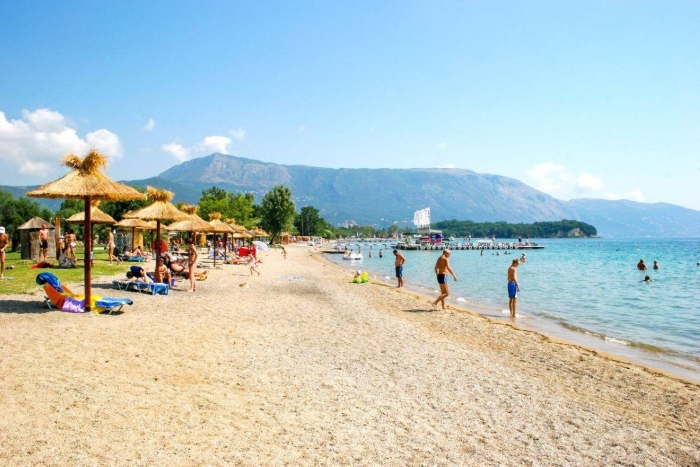
You Can Still Get Sunburned in the Water
Being in the sea does not fully protect you from ultraviolet radiation. You can still get sunburned while swimming, while sunlight reflected by the water can increase your exposure.
A beach umbrella does not provide complete protection either. UV radiation can reach you from the sides and can also be reflected by the sea, sand and surrounding surfaces.
During extreme heat, it is better to avoid sunbathing completely. If you decide to sit in the sun early in the morning or later in the afternoon, limit direct exposure to approximately 10–15 minutes and always use sunscreen, a hat and suitable clothing.
Drink Water, Not Alcohol or Sugary Drinks
Water should be your main drink during a heatwave. Drink it regularly throughout the day, even before you begin to feel very thirsty.
- Avoid alcohol, cocktails and excessive amounts of beer because alcohol can make dehydration worse.
- Beer contains alcohol and, depending on the type, carbohydrates or sugars. It should never be treated as a replacement for water.
- Limit soft drinks, energy drinks and other beverages containing large amounts of sugar.
- Ice cream and sweets may provide a temporary cooling sensation, but they do not properly hydrate the body and usually contain a lot of sugar.
- If you drink fruit juice, keep the quantity small or dilute one part juice with four parts water.
- Choose small, light meals with fruit and vegetables instead of heavy, fatty food.
Early Signs of Heat Exhaustion
The body will often produce warning signs before the situation becomes dangerous. Common symptoms of heat exhaustion include:
- A severe headache.
- Weakness, exhaustion or feeling faint.
- Dizziness or low blood pressure.
- Nausea or vomiting.
- A rapid heartbeat and intense thirst.
- Muscle cramps and excessive sweating.
If these symptoms appear, the person should immediately stop all physical activity, move to a cool or air-conditioned place and begin cooling down gradually.
Warning Signs of Heatstroke
Heatstroke is a medical emergency that can become life-threatening. Warning signs may include:
- A body temperature of around 40°C or higher.
- Very hot or red skin, with or without sweating.
- Rapid breathing and a fast heartbeat.
- Confusion, disorientation or difficulty speaking clearly.
- Unusual, aggressive or strange behaviour.
- Seizures, fainting or loss of consciousness.
If you suspect heatstroke, call 112 or the Greek ambulance service on 166 immediately. Do not wait to see whether the symptoms improve on their own.
What to Do While Waiting for Medical Assistance
- Move the person to a cool, shaded and preferably air-conditioned place.
- Remove unnecessary or heavy clothing.
- Cool the body with water, wet towels, a cool shower or continuous airflow.
- Place cold packs or cool wet cloths around the neck, under the arms and in the groin area.
- Only provide small sips of cool water if the person is fully conscious, cooperative and able to swallow normally.
- Never give drinks to someone who is confused, vomiting or unconscious.
Who Is Most at Risk?
- Older people, babies and young children.
- Pregnant and breastfeeding women.
- People who are overweight or obese.
- People with high blood pressure, heart disease or diabetes.
- People with lung, kidney or liver conditions.
- Anyone suffering from a fever, infection or gastroenteritis.
- People working outdoors or exercising intensely in hot conditions.
- People who regularly consume large quantities of alcohol.
- People taking diuretics, psychiatric medication, insulin or medicines that may affect the body’s response to heat.
Anyone receiving regular medication should not change the dosage without medical advice. Contact your doctor if you are concerned about how your medication may affect you during the heatwave.
Simple Heatwave Safety Advice
- Stay in an air-conditioned place whenever possible.
- Wear lightweight, loose-fitting and light-coloured clothes.
- Use a hat, sunglasses and high-protection sunscreen.
- Avoid exercise, heavy work and long journeys during the hottest hours.
- Take regular cool or lukewarm showers.
- Never leave children, older people or animals inside a parked car, even for a few minutes.
- Check regularly on elderly relatives, neighbours and anyone living alone.
- Always carry a bottle of water when leaving your accommodation.
Corfu may not experience the extreme temperatures expected in some parts of mainland Greece, but 35°C combined with high humidity and prolonged exposure to the sun can still be dangerous. Drink plenty of water, avoid unnecessary midday journeys and do not underestimate the strength of the sun while swimming or sitting beneath a beach umbrella.
Discover the Best of Corfu!
Get local events, travel tips and important Corfu updates delivered straight to your inbox.